How to Get Rid of Fungus Gnats in Houseplants (For Good)

You spot one first. Just one tiny black speck lifting off the soil when you water. You tell yourself it’s nothing.
A week later, you’re waving your hand in front of your face every time you walk past your monstera, and there are five more where that one came from.
I’ve been there. Fungus gnats are one of those pests that seem harmless at first and then quietly take over your whole plant shelf.
The good news? They’re annoying, not dangerous, and once you understand why they showed up in the first place, getting rid of them is pretty straightforward.
Why Fungus Gnats Love Your Houseplants
Fungus gnats aren’t picky. They don’t care if your plant is rare or expensive.
What they care about is moisture, and specifically, moist topsoil that never gets a chance to dry out.
Here’s what’s actually happening.
Female gnats lay their eggs in damp organic soil, and those eggs hatch into tiny larvae that feed on fungi, decaying plant matter, and sometimes tender root hairs.
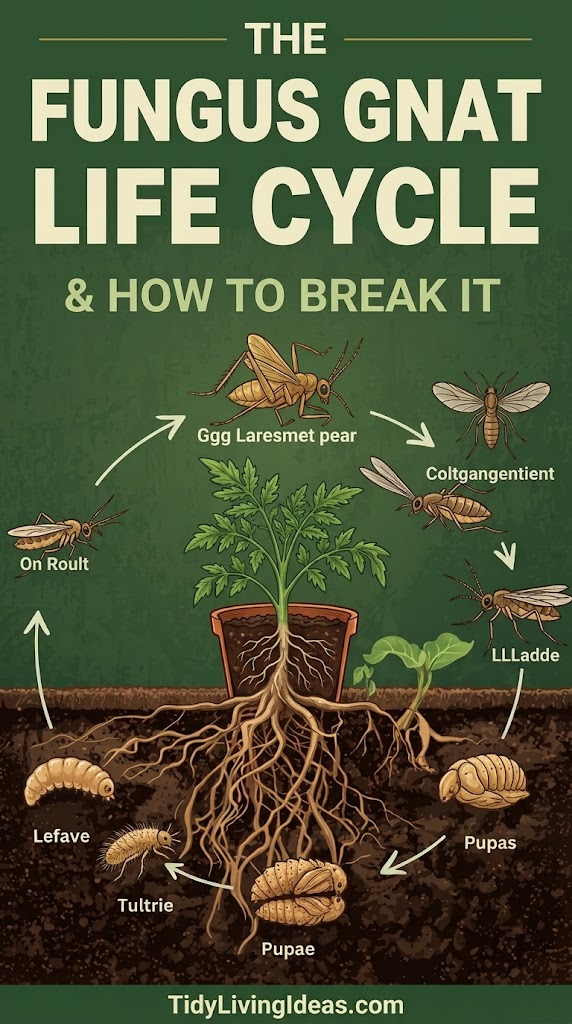
Give them a few days of consistently wet soil, and you’ve built them a nursery.
A few conditions make this worse:
- Overwatering. This is the big one. If the top inch of soil never dries between waterings, you’re keeping the surface exactly how gnats like it.
- Soggy, poorly draining pots. No drainage holes, or a pot that’s too large for the plant, means water sits and lingers instead of moving through.
- Organic, peat-heavy potting mixes. They hold moisture beautifully, which is great for roots and also great for gnat larvae.
None of this means you’re a bad plant parent. It usually just means your watering habits and your soil aren’t quite in sync yet. That’s fixable, and that’s exactly what we’re getting into next.
How to Get Rid of Fungus Gnats, Step by Step
Fungus gnats might seem impossible to shake, but most infestations respond to a handful of simple fixes done consistently.
These five steps tackle both the adult gnats and the larvae hiding in your soil. Work through them in order, and most plants clear up within a couple of weeks.
1. Let the Soil Actually Dry Out
This is the fix that solves most gnat problems on its own, and it’s also the one people resist the most. If you’re used to watering on a schedule, switch to watering by feel instead.
Stick your finger an inch or two into the soil. Dry? Water. Still damp? Walk away and check again tomorrow.
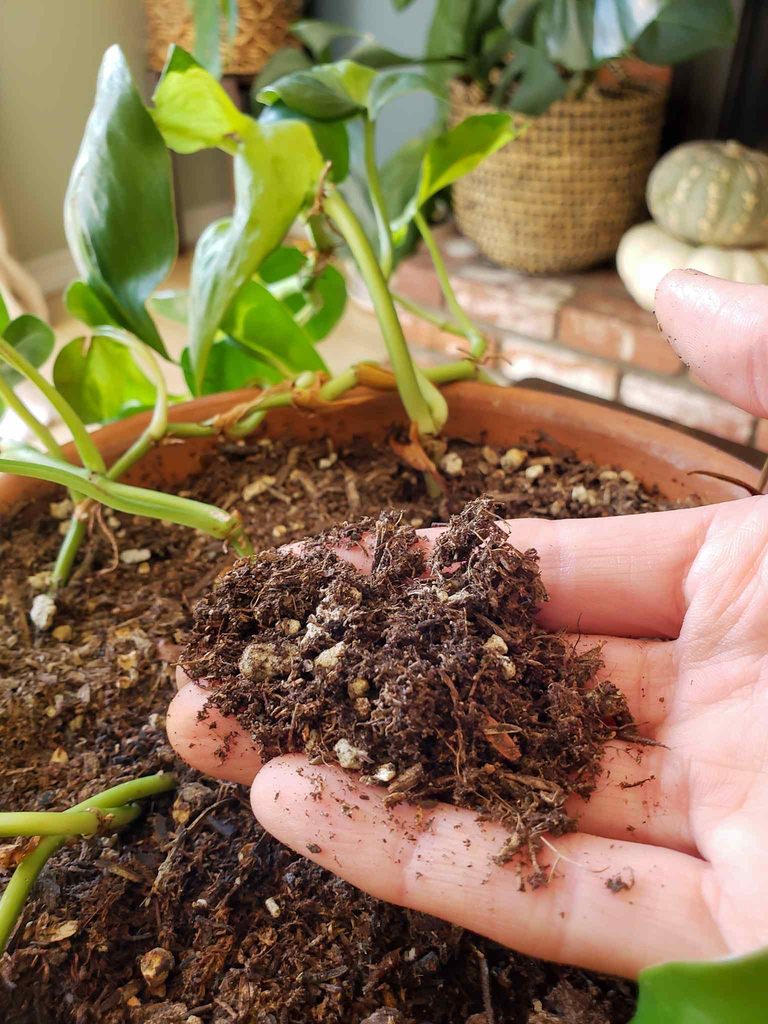
Gnat larvae can’t survive in dry soil. Starve them of moisture for a week or two, and you’ll watch the population crash without doing anything else.
2. Set Out Yellow Sticky Traps
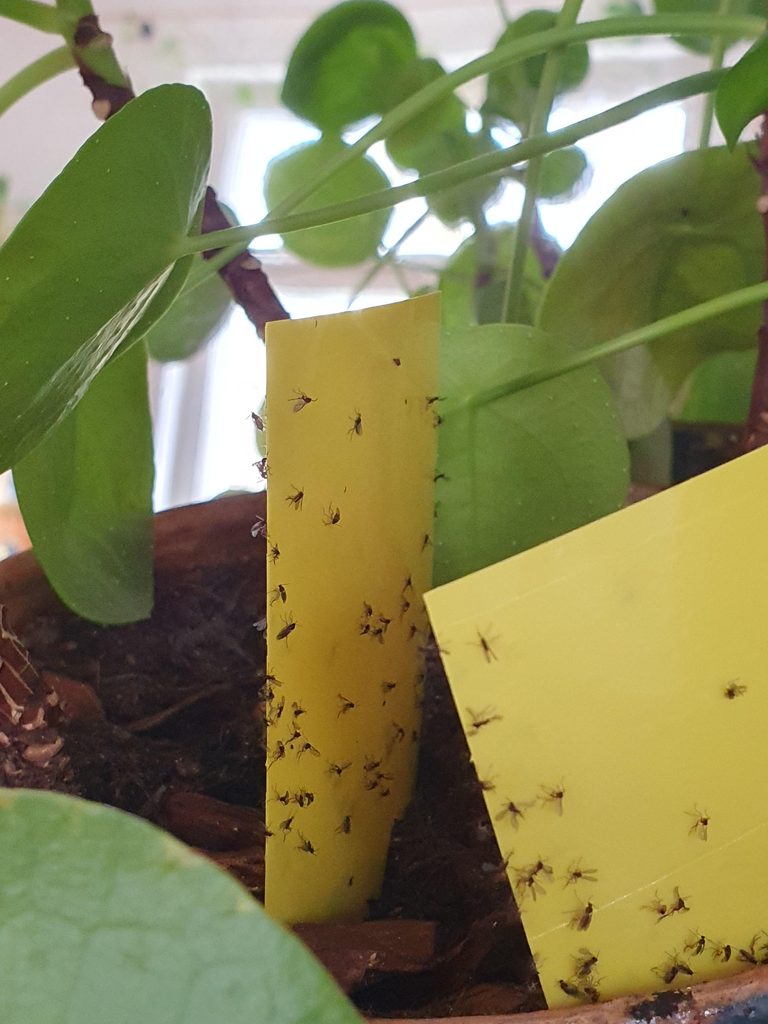
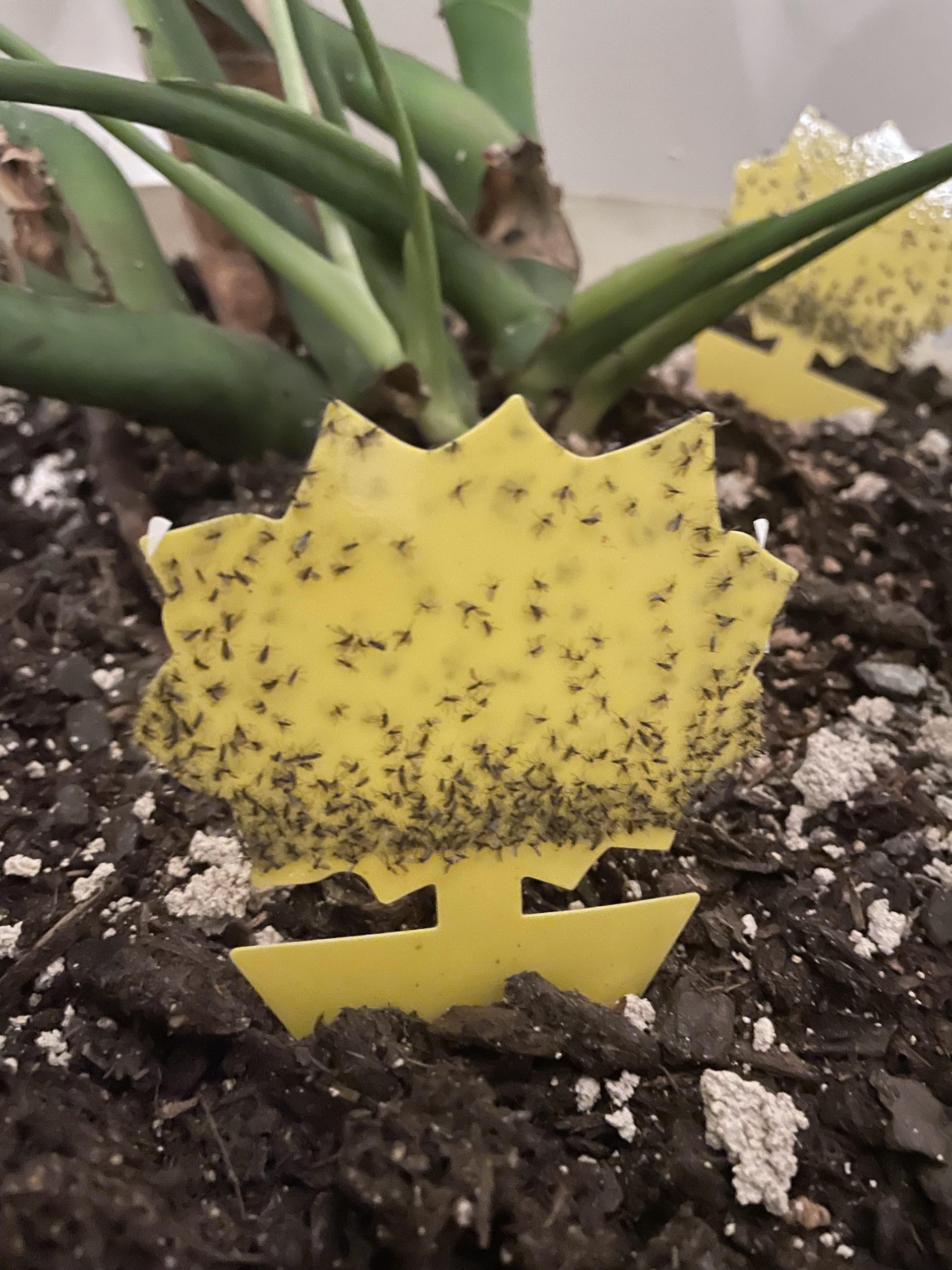
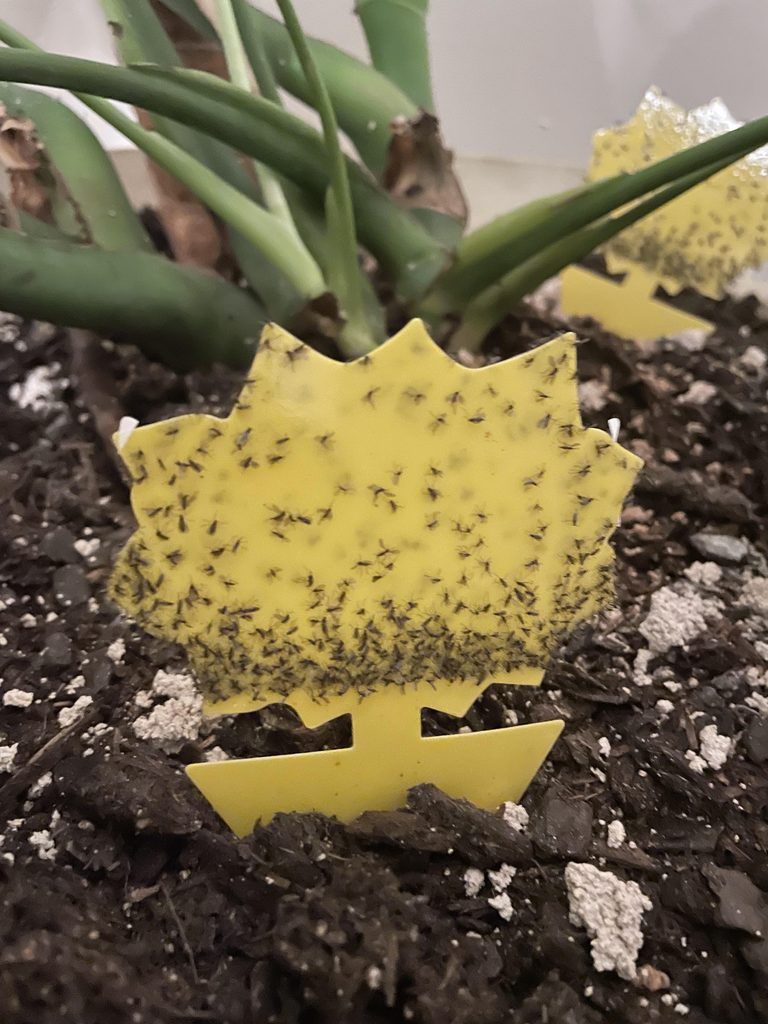
These little yellow cards are cheap, unglamorous, and genuinely effective.
Adult gnats are drawn to the color yellow, so pop a few traps into the soil around your affected plants and let them do the work.
They won’t touch the larvae hiding in the soil, but they’ll catch the adults before those adults lay another round of eggs. Think of it as cutting off the next generation while you deal with the current one.
3. Drench the Soil With Hydrogen Peroxide
Mix one part standard 3% hydrogen peroxide with four parts water, then pour it into the soil until it starts draining out the bottom.
It’ll fizz a bit on contact. That’s normal, and it means it’s working.
The peroxide kills larvae on contact but breaks down into plain water and oxygen almost immediately, so it won’t harm your plant’s roots.
You may need to repeat this every few days for a couple of weeks to catch new hatches.
4. Try a BTI Treatment for Stubborn Infestations
If peroxide isn’t cutting it, look for a product containing Bacillus thuringiensis israelensis, usually sold as “mosquito bits” or a similar name.
It’s a naturally occurring bacteria that targets fungus gnat larvae specifically without harming your plant, your pets, or you.
Soak the bits in water overnight, then use that water to water your plant as usual. It’s slower than peroxide but tends to be more thorough for infestations that keep coming back.
5. Repot When Things Have Gotten Out of Hand
Sometimes the soil itself is the problem, especially if it’s old, compacted, or been sitting wet for months.
If you’ve tried everything else and gnats keep reappearing, it’s worth repotting into fresh, well-draining mix.
Gently knock as much old soil off the roots as you can, rinse if needed, and start over in a pot with proper drainage. It feels drastic, but it’s often the fastest reset button you have.
Keeping Fungus Gnats From Coming Back
Getting rid of gnats once is one thing. Keeping them gone is another, and it mostly comes down to a few small habits sticking around after the infestation clears.
Top-dress with sand or fine gravel. A quarter-inch layer of horticultural sand on top of your soil does two things: it dries out fast, which gnats hate, and it physically blocks adults from reaching the soil underneath to lay eggs.
It’s a small change that makes a surprisingly big difference.
Rethink your watering routine. If overwatering got you into this mess, the same habit will get you right back into it.
Check soil moisture before you water instead of watering on autopilot, and remember that most houseplants would rather be slightly underwatered than sitting in damp soil for days.
Don’t let standing water linger. Empty out saucers and cover pots after watering. That little pool of water at the bottom of a decorative planter is basically a welcome sign for gnats looking for a place to breed.
Quarantine new plants. New arrivals are one of the most common ways gnats sneak into a home in the first place.
Keep new plants separate from the rest of your collection for a couple of weeks, and keep an eye on the soil for any early signs of activity.
The Bottom Line
Fungus gnats are irritating, but they’re rarely a real threat to your plants. Once you fix the moisture problem underneath the surface, the flying part of the problem tends to solve itself.
Give it a couple of weeks of consistent care, and you’ll likely forget they were ever an issue. Your plants will be better off for the drier soil anyway, and you’ll walk past your monstera without swatting at anything again.