10 Garlic Varieties to Plant This Fall (Matched to Your Climate)

Plant the wrong garlic, and you’ll pull small, weak bulbs next summer. The right garlic grows big and flavorful. The difference comes down to your winter.
Some varieties need a long cold spell to form bulbs. Others thrive where winters stay mild.
This guide matches 10 garlic varieties to your climate, from cold-hardy porcelains to heat-loving creoles.
You’ll also learn how to understand garlic types and choose seed garlic. Order early, because the best varieties sell out fast.
Garlic Types in 60 Seconds
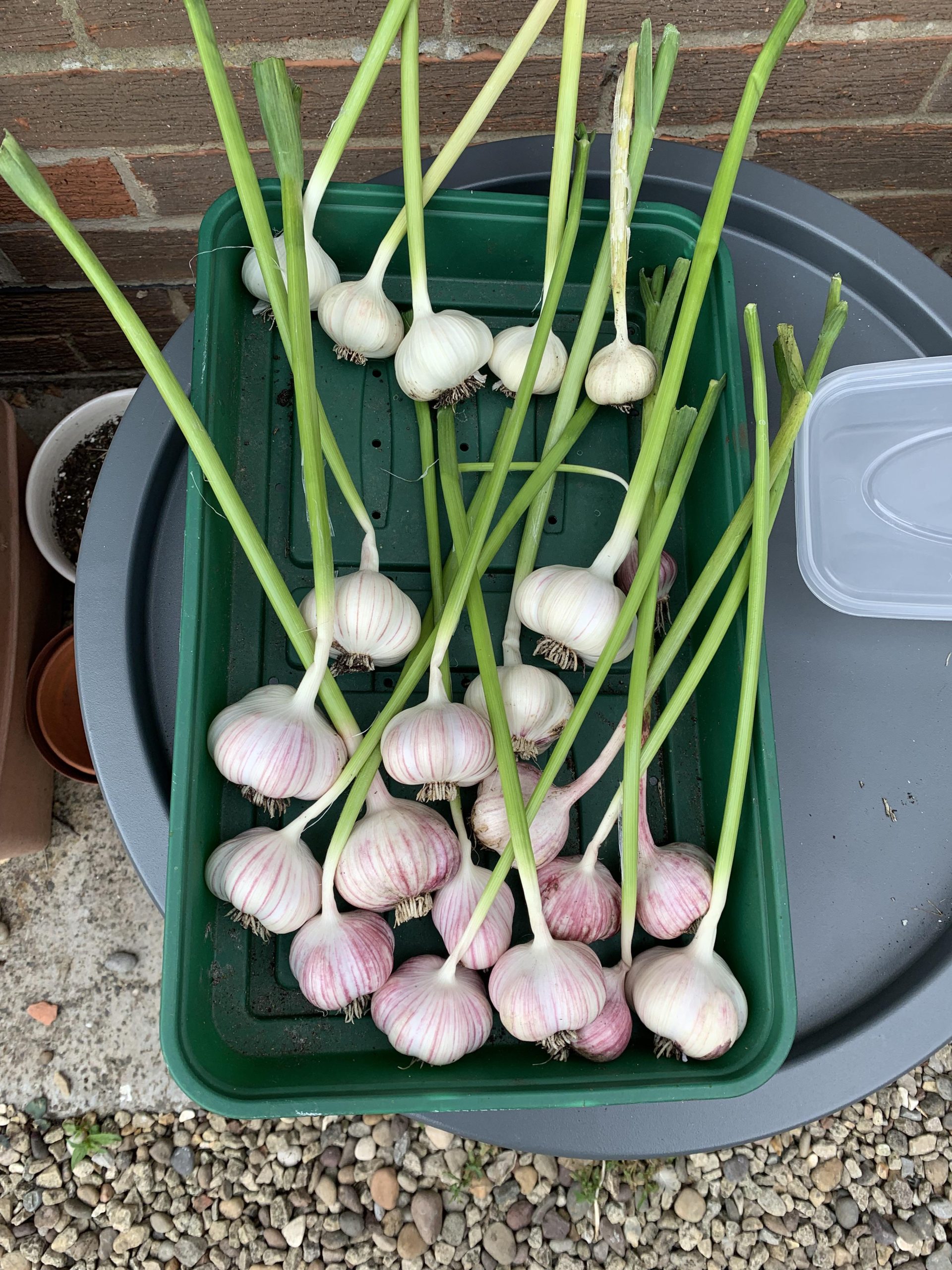
Garlic comes in two big families. Each one grows differently, so this is the best place to start.
| Key Factors | Hardneck | Softneck |
|---|---|---|
| Best winters | Cold to moderate | Mild to moderate |
| Scapes (flower stalks) | Yes, and they’re edible | Rarely |
| Cloves | 4 to 12, large, easy to peel | Many, smaller, in layers |
| Flavor | Rich and complex | Mild to hot, more straightforward |
| Storage | 2 to 6 months | 6 to 9 months, sometimes longer |
| Braiding | No, the stem is stiff | Yes |
Each family splits into smaller groups. Here are the six you’ll meet in this list.
Porcelain: Thick white skins hide a few big, plump cloves. The heat is strong but smooth. These plants handle brutal cold.
Rocambole: The skins slip off easily. The flavor is rich and full. Rocamboles love cold winters but store for a shorter time.
Purple Stripe: Purple streaks run across the wrappers and cloves. The flavor is medium and bakes beautifully. Cold winters suit them best.
Asiatic, Turban, and Creole: These types cope with warmer winters. Asiatic and Turban types are hardnecks that mature early. Creoles store well and show off bright wrappers. Scapes are weak or missing in mild climates.
Artichoke: These softnecks grow many cloves in overlapping layers. They are easy to grow and reliable in warm areas.
Silverskin: These softnecks have small cloves and thin wrappers. They store the longest and mature last. They also braid well.
Good to know: A hardneck isn’t always a cold-only plant. Asiatics and Turbans break that rule. So do Creoles, which sit on the line between the two families. Garlic can also act differently in a new place. A softneck may send up a scape in a cold garden.
Elephant garlic isn’t true garlic. It’s a leek relative with huge, mild cloves. I included it as a bonus because gardeners love it.
Match Your Garlic to Your Winter
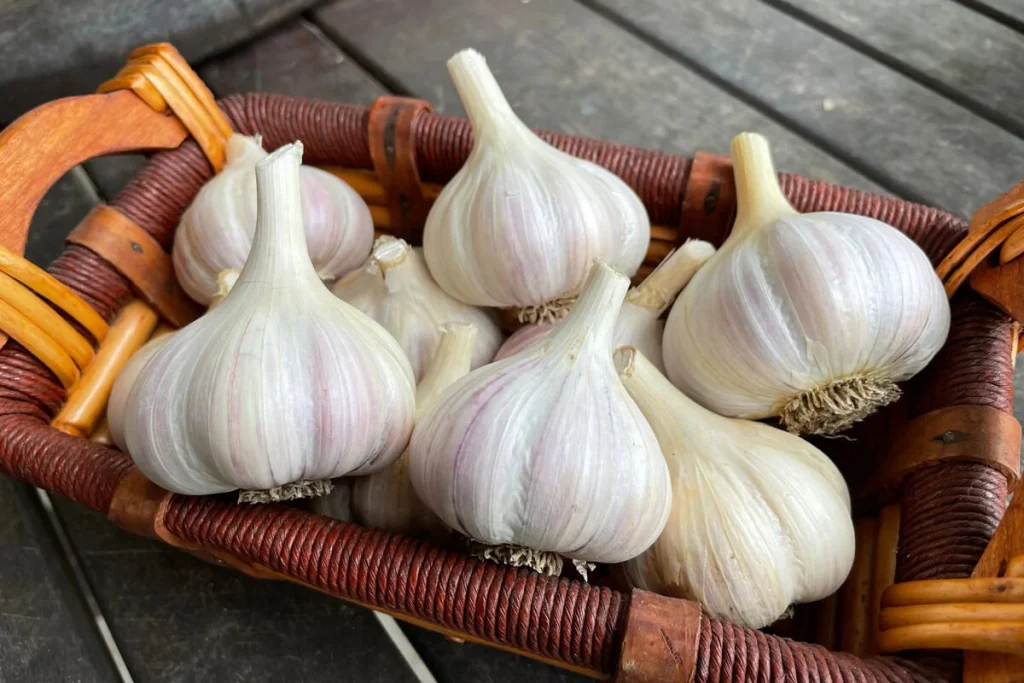
Your winter decides which garlic wins in your yard. Look up your USDA zone, then use this guide.
Cold winters (Zones 3 to 5): Hardnecks rule here. Porcelains, rocamboles, and purple stripes get the long chill they need.
A thick layer of mulch protects them in deep freezes. You also get scapes to cook in spring. Look at Music, Spanish Roja, and Chesnok Red.
Moderate winters (Zones 6 to 7): You can grow almost anything. Hardnecks get enough cold, and softnecks do well too. Plant a mix of both.
You get rich flavor from the hardnecks and long storage from the softnecks. Chesnok Red and Inchelium Red are safe picks.
Mild winters (Zones 8 to 10): Skip the cold lovers. Choose softnecks, Creoles, Asiatics, and Turbans. Korean Red, Red Janice, Burgundy, and Silver
White are all good bets. Plant in mid to late fall.
If your winters rarely freeze, chill hardneck cloves in the fridge for a few weeks before planting.
Read more: Garlic Planting Mistakes That Shrink Your Harvest (And Easy Fixes)
How to Buy Seed Garlic (And Why Grocery Garlic Falls Short)
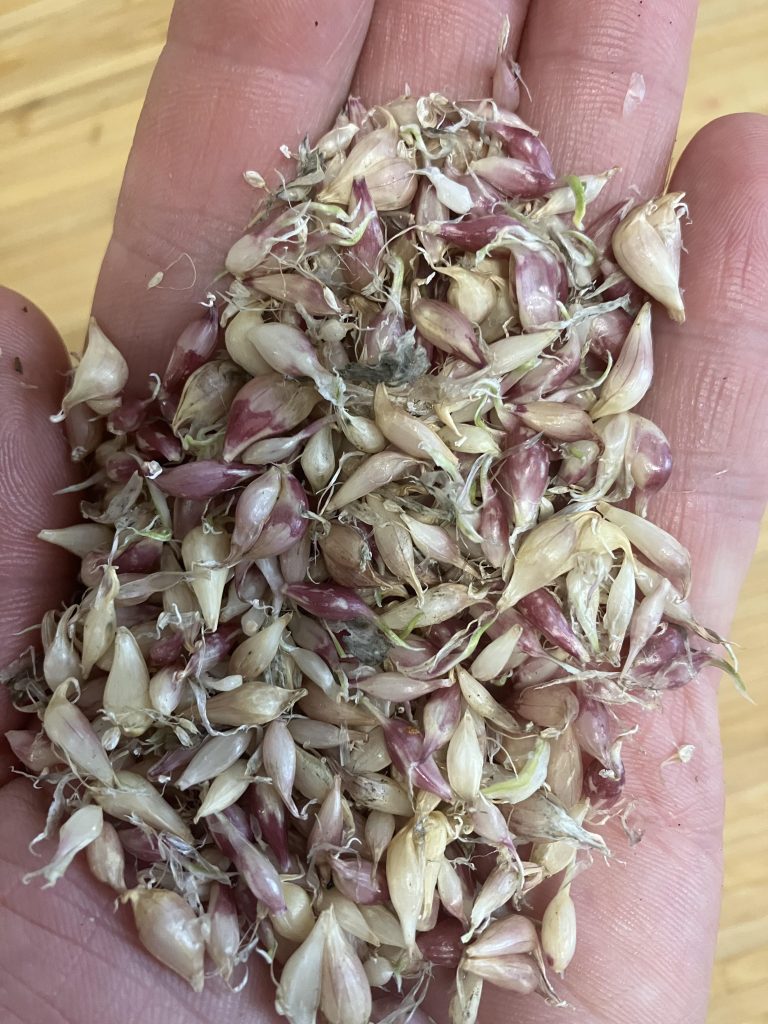
Grocery garlic is a gamble. Stores sell it for shelf life, not for growing. Many bulbs get treated to stop sprouting. Some can carry diseases you don’t want in your soil. You also never learn the variety, so you can’t match it to your climate.
Where to buy: Try garlic farms, seed companies, farmers’ markets, and nurseries. Local growers are gold. They know which varieties thrive in your area.
When to order: Order now. Popular varieties sell out early. Most sellers ship in fall, close to planting time.
What to look for: Choose firm, plump bulbs. Skip any with soft spots, mold, or shriveled cloves. Leave the papery wrapper on until planting day. Big bulbs give you big cloves, and big cloves grow big bulbs.
Smart start: Buy one or two bulbs each of three varieties. Each bulb gives you several cloves to plant. Next summer, save your best bulbs and replant them. You buy seed garlic once, then grow your own supply.
Also read: Planting Garlic Cloves in Fall: 7 Steps for Big Bulbs Next Summer
10 Best Garlic Varieties to Plant This Year
1. Music
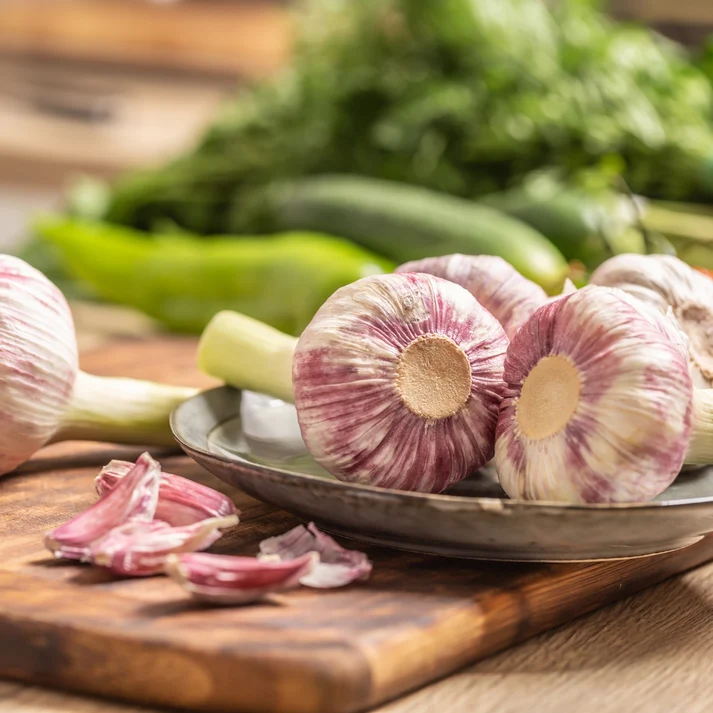
Want garlic that shrugs off the coldest winters? I’d start here. This porcelain hardneck grows big bulbs with only four to six huge cloves. They peel easily, so prep time drops.
The flavor is bold and rich, with a spicy kick. Music asks for steady water and a weeded bed. Give it both, and you get some of the largest bulbs of any porcelain.
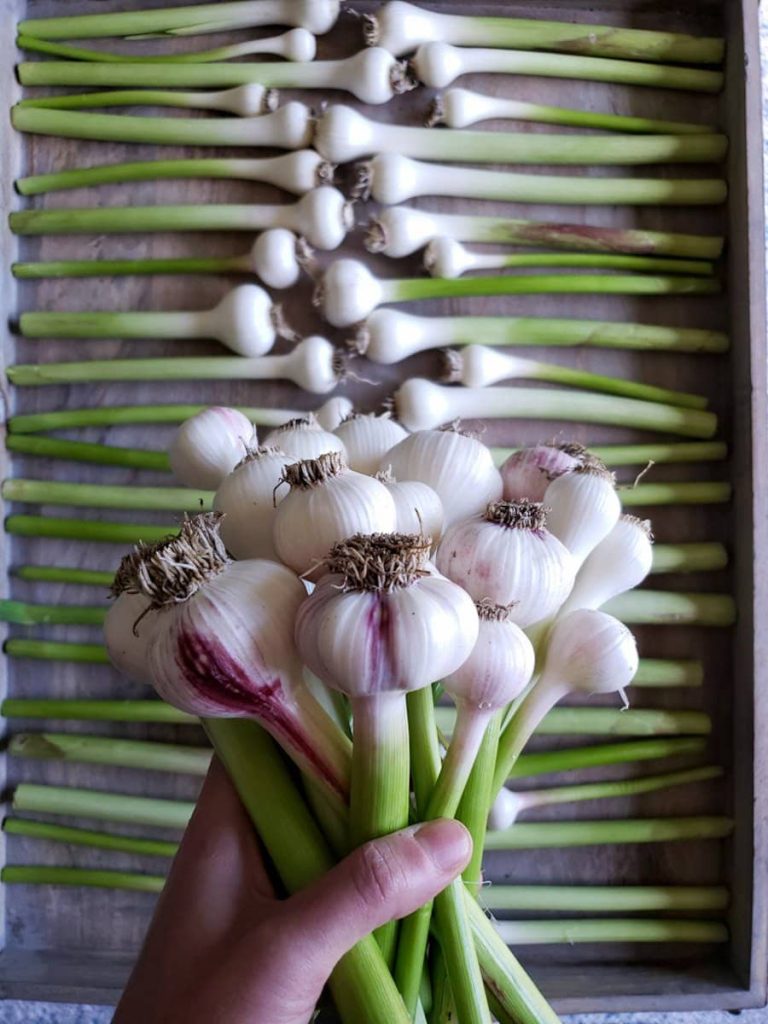
Snap off the scape in early summer. The plant then sends its energy into the bulb.
Type and climate: Porcelain hardneck for cold winters
Flavor: Bold, rich, medium to hot
Storage: 6 months or more
Best for: Big, easy-peel cloves
2. Spanish Roja
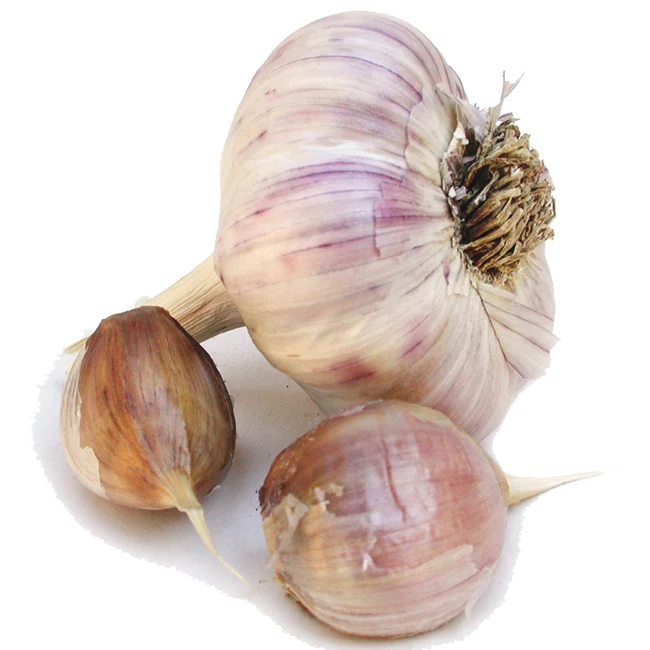
Peeling garlic gets old fast when the skins cling. Not this one. The thin, loose wrappers slip right off this rocambole hardneck. Inside, plump reddish-brown cloves wear light purple streaks.
The flavor is rich and complex. Raw, it bites back. Cooked, it turns sweet and mellow. This heirloom has grown in the Pacific Northwest for well over a century.
Plan to use it first. Those thin skins mean a shorter shelf life.
Type and climate: Rocambole hardneck for cold winters
Flavor: Rich and complex, spicy raw, sweet cooked
Storage: 4 to 6 months
Best for: Roasting, sauces, and raw dishes
3. Chesnok Red
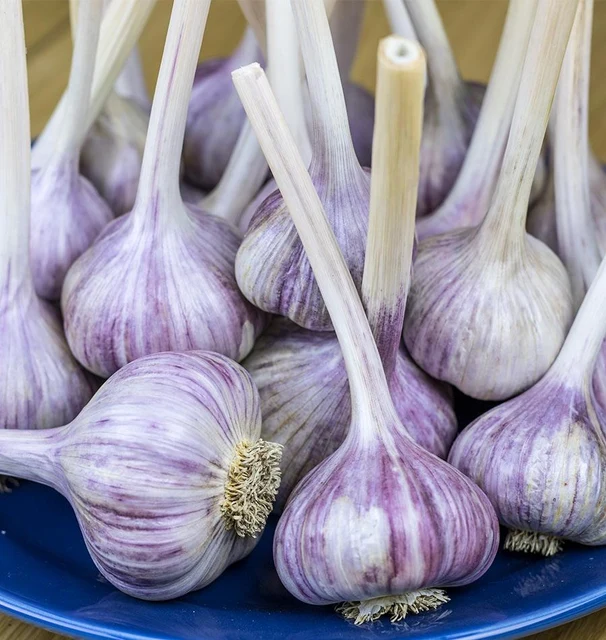
Roast a whole bulb and you’ll see why cooks rave about this purple stripe hardneck. The cloves hold their shape in the oven. They turn creamy and buttery.
Each big bulb packs eight to ten cloves, wrapped in bold purple stripes. It looks as good in a kitchen basket as it does in the garden.
Chesnok Red loves cold winters. In warm areas, it can struggle during hot, dry springs. Check your climate before you commit.
Type and climate: Purple stripe hardneck for cold to moderate winters
Flavor: Rich, medium-hot, creamy when baked
Storage: 4 to 6 months
Best for: Baking and roasting
4. Korean Red
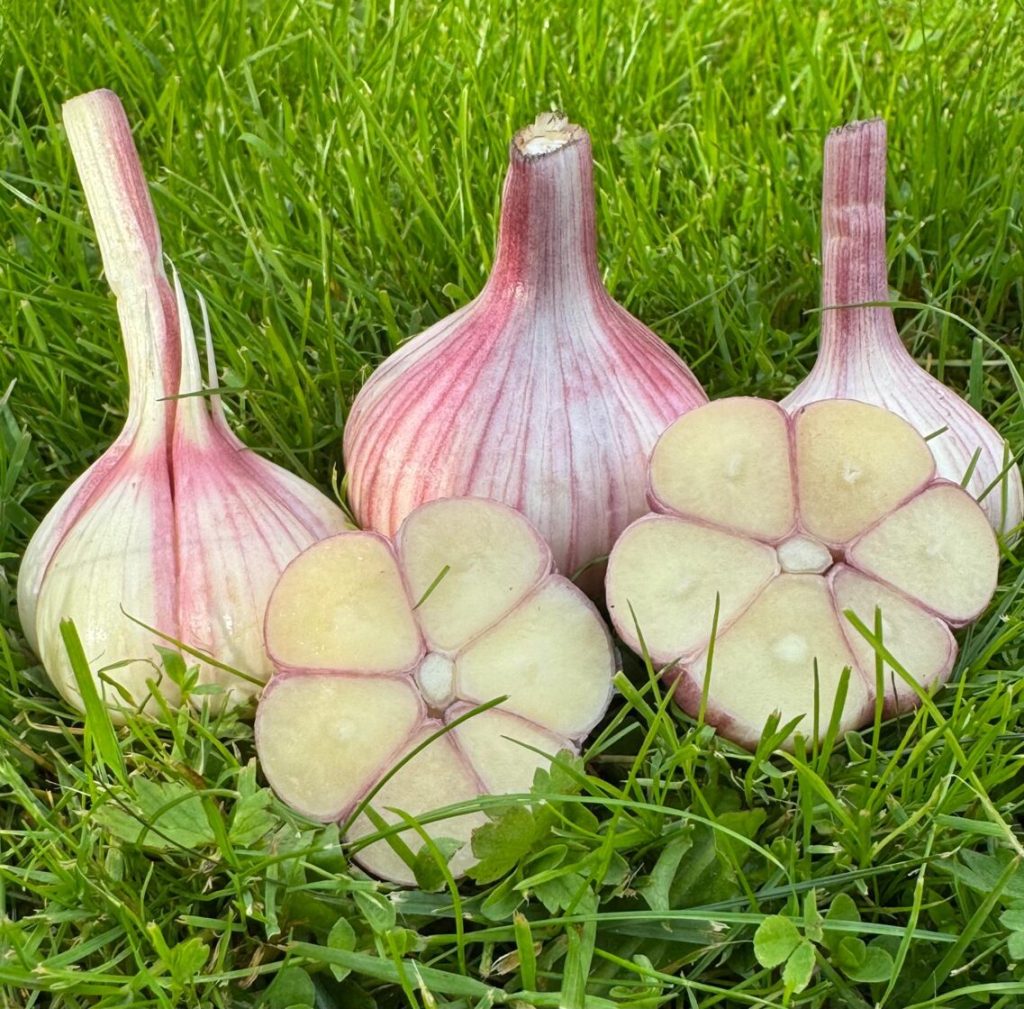
Here’s a hardneck that doesn’t mind milder winters. This Asiatic type also finishes early. You can pull bulbs in late spring or early summer, before most garlic is ready.
The wrappers show deep red hues with occasional purple streaks. Each bulb holds six to ten cloves in a neat circle.
Flavor changes with where you grow it. Some gardeners taste a smooth, mellow garlic with little heat. Others taste a zingy kick. Leave the scape on if you like. Asiatic garlic keeps its bulb size either way.
Type and climate: Asiatic hardneck for cold to mild winters
Flavor: Rich, from mellow to zingy
Storage: 4 to 6 months
Best for: Early harvests and warmer gardens
5. Red Janice
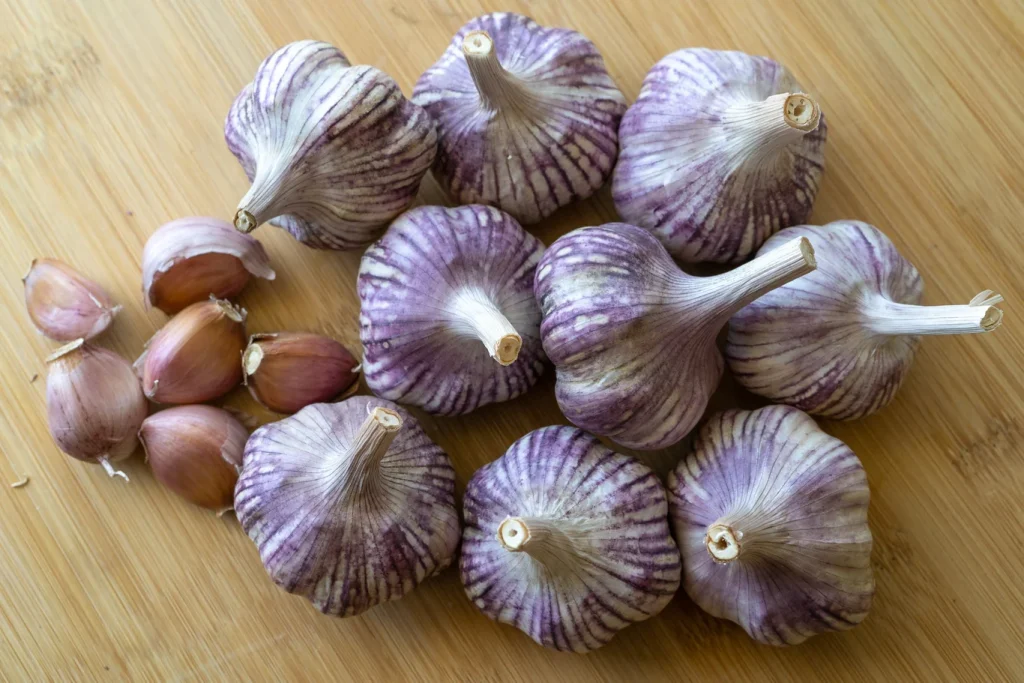
Craving fresh garlic in May? This turban hardneck gets you there first. It ranks among the earliest garlics to harvest, often in late spring or early summer.
Each bulb holds five to nine large, fat cloves. The plant looks a little weak. Stems can even flop near harvest. Don’t worry. Good-sized bulbs wait underground.
The flavor hits hot when raw. Bake it, and it turns sweet with a little spice. Plant it beside a long keeper like Silver White, and you’ll have garlic all year.
Type and climate: Turban hardneck for mild to moderate winters
Flavor: Hot raw, sweet and spicy baked
Storage: A few months, the shortest here
Best for: Early harvests and warm-winter gardens
6. Burgundy
Hot summers and mild winters? I’d reach for this one. It belongs to the Creole group. These garlics shrug off heat spells and drought.
The bulbs run small to medium. Don’t let that fool you. Each one holds eight to twelve cloves in deep burgundy skins. The flavor is sweet, rich, and mellow, with moderate heat. It tastes great raw.
Creoles don’t love cool, humid spots. Warm and dry suits them best.
Type and climate: Creole garlic for hot, mild-winter gardens
Flavor: Sweet, rich, moderate heat
Storage: 7 to 9 months
Best for: Salsas, dressings, and warm gardens
7. Inchelium Red
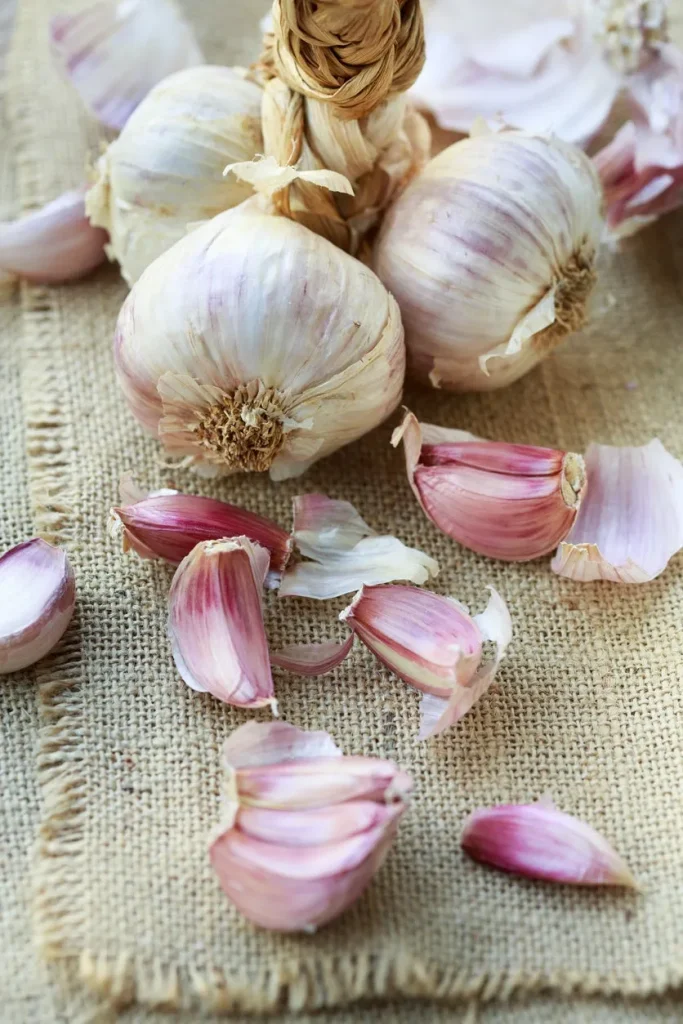
Want a no-fuss garlic that grows big almost anywhere? Here’s your beginner pick. This artichoke softneck often grows bulbs over three inches wide.
Each one holds eight to twelve cloves in neat layers. Some pack in up to twenty.
The flavor starts spicy when fresh. In storage, it mellows into a rich, mild garlic with a lingering finish.
The soft stems braid beautifully. This variety also adapts to cold, moderate, and warm climates, from Zone 4 to Zone 9.
Type and climate: Artichoke softneck, adaptable
Flavor: Mild and rich, spicier fresh
Storage: 6 to 10 months
Best for: Beginners and braiding
8. Silver White
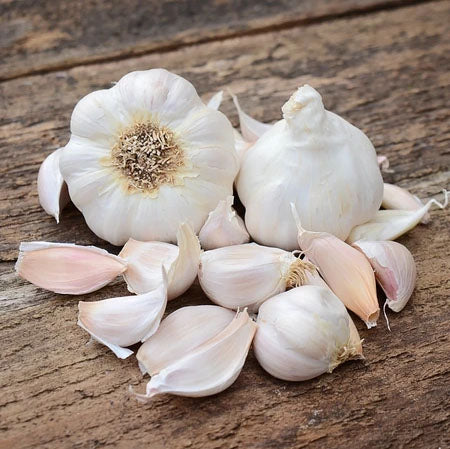
Need garlic that grows nearly anywhere and keeps almost all year? Plant this one. It’s the classic silverskin, with pure white wrappers and an everyday garlic taste.
Silver White thrives in cold and hot gardens alike. Each fat bulb holds eight to twelve cloves. Expect a late harvest, because silverskins mature after most other garlic.
The flavor starts mild. It gets a stronger bite as it sits in storage. The soft stems braid into long-lasting garlic ropes.
Type and climate: Silverskin softneck, flexible in any climate
Flavor: Mild, stronger after storage
Storage: Up to 12 months
Best for: Everyday cooking and braids
9. Lorz Italian
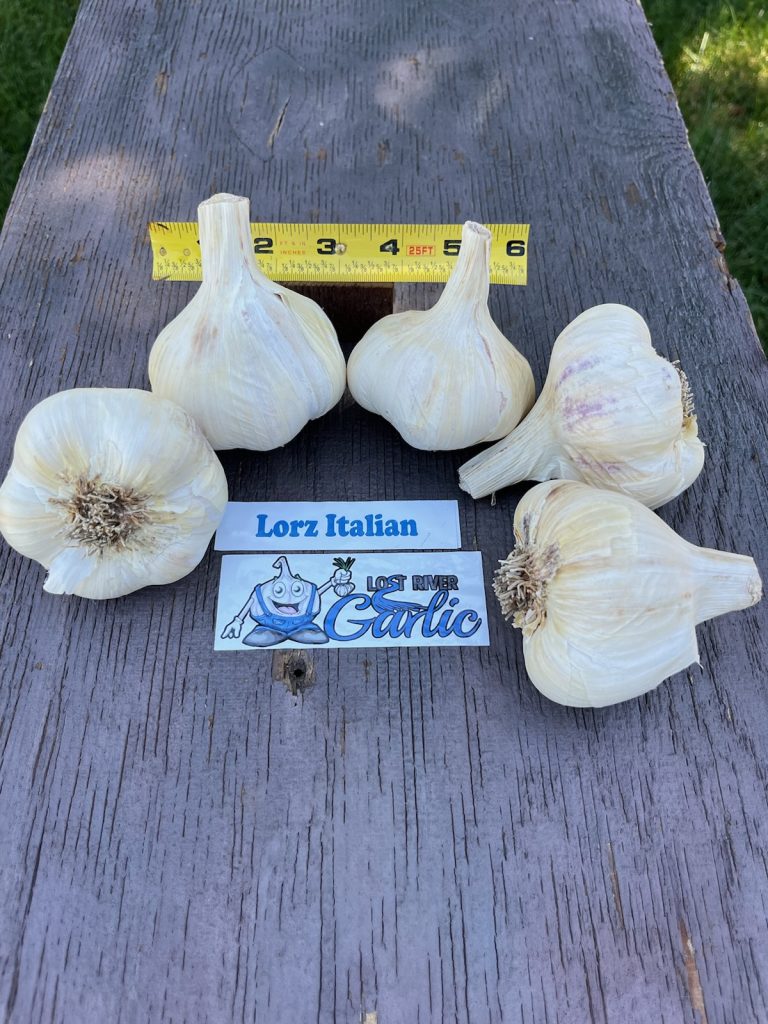
Most Italian garlics play it mild. This one doesn’t. Lorz Italian packs a bold, spicy bite that builds in your mouth and lingers long after the meal.
This heirloom came from Italy to Washington State before 1900. Hot summers make the flavor even bolder. The bulbs hold large outer cloves with smaller ones in the center.
Here’s my tip. Plant the big outer cloves. Save the small inner ones for the kitchen.
Type and climate: Artichoke softneck, loves hot summers
Flavor: Bold, spicy, lingering
Storage: 6 to 8 months
Best for: Italian dishes and garlic lovers
10. Elephant Garlic
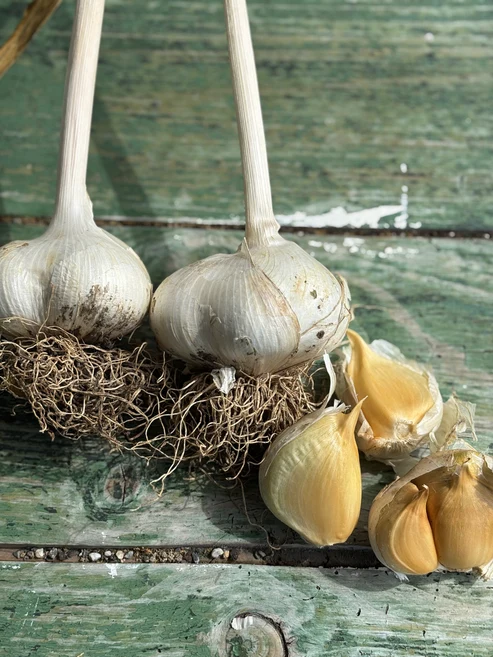
Here’s the fun one. Elephant garlic isn’t true garlic at all. It’s a leek relative that grows softball-size bulbs. Each one holds just three or four giant cloves.
The flavor is mild and slightly sweet. Roast the cloves whole, and they turn soft and creamy. If strong garlic bothers you, this is your pick.
Give each plant room. Space the cloves six to eight inches apart. Plan on six to eight months from planting to harvest.
Type and climate: Leek relative, adaptable to many climates
Flavor: Mild and sweet
Storage: Shorter than true garlic
Best for: Roasting and mild-flavor fans
Garlic Varieties at a Glance
| Variety | Type | Best Winters | Flavor | Storage |
|---|---|---|---|---|
| Music | Porcelain hardneck | Cold | Bold, medium to hot | 6+ months |
| Spanish Roja | Rocambole hardneck | Cold | Rich, spicy raw | 4 to 6 months |
| Chesnok Red | Purple stripe hardneck | Cold to moderate | Rich, medium-hot | 4 to 6 months |
| Korean Red | Asiatic hardneck | Cold to mild | Mellow to zingy | 4 to 6 months |
| Red Janice | Turban hardneck | Mild to moderate | Hot raw, sweet baked | A few months |
| Burgundy | Creole | Mild to hot | Sweet, rich, moderate heat | 7 to 9 months |
| Inchelium Red | Artichoke softneck | Cold to warm | Mild and rich | 6 to 10 months |
| Silver White | Silverskin softneck | Any | Mild, classic | Up to 12 months |
| Lorz Italian | Artichoke softneck | Moderate to hot | Bold, spicy | 6 to 8 months |
| Elephant | Leek relative | Many | Mild, sweet | Shorter than garlic |
Can’t Decide? Plant One of These Trios
I like to plant three varieties with three jobs. One brings big flavor. One works as the everyday cook’s garlic. One keeps for months. You learn fast which one loves your garden.
Cold winters: Music for big flavor, Chesnok Red for baking, and Silver White as your long keeper.
Moderate winters: Spanish Roja for rich flavor, Inchelium Red for everyday cooking, and Korean Red for an early harvest.
Mild winters: Red Janice for an early harvest, Lorz Italian for bold flavor, and Burgundy for a sweet garlic that keeps.
Plant six to ten cloves of each type. Then watch which one wins.
FAQ
Can I plant garlic from the grocery store?
You can, but it’s a gamble. Many bulbs get treated to stop sprouting, and some carry disease. Seed garlic costs a little more and grows far better.
How many varieties should a beginner plant?
Start with three. Pick one flavor star, one everyday garlic, and one long keeper. You’ll learn what your soil and climate prefer without a big investment.
Can I grow hardneck garlic in a warm climate?
Yes, if you choose the right types. Look at Asiatic, Turban, and Creole garlics. Chill hardneck cloves in your fridge for a few weeks before planting.
Should I cut the scapes?
On most hardnecks, yes. Snap them off when they curl so the plant puts its energy into the bulb. Asiatic garlic keeps its bulb size either way, so you can leave those scapes on.
How far apart should I plant garlic?
Space cloves about six inches apart in rows roughly a foot apart. Plant them two to three inches deep, pointed end up. Give elephant garlic six to eight inches.
Time to Plant Your Garlic
Choosing garlic gets easier when you start with your winter. Pick three varieties, plant them this fall, and see which one wins in your garden.
Next summer, you’ll pull bulbs that no grocery shelf can match. Save your best ones, and you can replant them for years.