Minimalist Front Yard Landscaping: 15 Clean, Low-Effort Ideas That Look High-End

Front yards get messy fast. A few extra pots, three types of mulch, and a dozen plants that don’t match. Soon the whole space feels busy.
Minimalist landscaping fixes that. You use fewer plants, fewer materials, and more open space. The result looks calm, sharp, and easy to care for.
I picked 15 front yard landscaping ideas that prove simple can still look stunning. Let’s start.
The Rules Behind a Minimalist Front Yard
- Limit your plant palette: Pick two or three plants and repeat them.
- Repeat one shape: Round, pointed, or linear all work. Choose one and stick with it.
- Leave breathing room: Empty space is part of the design, so don’t fill every gap.
- Add one focal point: A single tree, a bold door, or a sculptural plant is enough.
15 Low Effort Landscaping Ideas for Front Yard
1. Black Slate and White Pebble Front Garden
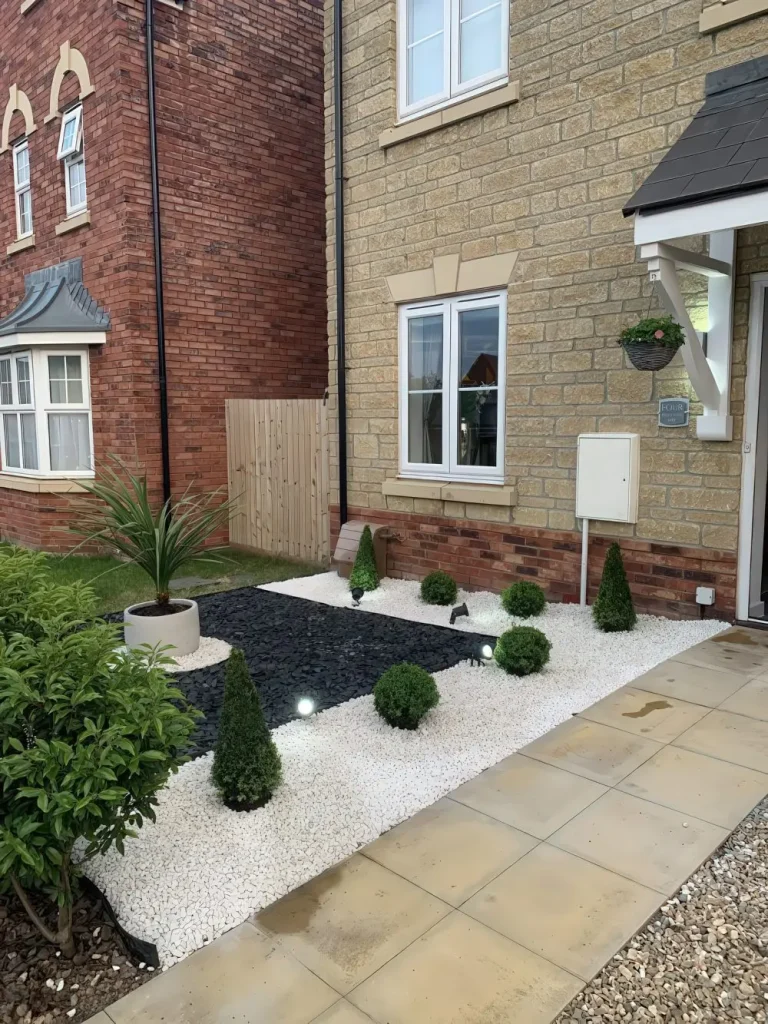
Material formula: black slate + white marble chips + clipped boxwood + uplights
I love how this tiny front garden uses only two stone colors. The white pebbles wrap the house like a soft frame. The black slate cuts through them in one bold stripe.
Round and cone-shaped boxwoods sit in the gravel like quiet sculptures. A potted cordyline adds height on the left. Small ground lights make the whole scene glow at night.
Why it works:
- Black and white contrast makes a small space look sharper.
- Repeated boxwood shapes keep the planting tidy.
- Stone replaces lawn, so you skip mowing.
Upgrade idea: Lay landscape fabric under the stone first. Weeds will have a much harder time breaking through.
Read more: 13 Front Yard Flower Beds Against the House
2. Stepping Stone Path Through Soft Grasses
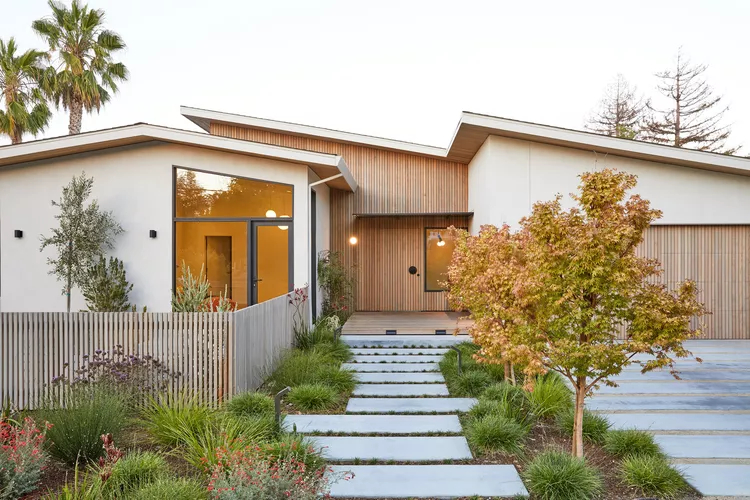
This modern home shows how far one good path can go. Wide, pale stepping stones lead you straight to the wooden entry. Low ornamental grasses sit on both sides, and they soften every edge.
A single Japanese maple adds warm orange color near the driveway. You get a focal point without any extra clutter.
The slim wooden fence echoes the siding, so the whole front feels connected.
Best for: Modern homes, mild climates, and anyone who wants a path that doubles as a design feature.
Landscape note: I’d plant the grasses in clusters of three or five. Odd numbers look natural. Keep one stone’s width of space between each plant and the path so the grass never blocks your steps.
3. White Modern Home with a Single Tree
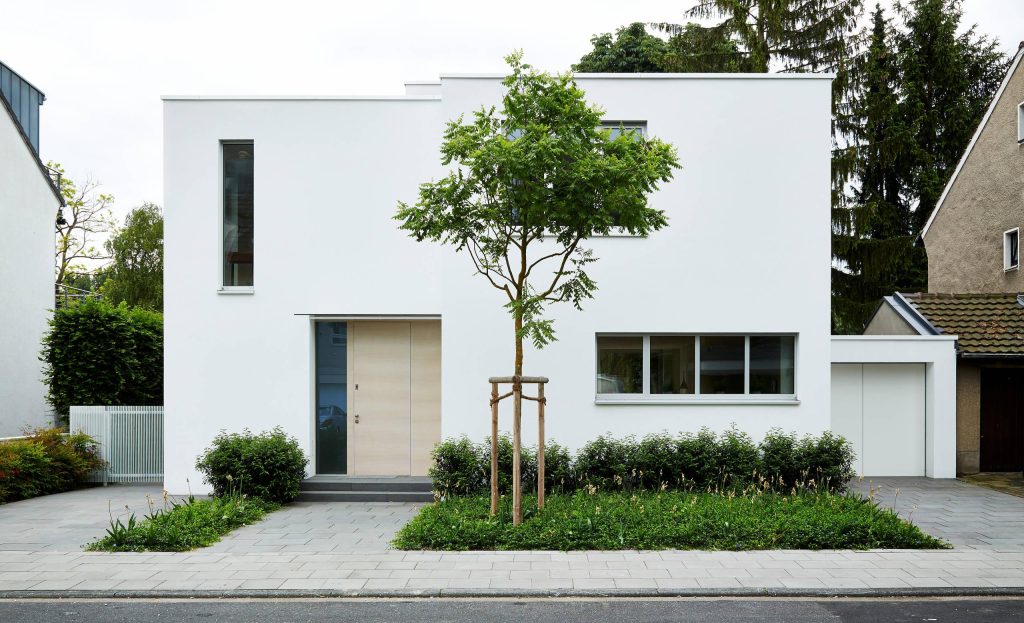
Here’s a lesson in restraint. The house is a clean white box, and one slim tree stands right in the middle. That’s the whole show. It works beautifully.
Low shrubs trimmed to the same height run along the base of the wall. A carpet of groundcover fills the bed in front. Gray pavers tie the driveway and walkway together.
Why it works:
- One tree gives the plain facade a clear center.
- Matching shrub heights create a calm, even line.
- Groundcover replaces grass and needs far less care.
Proportion tip: Choose a tree with a light, airy canopy. A heavy one would hide the architecture you want people to see.
4. Gravel, Corten Steel, and Agave Garden
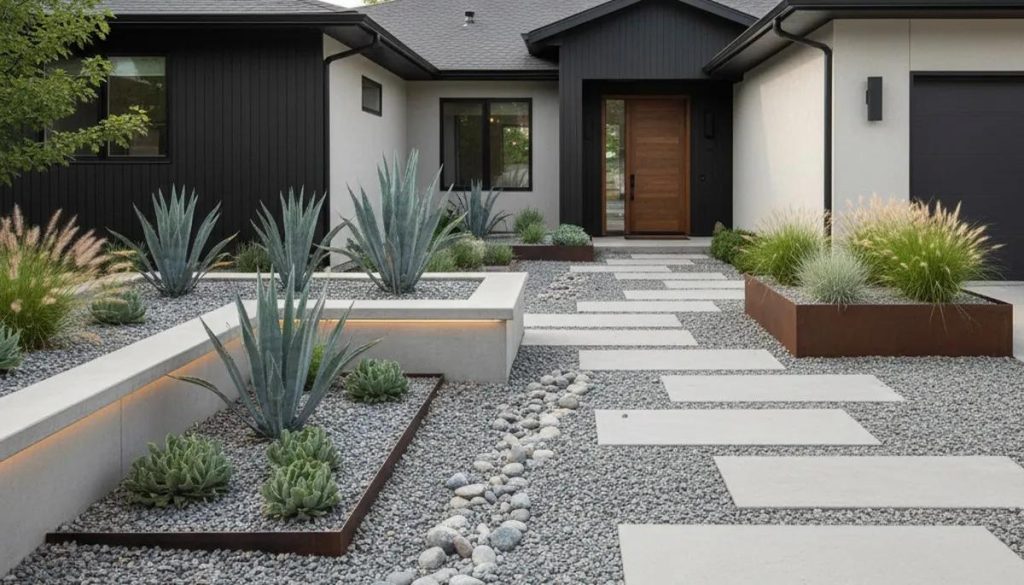
If you want drama, try this one. Gray gravel covers the ground. Rust-colored steel planters hold spiky agaves and soft grasses. Wide concrete pavers lead you to a wooden door.
I’m a big fan of the contrast here. The sharp blue agaves look bold next to the feathery grasses. A thin line of river rocks adds a gentle curve to all those straight edges.
Material formula: gray gravel + corten steel edging + poured concrete pavers + blue agave
The low wall also hides a strip of warm light. It makes the entry feel welcoming after dark.
Maintenance note: This yard needs very little water once the plants settle in. Rake the gravel now and then, and you’re done.
5. Spanish Bungalow with a Gravel Courtyard
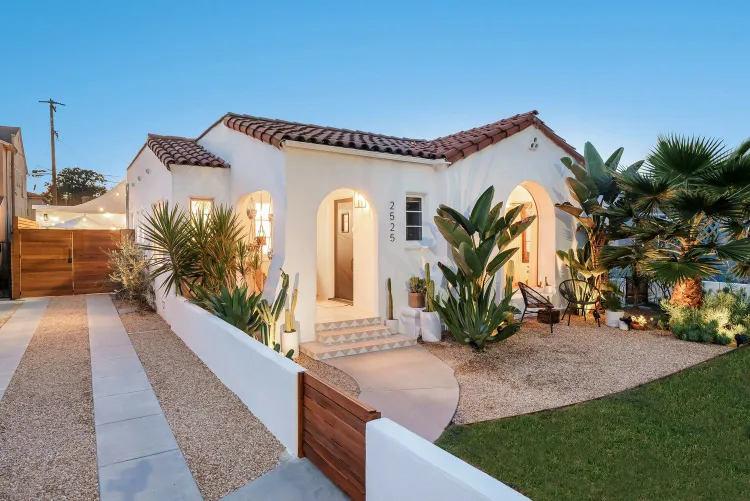
White stucco walls and a red tile roof set the mood here. The landscaping stays simple so the house can shine. Pale gravel replaces the lawn in front, and a few big-leaf plants add height.
A low white wall wraps the entry. It creates a private courtyard feel without blocking the view. Tall succulents and palms bring a relaxed, sunny look.
Best for: Warm, dry climates and small lots.
Landscape note: Choose plants with bold, sculptural leaves. They need fewer companions to look good. Space them far apart, and let the gravel fill the gaps. That empty space is what keeps this look minimal.
What to avoid: Don’t add small decorative pots around the steps. They would compete with the arched doorway.
6. Concrete Slab Walkway with Grass Strips
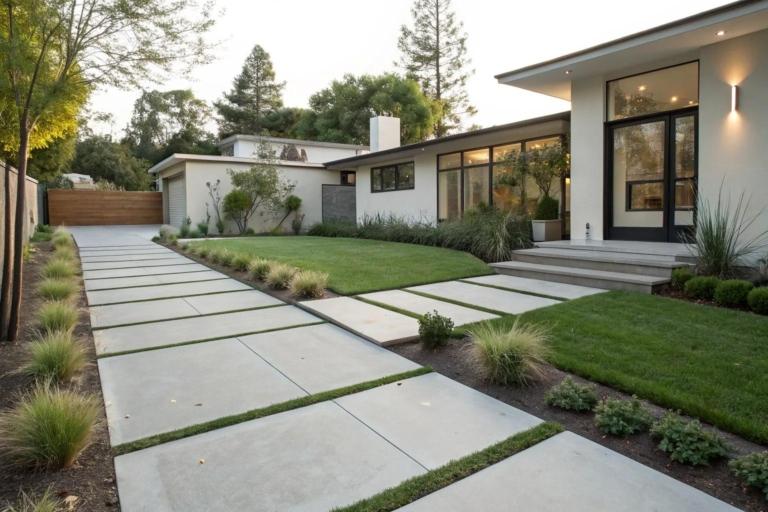
This path looks like art. Big concrete slabs sit at gentle angles, and thin strips of grass run between them. The pattern guides your eye toward the front door.
Low grasses line the bed on the left. Trimmed shrubs sit near the entry on the right. A clean green lawn fills the middle, so the yard feels open and fresh.
Copy the look:
- Use large slabs instead of small pavers. Fewer joints mean a cleaner surface.
- Keep the grass strips narrow, about two to three inches wide.
- Repeat one grass variety along the whole border.
Lighting idea: Add a single wall light beside the door. I’d skip path lights here. The slabs already do the guiding.
7. Cypress Trio Against a Cream Stucco Facade
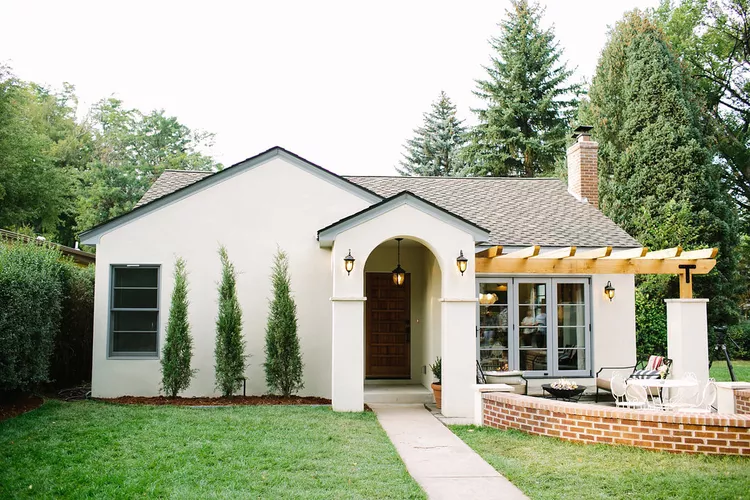
Three slim evergreens do all the work in this front yard. They stand in a neat row beneath the front windows. Their tall, narrow shape adds height without taking up space.
The rest of the yard stays simple. You see a green lawn, a plain walkway, and a small brick patio on the side. Nothing fights for attention.
Plant formula: columnar evergreens x 3 + mulch strip + open lawn
Why it works:
- Repeating one plant creates rhythm.
- Upright shapes suit narrow beds.
- Mulch keeps the base tidy and holds in moisture.
Upgrade idea: Swap the dark mulch for light gravel. It would brighten the base and match the cream walls.
8. White Brick Entry with Boxwoods and One Tree
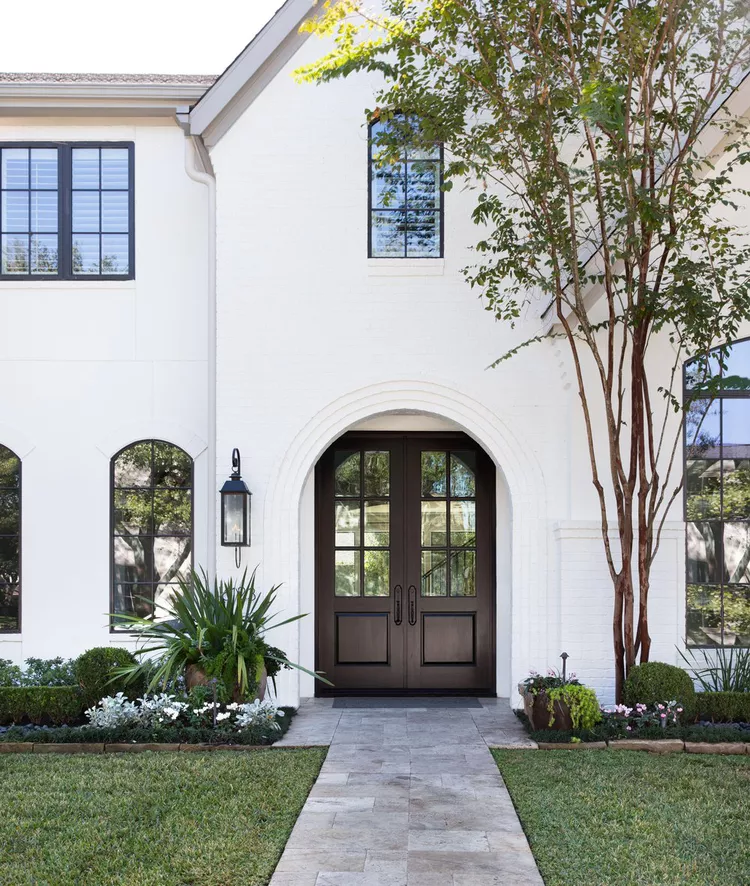
This front entry feels elegant and calm. A creamy white brick wall frames a pair of dark wood doors. The arched shape adds softness without any extra decoration.
Small boxwood balls sit on each side, and a crepe myrtle leans over the walkway. Its peeling bark adds warm color all year. Two large pots hold simple green foliage.
Best for: Traditional homes that want a cleaner, quieter look.
Landscape note: Keep the flowers to one color, like white. It helps the bed feel calm. Trim the boxwoods twice a year so they stay round and crisp.
What to avoid: Skip brightly colored pots. Neutral planters keep the focus on the door.
9. Ornamental Grasses Framing a Charcoal Door
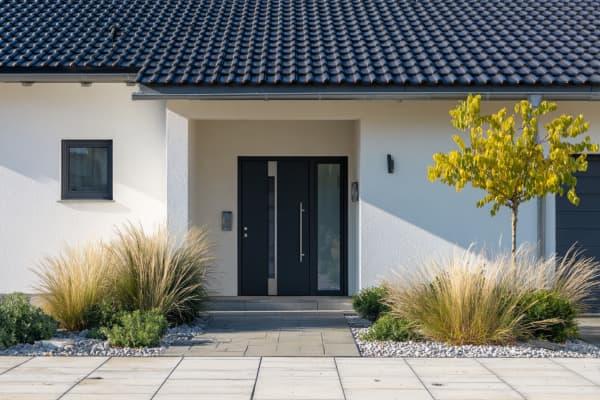
Plant formula: feathery grasses x 2 clumps + white pebbles + one small flowering tree
I love how this entry feels so calm. A dark tile roof and a charcoal door sit against smooth white walls.
Two big clumps of grass sit on each side of the path. They look soft next to all those clean lines.
A small tree with golden leaves leans in from the right. It adds a splash of color without stealing the show. White pebbles run along the bed edges and keep everything sharp.
The grasses sway in the breeze. That movement makes the front yard feel alive, even though the design stays simple.
Landscape note: I’d plant each clump about two feet from the pavers. The grass will arch outward as it grows. You don’t want it brushing your legs every time you walk by.
Upgrade idea: Add one small wall light beside the door. It will glow against the white wall at night.
10. Olive Tree Courtyard with Gravel and Terracotta
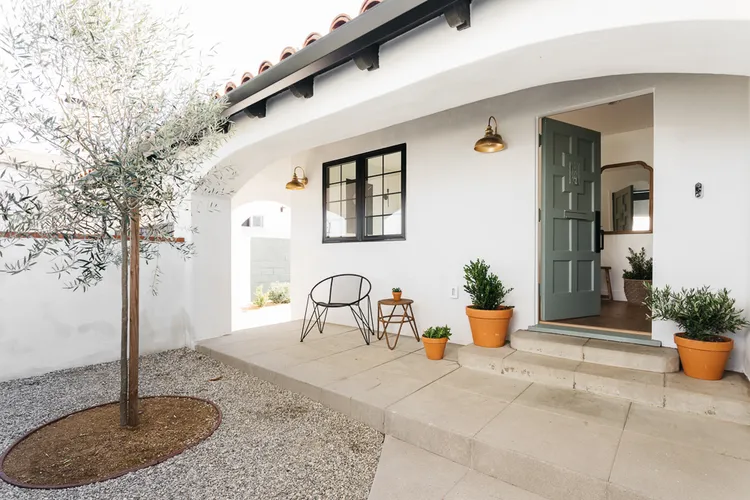
Best for: Small courtyards, warm climates, and Spanish or Mediterranean style homes.
This little entry proves you don’t need a big yard. One olive tree grows from a simple round bed of mulch. Pale gravel surrounds it. A thin metal ring keeps the two materials apart.
Three terracotta pots sit by the sage green door. Each one holds a tidy green shrub. Brass wall lights add a warm glow that suits the white walls.
I like how every piece has a job. The tree gives shade. The pots add color. The gravel stays tidy with almost no work.
Why it works:
- Warm terracotta pops against white stucco.
- Matching pots look intentional, not cluttered.
- A single tree feels more special than a crowded bed.
What to avoid: Don’t line the gravel with too many extra plants. The empty space is the best part.
11. Layered Evergreens in a Granite Bed
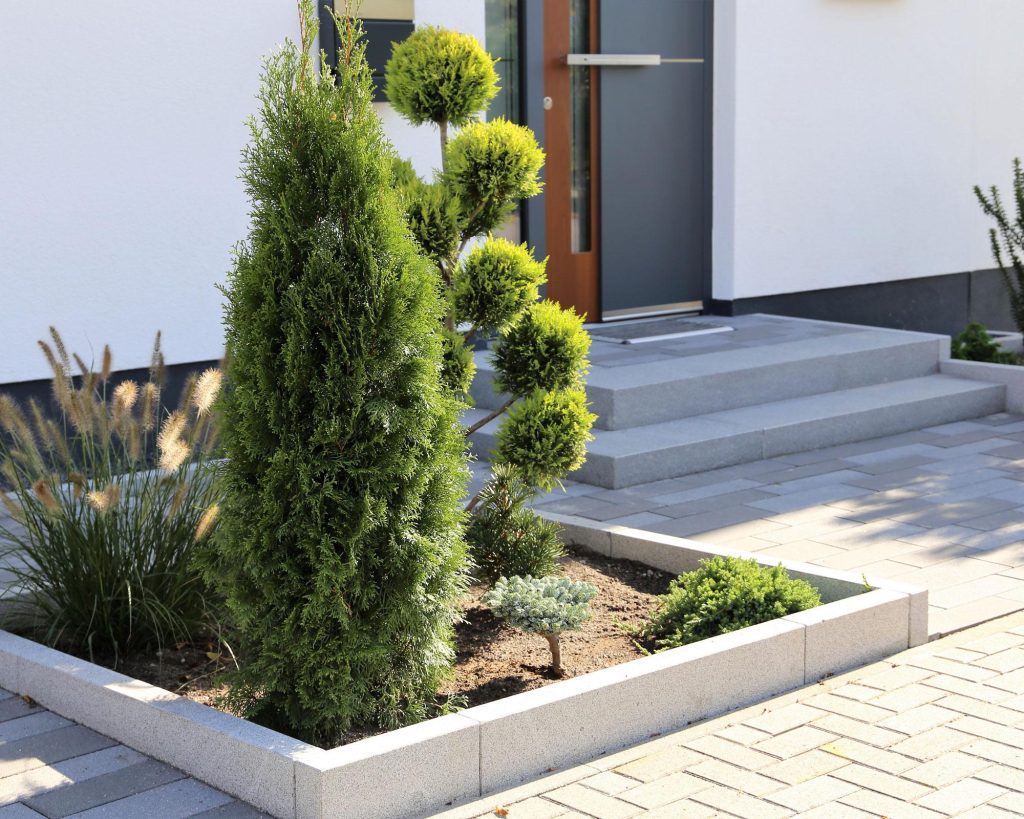
Evergreens are a minimalist’s best friend. This corner bed packs in lots of texture, yet it still feels neat.
A tall, slim arborvitae anchors the left side. A cloud-pruned shrub rises behind it like a green sculpture.
Short grass tufts and a tiny blue conifer fill the front. A low juniper spreads along the right edge. A pale granite curb frames the whole bed with crisp, straight lines.
Why it works:
- Different shapes share one color family, so nothing feels random.
- The granite curb matches the steps and the pavers.
- Evergreens look good all year, even in winter.
Proportion tip: Put your tallest plant at the back corner. Let the shorter ones step down toward the path. The bed will look full without feeling crowded.
Maintenance note: Prune the cloud shrub once or twice a year. Keep the clean shape, and it will stay a showpiece.
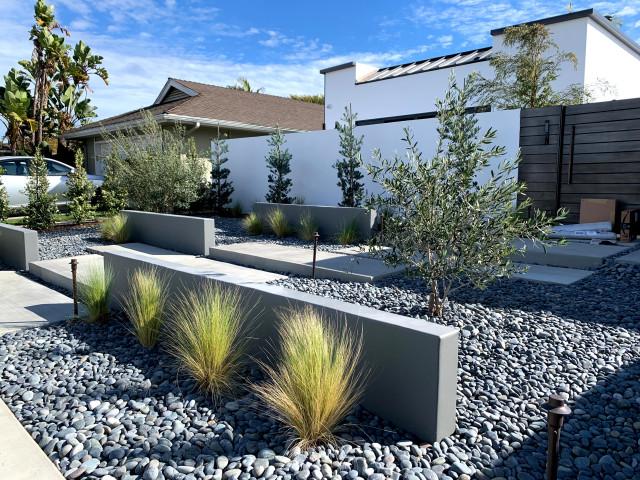
12. Low Concrete Walls with River Pebbles
Here’s a front yard with no lawn at all. Smooth gray walls cut through a sea of dark river pebbles. Soft grasses sit in front of the walls. A young olive tree rises on the right.
The walls do something clever. They create gentle levels, so the yard feels designed instead of flat. Slim evergreens stand in the back like quiet green columns.
I’d call this a low-water garden that looks expensive. Dark stones, gray concrete, and pale grass make a calm palette.
Material formula: dark river pebbles + gray stucco walls + feather grass + one olive tree
Landscape note: Space the grasses about three feet apart. They’ll spread over time, and the extra room keeps the look clean.
Lighting idea: Small path lights along the wall edge guide visitors after dark. Choose bronze fixtures. They blend into the stones.
13. Oversized Planters at a Wooden Entry
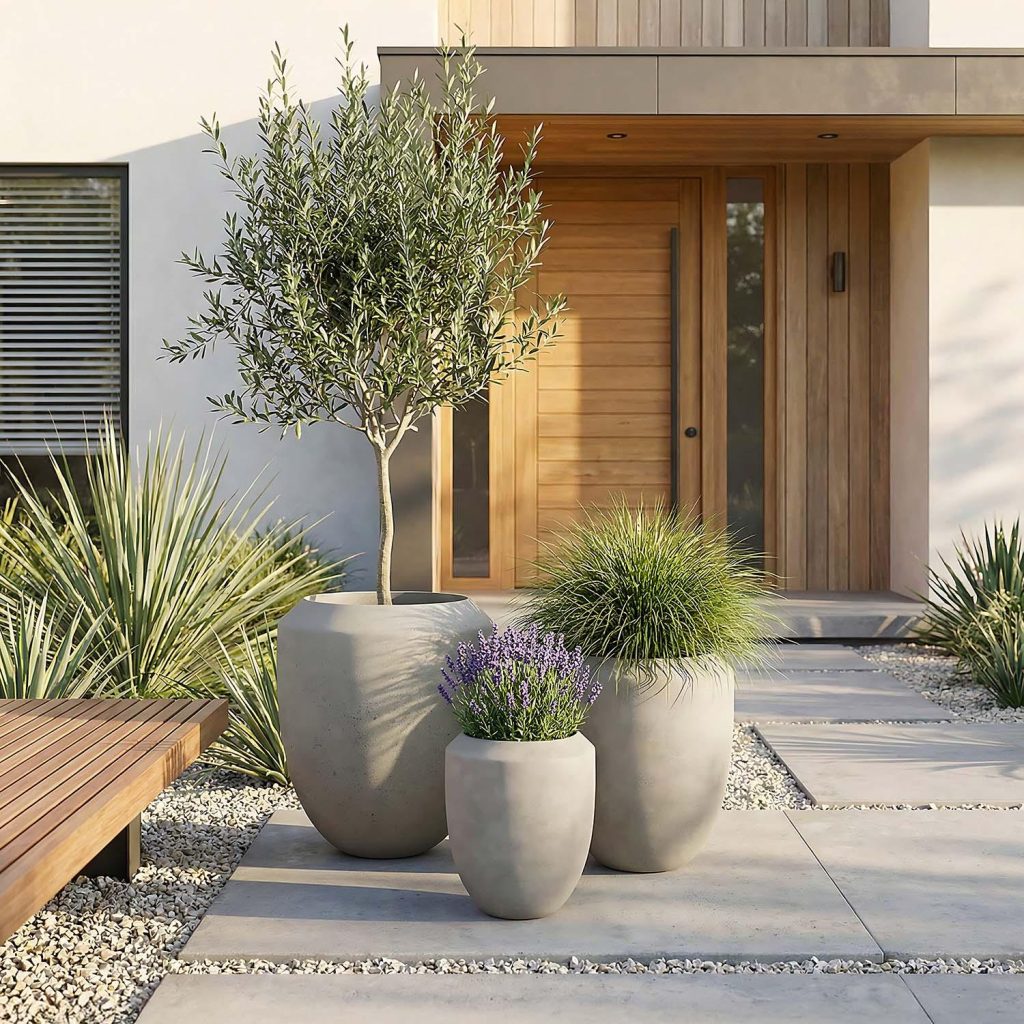
Copy the look:
- Group three planters in the same color and finish.
- Pick one tall plant, one mid-height plant, and one short plant.
- Choose a plant for each pot that adds a different texture.
Don’t have much room for beds? Try this idea. Three round concrete pots do all the work here. An olive tree stands tallest.
A tuft of green grass fills the second pot. Purple lavender sits in the smallest one.
Wide slabs lead to a warm wood door. Gravel fills the gaps and lets rain soak into the ground. Spiky plants on the left add a bold, sculptural touch.
The pots look best in odd numbers. Three feels natural, and it keeps the corner from looking stiff.
Upgrade idea: Slide a low wooden bench next to the planters. It gives you a place to sit and slip off your shoes.
14. Clean Lawn with Rounded Shrubs
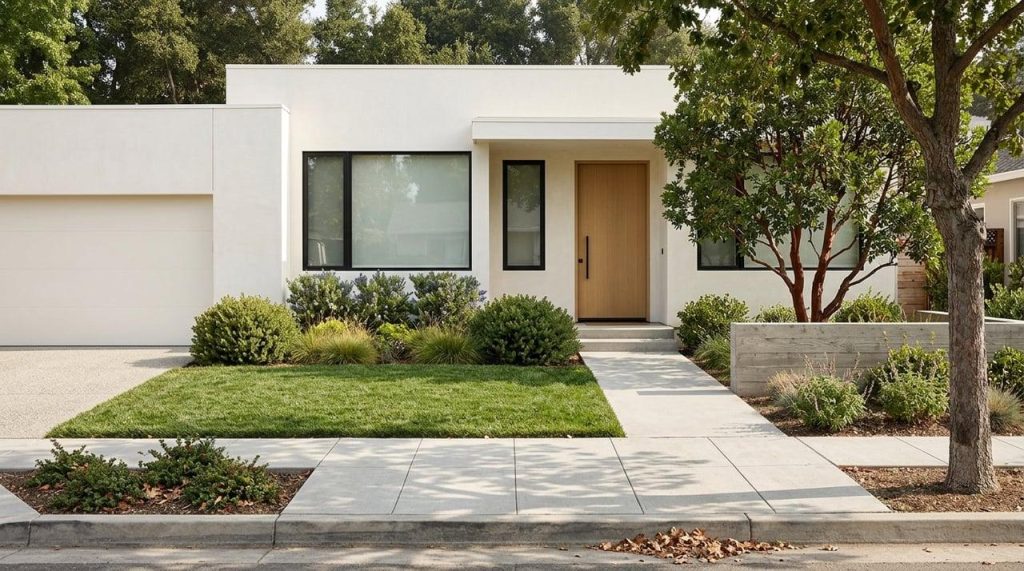
Not every minimalist yard needs to skip grass. This flat-roofed home keeps one tidy rectangle of lawn near the street. The shape feels sharp and simple.
Rounded shrubs fill the bed behind the grass. A few soft grasses sit between them.
Everything stays low, so you can still see the large window and wood door. A mature tree on the right gives shade and some warm red bark.
Why it works:
- The straight lawn edge matches the crisp lines of the house.
- Rounded shrubs add softness to a boxy building.
- A wide concrete walkway leads the eye right to the door.
Best for: Families who still want a little lawn for kids or pets.
What to avoid: Skip tall plants in front of the large window. They would block your light and your view.
15. Desert Modern with Palms and a Gray Wall
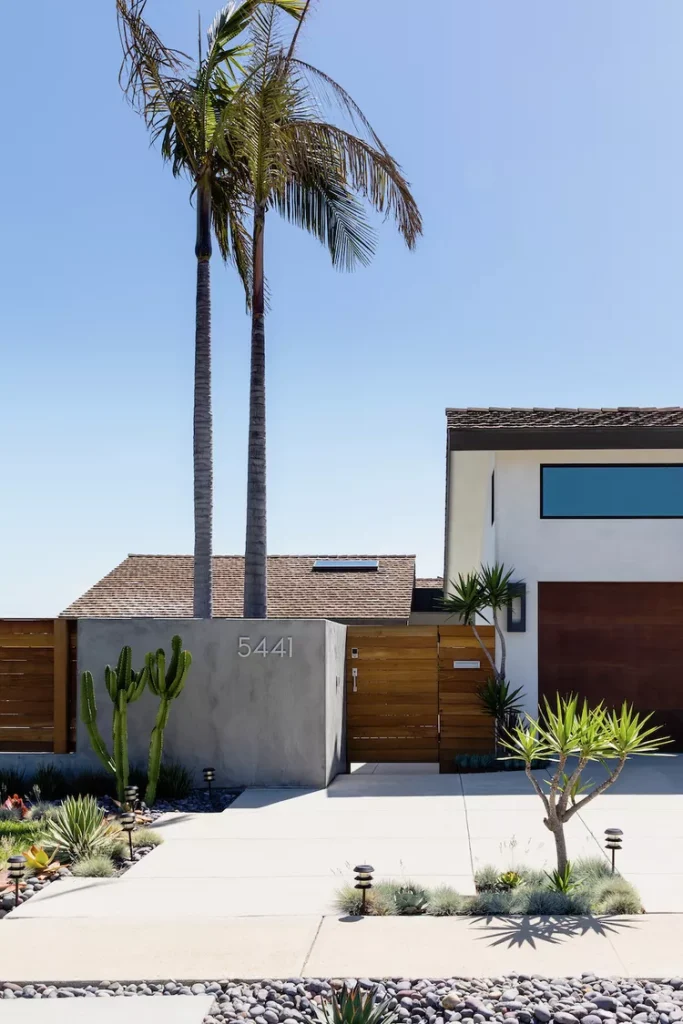
This final idea feels like a mini resort. A smooth gray wall carries the house numbers. A warm wood gate sits beside it. Two tall palms rise in the background and draw your eye toward the sky.
The planting stays low and sculptural. Tall green cacti stand near the wall. A spiky tree stands by the garage. River stones cover the ground.
I love that the house number does double duty. It acts as a bold design feature and helps visitors find your door.
Material formula: gray stucco wall + horizontal wood gate + river stones + cactus and palm
Landscape note: Keep the plant list short. Pick two or three bold shapes and let the stones fill the rest. Small path lights add safe footing at night.
Upgrade idea: Paint the wall a soft warm gray. It will blend with both the concrete drive and the wood.
FAQs
1. What makes a front yard minimalist?
A minimalist front yard uses few plants, few materials, and lots of open space. Clean lines and repeated shapes keep it calm.
2. Are minimalist front yards low maintenance?
Most are. Gravel, groundcover, and ornamental grasses need little water and little trimming. Rake the gravel and prune the shrubs once or twice a year.
3. What plants work best for a minimalist look?
Choose plants with strong shapes, like ornamental grasses, boxwood, olive trees, and columnar evergreens. Repeat the same plants instead of mixing many types.
4. Can I keep my lawn and still go minimalist?
Yes. Keep the lawn small with straight edges. Pair it with rounded shrubs and a simple path for a clean, modern look.
Final Thoughts
A minimalist front yard doesn’t mean boring. It means choosing a few good things and giving them space. Start with one material, one focal point, and a short plant list. Add more only if the yard really needs it.
I hope these 15 ideas give you a clear plan. Pick the one that fits your home, then make it your own.