Small Trees for Flower Beds: 13 Showstoppers That Won’t Crowd Your Perennials

You want height in your flower bed. But most trees are too big, too thirsty, or too greedy for the plants around them.
I’ve picked 13 small trees that play nicely with perennials. They top out around 30 feet at most, give you light shade instead of heavy shade, and offer more than one season of color.
First, I’ll show you which tree fits your bed type. Then I’ll walk through how to plant one without harming your existing flowers. After that, you get all 13 picks.
Which Small Tree Fits Your Flower Bed?
Start with the light your bed gets. That choice narrows the list fast. Then check your zone.
Dappled shade beds (hostas, ferns, astilbe): Picks 1 to 5. These trees handle light shade and filter the sun that reaches your perennials.
Sunny spring beds (bulbs and early perennials): Picks 6 to 10. They bloom early and leave room for summer flowers to take over.
Hot summer borders (coneflower, salvia, yarrow): Picks 11 and 12. They bloom when the heat peaks.
Tight, narrow beds: Pick 13. It stays only 2 to 3 feet wide.
Cold climates: Picks 2, 4, 6, 7, and 10 handle zone 4.
Warm climates (zones 7 to 9): Picks 11 and 12 love the heat.
How to Plant a Tree in a Flower Bed Without Hurting Your Perennials
A tree and a flower bed can share space. They just need a few ground rules.
Plant the tree first. Most of a tree’s feeder roots sit in the top 12 to 18 inches of soil. Digging around an established tree cuts them. Add the tree, then fill in the flowers.
Dig wide, not deep. Make the hole two to three times as wide as the root ball. Keep it no deeper than the root ball. Set the root flare, where the trunk widens, at or slightly above soil level.
Keep the soil level. Never pile soil over the roots or build a raised bed around the trunk. More than an inch or two of fill can slowly choke a tree.
Mulch like a doughnut. Spread 2 to 4 inches of mulch in a wide ring. Pull it back about 3 inches from the trunk. A mulch volcano rots bark and invites pests.
Start flowers a foot away. Plant perennials at least a foot from the trunk. Choose small plants or divisions, dig small holes, and use a hand trowel. If you hit a thick root, move over.
Skip black walnut zones. Their roots release a chemical that stunts many plants.
13 Stunning Dwarf Flowering Trees for Your Garden
1. Japanese Maple
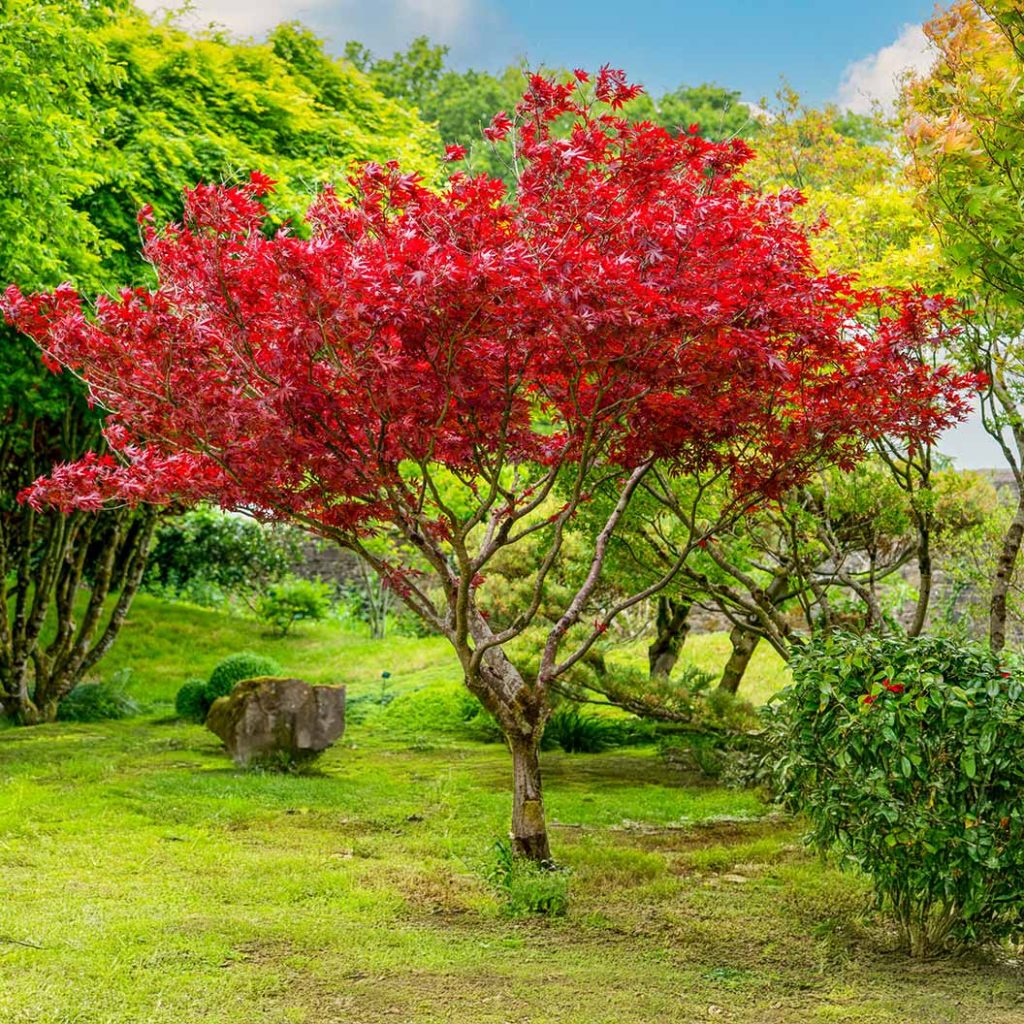
Few trees look as good beside a flower bed. The lacy leaves add texture, and the fall color stops people in their tracks.
Choose a compact cultivar, since the full-size tree can reach 20 feet. ‘Garnet’ is a lacy purple dwarf that turns scarlet in fall.
Give it dappled light or afternoon shade, plus shelter from wind. Japanese maples grow in zones 5 to 8, so most of the country can enjoy one.
Best bed: A part-shade bed with woodland perennials.
Plant under it: Hostas, ferns, and astilbe.
Watch out: In zones 7 and 8, the leaves scorch in hot, dry summers unless you give them afternoon shade or water.
2. Serviceberry
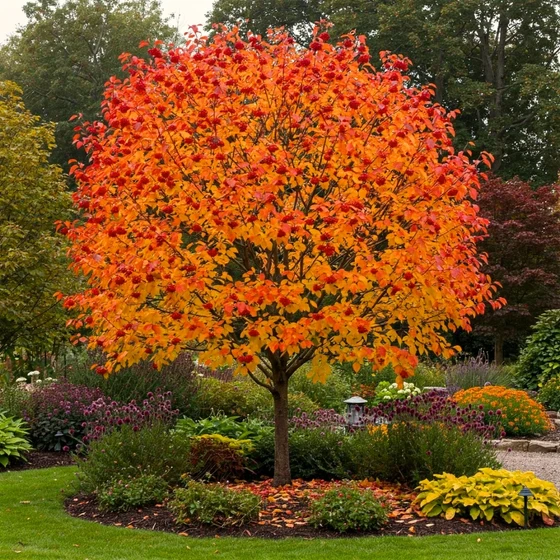
Early spring is the star here. Clusters of white flowers open just as your bulbs wake up. Summer brings purple-black berries that taste like blueberries, and the birds will beat you to most of them. Fall finishes the show with orange-red leaves.
Look for ‘Autumn Brilliance’. This hybrid grows 15 to 25 feet tall and handles zones 4 to 8. It thrives in sun or part shade and adapts to most soils.
Best bed: A sun or part-shade bed full of spring bulbs.
Plant under it: Daffodils, columbine, and other spring bloomers.
Watch out: Serviceberry sends up suckers. Snip them for one clean trunk, or let them fill in for a multi-stem look. Skip the low “running” types, which spread into thickets.
3. Japanese Snowbell
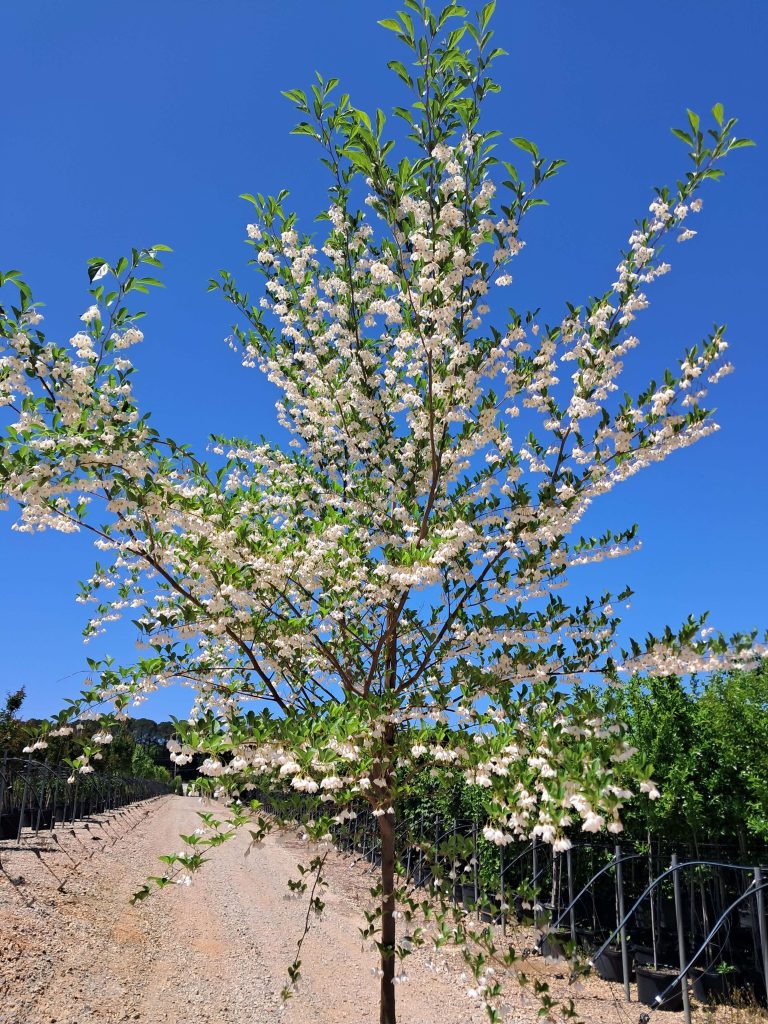
In late spring, white bell flowers dangle from the branches like tiny lanterns. You see them best from below, so plant this tree near a path or seat. Expect plenty of bees during bloom.
This tree grows slowly to about 20 to 30 feet in zones 5 to 8. Surface roots are usually not a problem, which is good news for the flowers around it.
Remove the lowest branches as it matures and you gain headroom for plants underneath. Give it moist, acidic, well-drained soil. In the coldest zones, shelter it from winter wind.
Best bed: A dappled-shade bed with rich, moist soil.
Plant under it: Foamflower, ferns, and hellebores.
Watch out: Small fruits drop in fall. The mess is light and short-lived.
4. Pagoda Dogwood
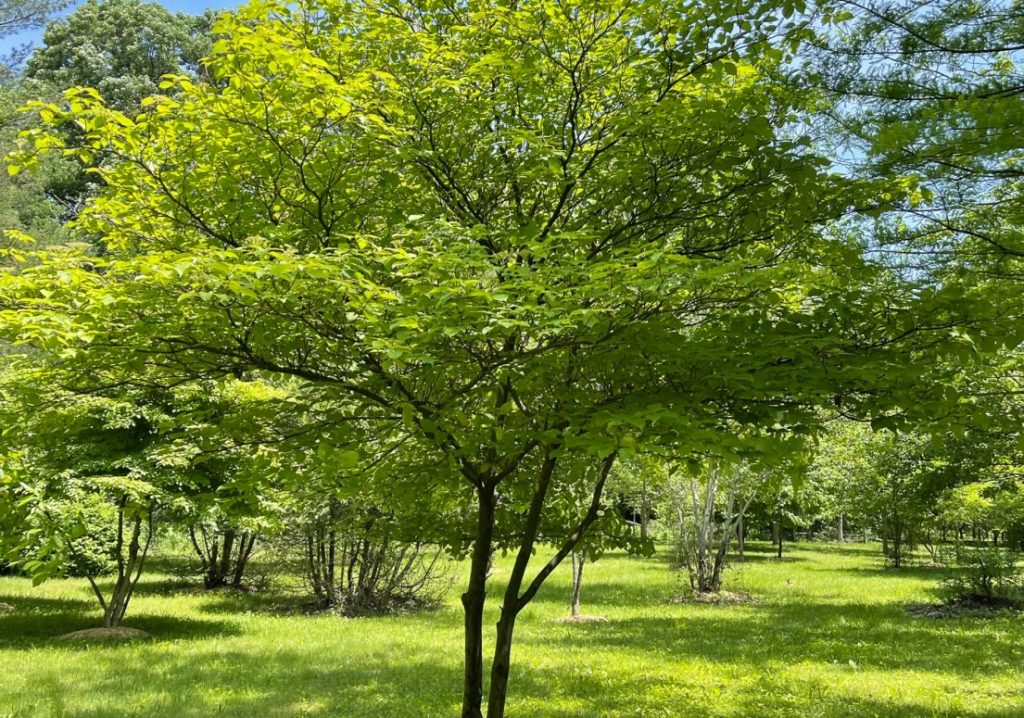
Layered branches stack like the tiers of a pagoda. That strong horizontal shape adds calm to a busy flower bed. Fragrant, creamy flower clusters appear in May and early June. Blue-black fruit follows, and birds enjoy it.
The full-size tree gets wide, so I’d pick a smaller selection. ‘Gold Bullion’ stays around 8 to 10 feet tall and wide, with golden leaves that fade to chartreuse in fall.
Pagoda dogwood grows in zones 3 to 7. It prefers cool summers, part shade, and shelter from wind.
Best bed: A cool, part-shade bed in the north.
Plant under it: Wild geranium, columbine, and bleeding heart.
Watch out: It sulks in heat and drought. Skip it if your summers run hot and dry.
5. ‘Ruby Falls’ Weeping Redbud
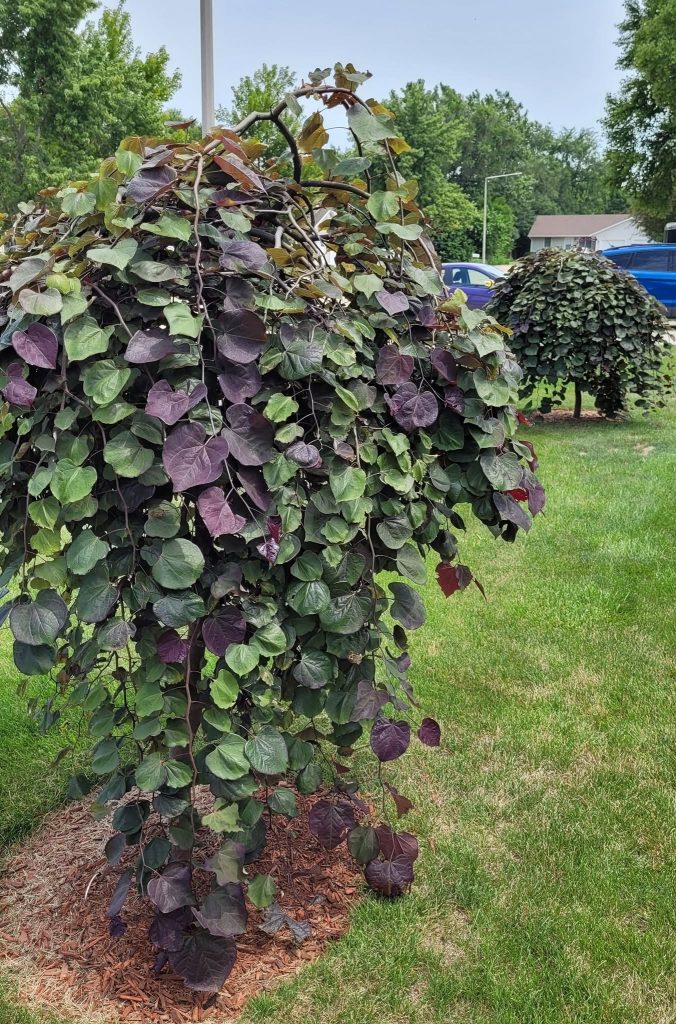
Pink-lavender blooms cover the bare stems in early spring, before any leaves show. Then glossy, heart-shaped leaves arrive in deep maroon.
They fade to green with violet streaks as summer goes on. The weeping branches add instant movement to a bed.
At about 6 to 8 feet tall, this dwarf redbud fits where a full-size redbud never could. It grows in sun or part shade and does best in zones 6 to 8. Want more height before the weep begins? Stake the leader while the tree is young.
Best bed: A bed that needs a small focal point near a path or patio.
Plant under it: Lime-green coral bells, spring bulbs, and hardy geraniums.
Watch out: Wet soil is the enemy. Plant it where water drains away.
6. Star Magnolia
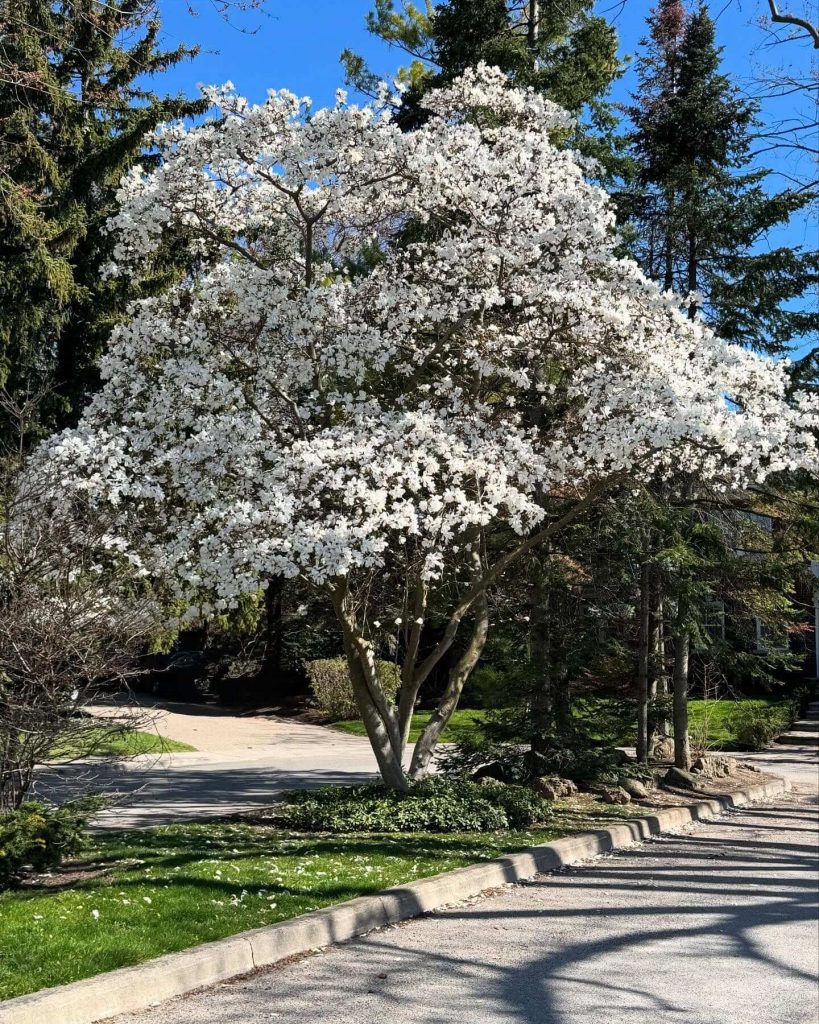
Fuzzy buds crack open in late winter or early spring. Fragrant white flowers with 12 to 18 narrow petals cover the bare branches. Few trees announce spring this early.
This tree stays compact at 15 to 20 feet tall and 10 to 15 feet wide. It grows in zones 4 to 8.
Give it full sun and moist, rich, well-drained soil. It dislikes root competition, so keep the underplanting light and shallow-rooted.
Best bed: A sunny, sheltered bed near a patio or entry.
Plant under it: Snowdrops, crocus, and other small bulbs.
Watch out: Late frost browns the open flowers. Pick a later bloomer like ‘Royal Star’ or ‘Rosea’. Avoid a south-facing wall, which wakes the buds too early.
7. Fringe Tree
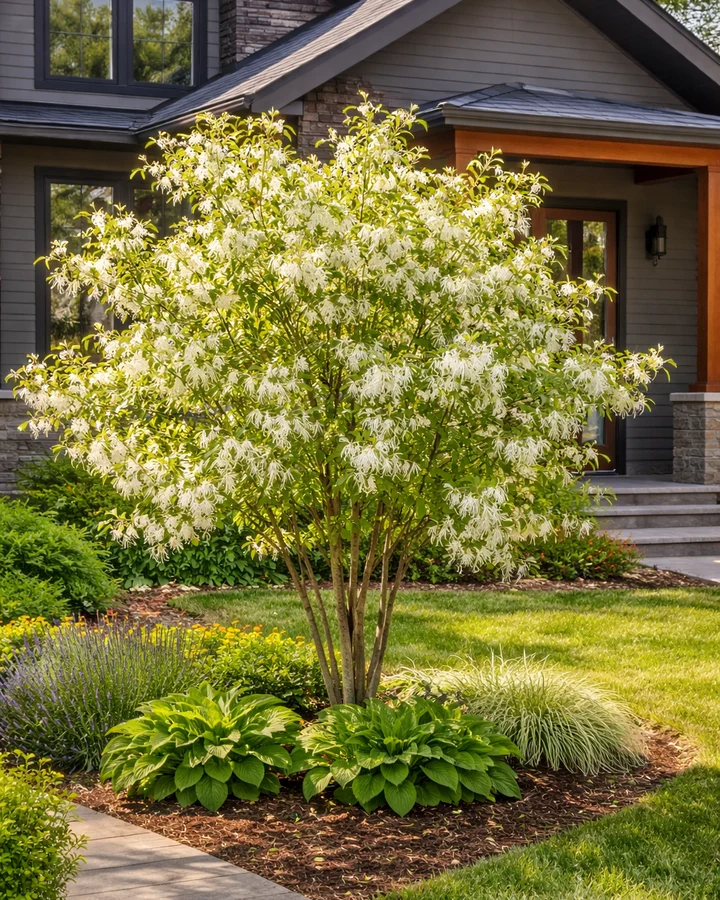
Late May and June belong to the fringe tree. Fragrant white blooms hang in soft, fringe-like clusters for about two weeks. The show fills the gap between spring bulbs and summer perennials.
This native grows slowly to 12 to 20 feet tall and wide in zones 4 to 9. It blooms best in full sun but tolerates part shade and many soil types.
Male trees have the showiest flowers. Female trees make dark blue fruit that birds love, but only if a male grows nearby.
Best bed: A sunny or lightly shaded cottage-style bed.
Plant under it: Catmint, salvia, and alliums.
Watch out: Emerald ash borer, a pest that kills ash trees, has also attacked fringe tree. Ask your local extension office if it’s active near you.
8. Kousa Dogwood
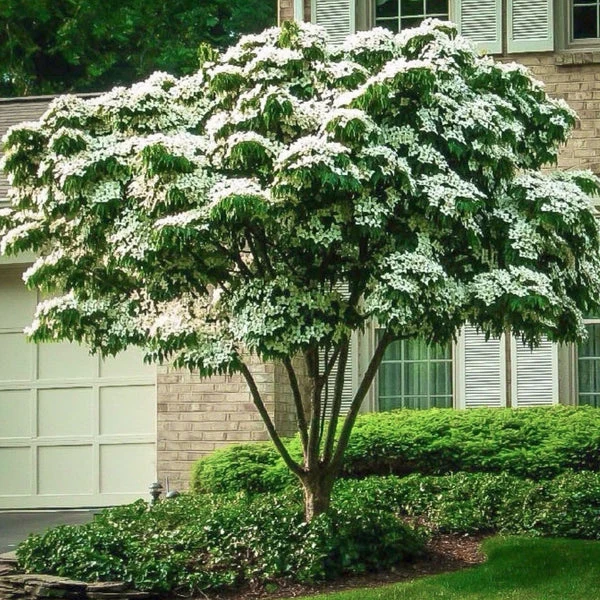
Creamy white, pointed bracts open in late May or early June. They appear after the leaves, so kousa picks up where other dogwoods leave off.
The show lasts about six weeks. Raspberry-like red fruit follows, then reddish-purple fall color and mottled bark.
Expect 15 to 30 feet in zones 5 to 8. Kousa resists the disease that plagues flowering dogwood. It also handles dry spells better. Give it full sun or part shade and moist, well-drained soil.
Best bed: A sun or part-shade bed that needs a four-season anchor.
Plant under it: Coral bells, hardy geraniums, and spring bulbs.
Watch out: The roots sit shallow, so dig gently around it. If you ever move one, do it in early spring.
9. ‘Snow Fountains’ Weeping Cherry
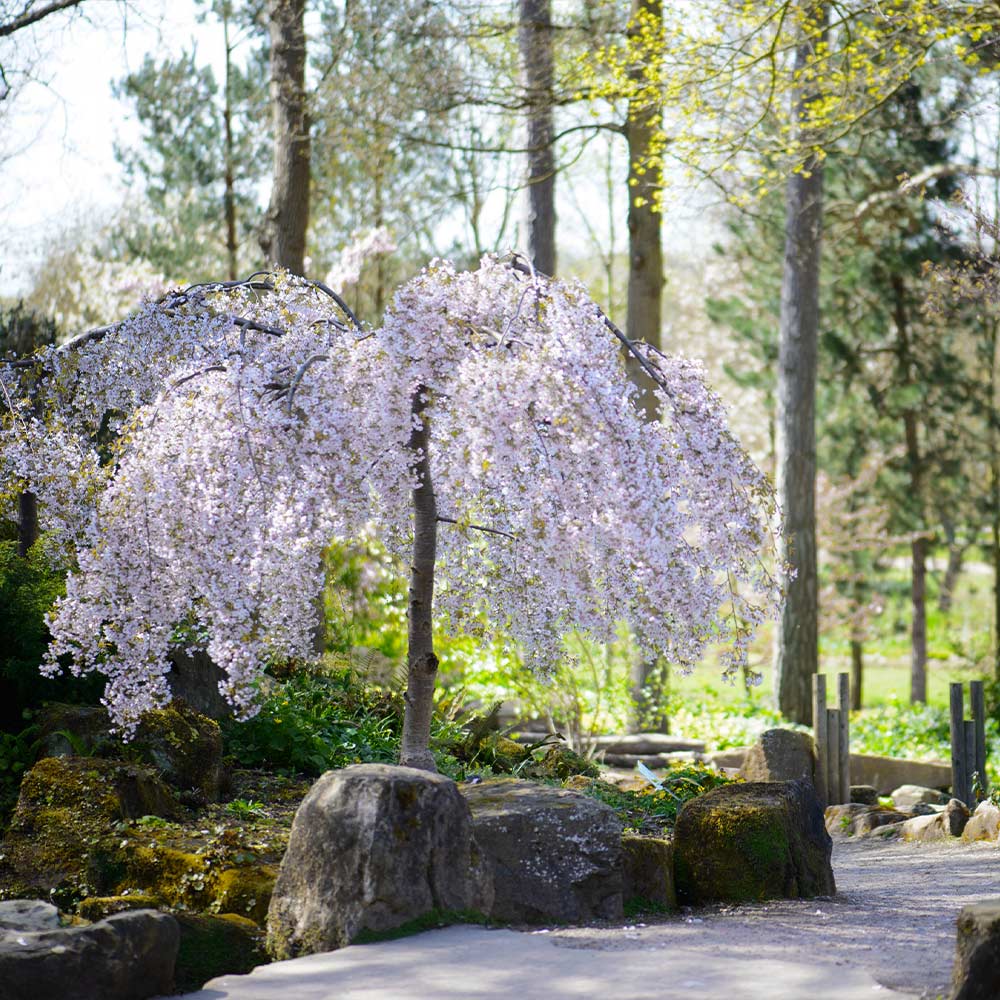
White blossoms cascade down arching branches in early to mid spring. The tree looks like a frozen fountain. Leaves turn golden in fall, and the bare weeping branches still look good in winter.
This cherry stays small at 8 to 15 feet tall and 6 to 12 feet wide. It grows in zones 5 to 8.
Plant it in full sun with well-drained soil. It blooms on old wood, so prune right after the flowers fade.
Best bed: A sunny bed that needs a spring centerpiece.
Plant under it: Daffodils, grape hyacinths, and creeping phlox.
Watch out: Cherries dislike root disturbance. Plant bulbs and small perennials with a light hand.
10. Sargent Crabapple
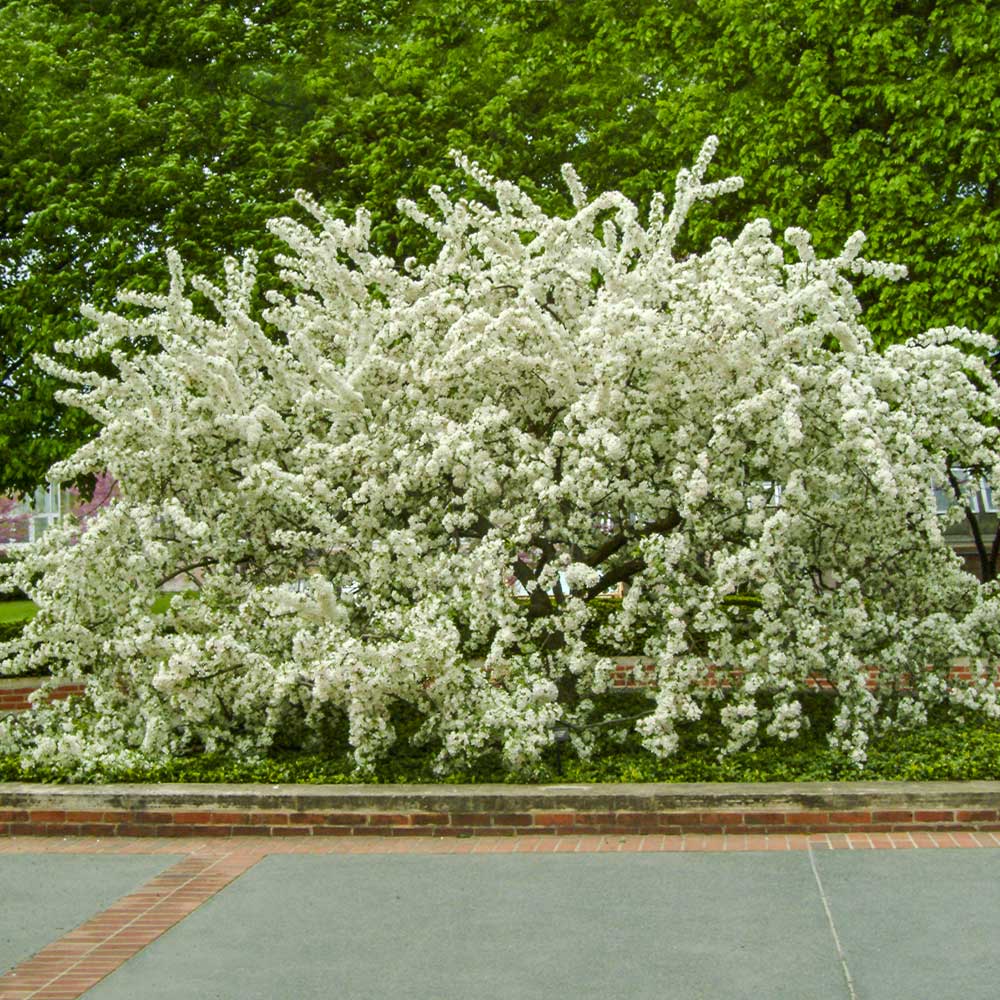
Pink buds open to fragrant white flowers in April and May. Tiny red fruit follows and hangs on into winter, which keeps the birds busy. The tree grows in a low mound, so it frames a flower bed softly.
It reaches only 6 to 10 feet tall but spreads wider than tall, up to 15 feet across. It grows in zones 4 to 8 and wants full sun.
Disease resistance is good. For a tight bed, try ‘Tina’. This dwarf type stays about 3 to 5 feet tall.
Best bed: A sunny island bed with room to spread.
Plant under it: Catmint, salvia, and yarrow.
Watch out: It blooms heavily every other year. The off year is still pretty, just lighter. Powdery mildew and Japanese beetles can show up.
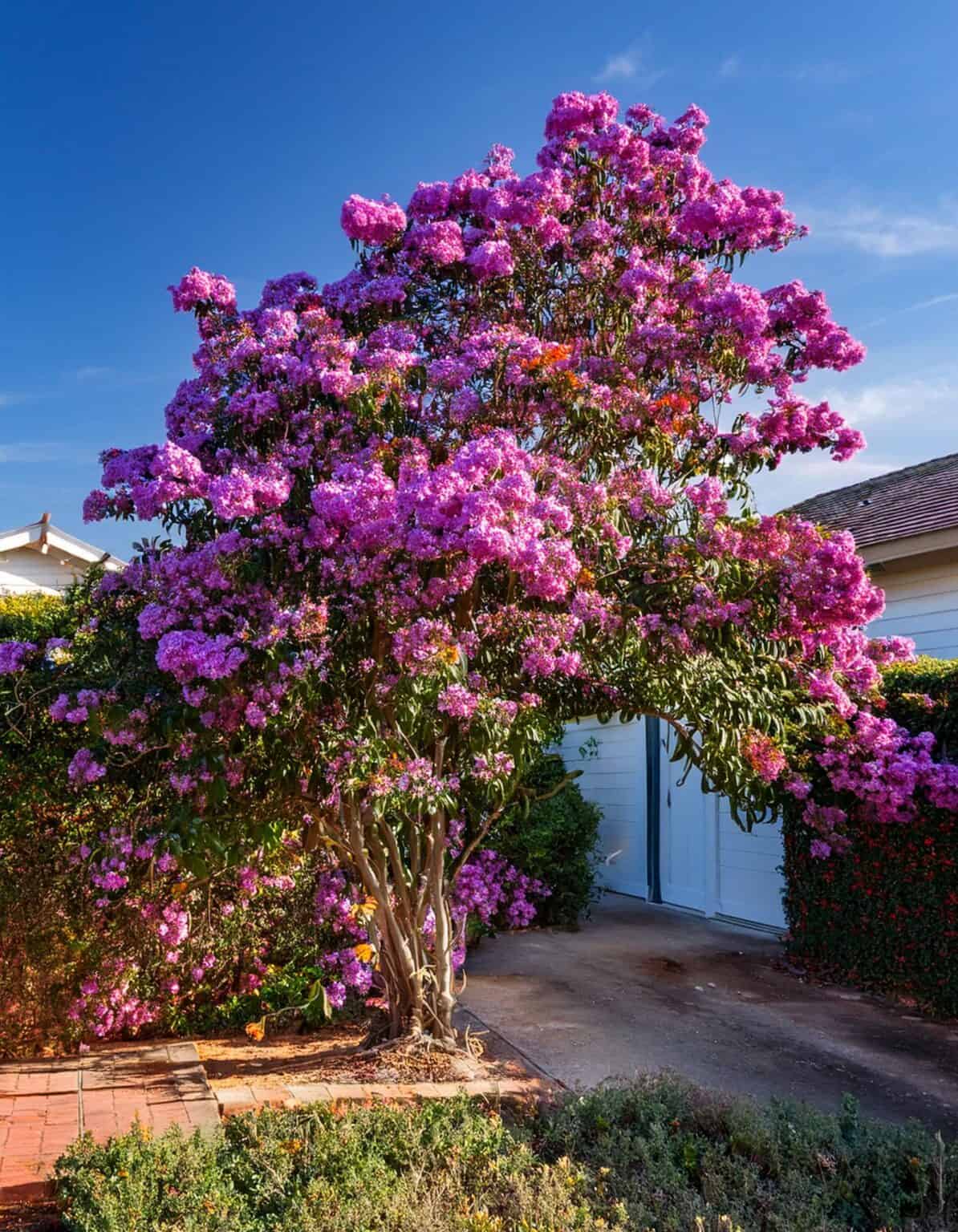
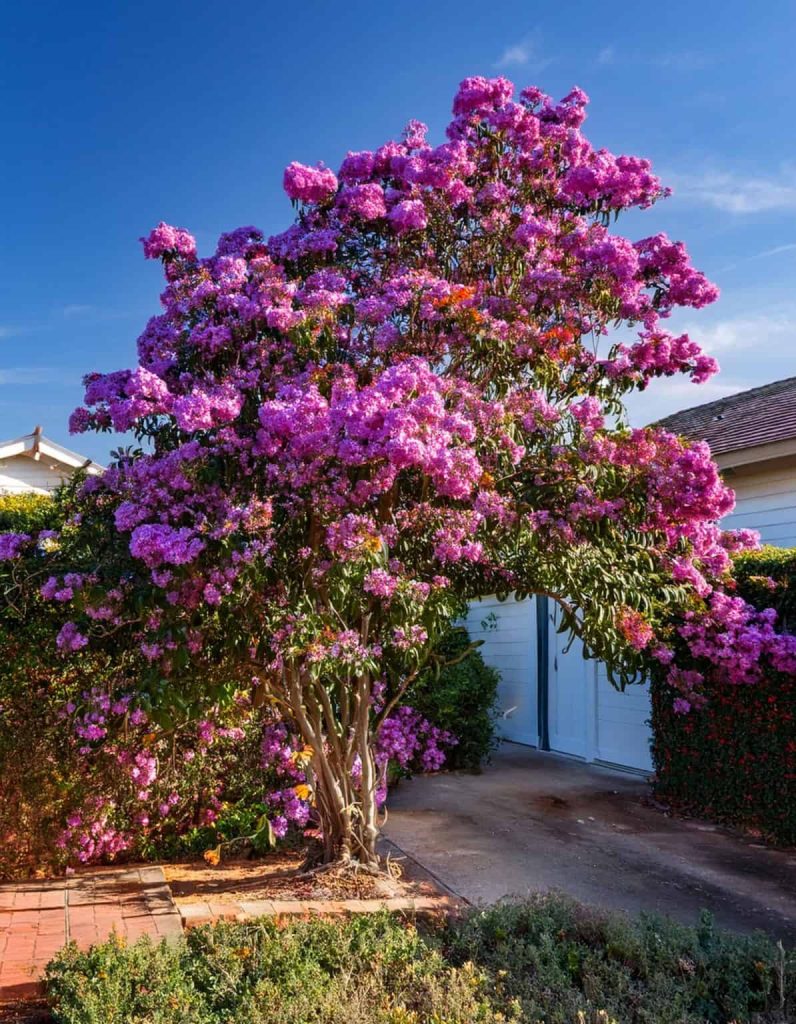
11. Small Crape Myrtle
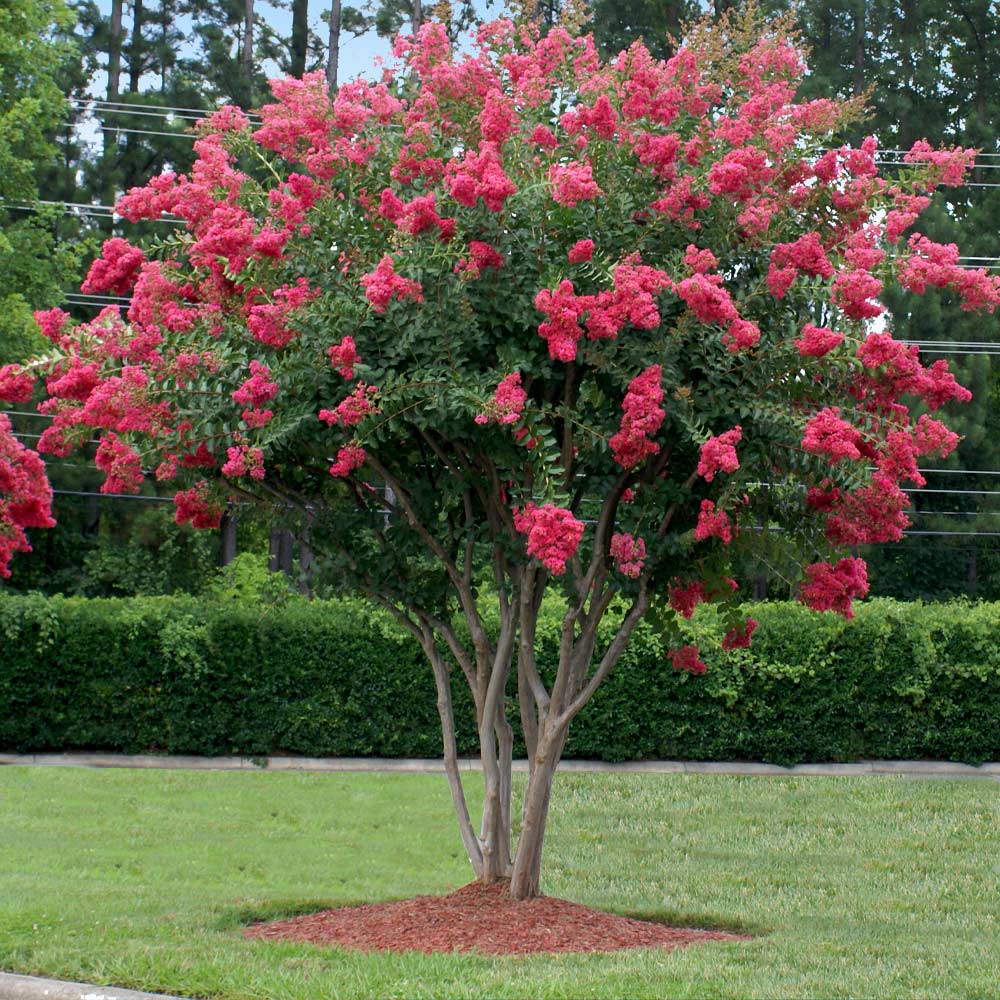
Summer color is hard to beat. Flowers in pink, red, or white open in July and keep coming for weeks.
Skip the standard types, which can reach 20 to 30 feet. Choose a semi-dwarf cultivar instead. ‘Delta Jazz’ tops out near 9 feet.
Dwarf types like ‘Pocomoke’ stay around 3 feet, but they grow as shrubs. Most crape myrtles are hardy to zone 7, and to zone 6b with winter protection. Plant them in full sun.
Best bed: A hot, sunny summer border.
Plant under it: Coneflower, black-eyed Susan, and salvia.
Watch out: Buy by cultivar name, since size varies a lot. Choose a mildew-resistant type. Don’t chop the top off every winter, because heavy topping hurts the tree.
12. Chaste Tree
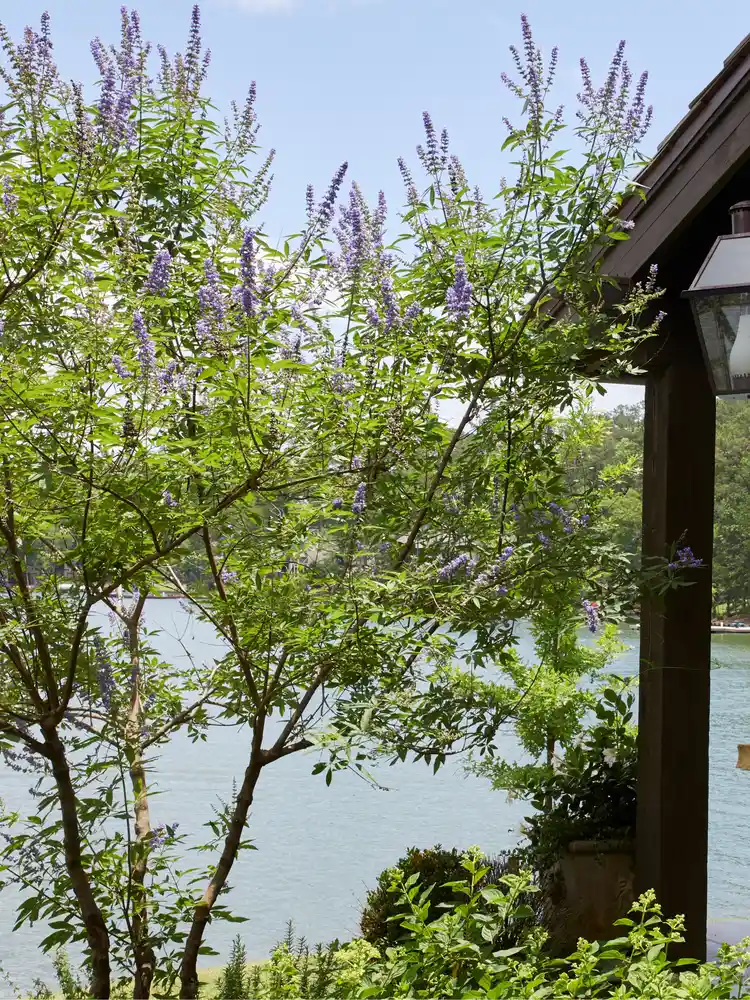
Spikes of pale violet flowers appear in June or July and last into September. Pollinators love them. The gray-green leaves smell like sage when you brush them.
Most grow 10 to 15 feet tall. A tree form can reach 20. It thrives in zones 7 to 9. In zone 6 and colder, winter can kill the top growth. The roots usually survive, and the plant blooms on new wood.
Many gardeners cut it back hard and treat it like a perennial. It can regrow 8 feet or more in one season.
Best bed: A hot, sunny, drought-prone bed.
Plant under it: Yarrow, black-eyed Susan, and ornamental grasses.
Watch out: Chaste tree can reseed and spread in some areas, especially in the South. Check your state’s invasive plant list before you buy.
13. ‘Sky Pencil’ Holly
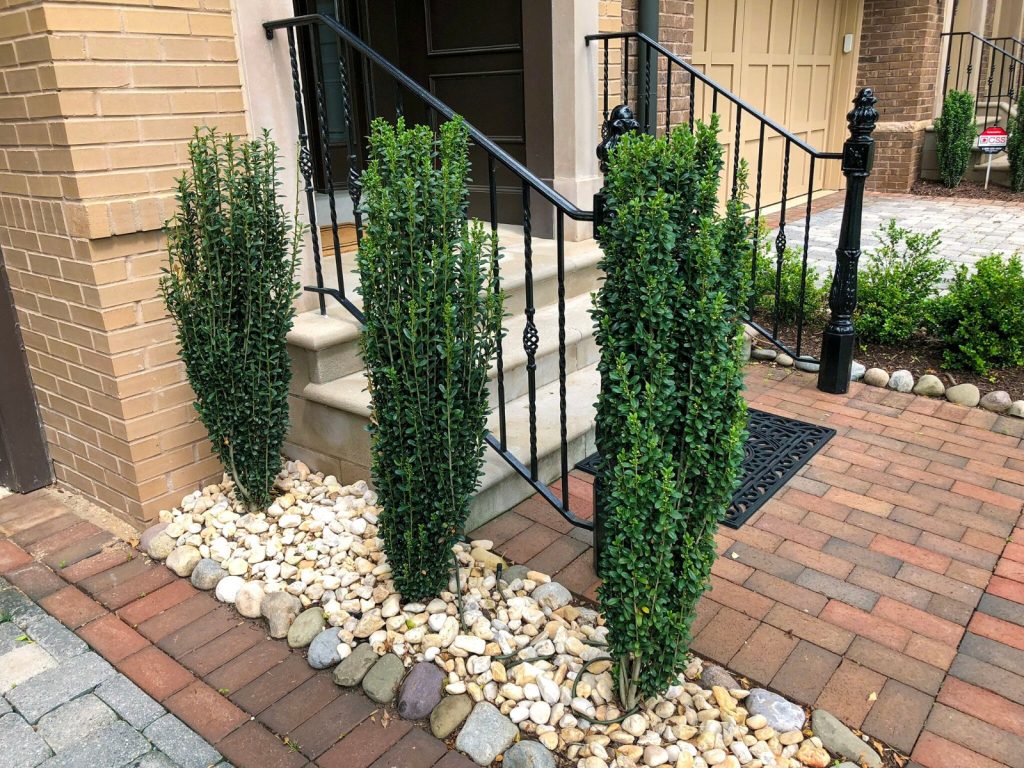
Picture a green exclamation mark. This slim evergreen shoots straight up with glossy, dark green leaves that look good all winter.
Botanically it’s a shrub, but it works like a tiny tree in a narrow bed. It adds structure when your perennials are cut back.
Expect 6 to 10 feet tall and only 2 to 3 feet wide in zones 5b to 9. It holds its shape without pruning. Give it full sun or part shade and slightly acidic, well-drained soil.
Best bed: A narrow bed along a fence, wall, or walkway.
Plant under it: Soft, rounded perennials like catmint and coneflowers. They play off its straight lines.
Watch out: It grows slowly, so buy the height you want. Berries appear only if a male holly grows nearby.
Frequently Asked Questions
Can I plant a tree in an existing flower bed?
Yes, but go slowly. Lift any perennials that sit in the way, then dig only the hole the tree needs. Set the tree, keep the soil level, and replant your flowers about a foot from the trunk.
How close to the trunk can I plant flowers?
Start about a foot away. Go farther for trees that dislike root disturbance, like cherry, magnolia, and dogwood. Choose small plants, dig small holes with a hand trowel, and never cut a thick root.
Which small trees have the least aggressive roots?
No tree is root-free, but some behave better than others. Japanese snowbell rarely causes surface-root trouble. Kousa dogwood has shallow roots, so dig lightly near it. With any tree, skip the tiller and plant small perennials.
What are the best small trees for shade gardens?
Japanese maple, Japanese snowbell, pagoda dogwood, and ‘Ruby Falls’ redbud all enjoy dappled or part shade. Serviceberry and fringe tree tolerate it too. Deep shade is tough on flowering trees, so aim for bright, filtered light.
How far from the house or fence should I plant a small tree?
A good rule is half the tree’s mature width, plus a little extra for growth. A tree that spreads 10 feet needs about 5 feet of clearance. A slim tree like ‘Sky Pencil’ needs much less.
Ready to Add Height to Your Flower Bed?
A small tree can turn a flat flower bed into a layered garden. Match the tree to your light and your zone, plant it first, and give the roots room. Pick one from this list, and you’ll get height, color, and shade that your perennials can live with.