How to Get Stunning Blue Hydrangeas: A Complete Guide

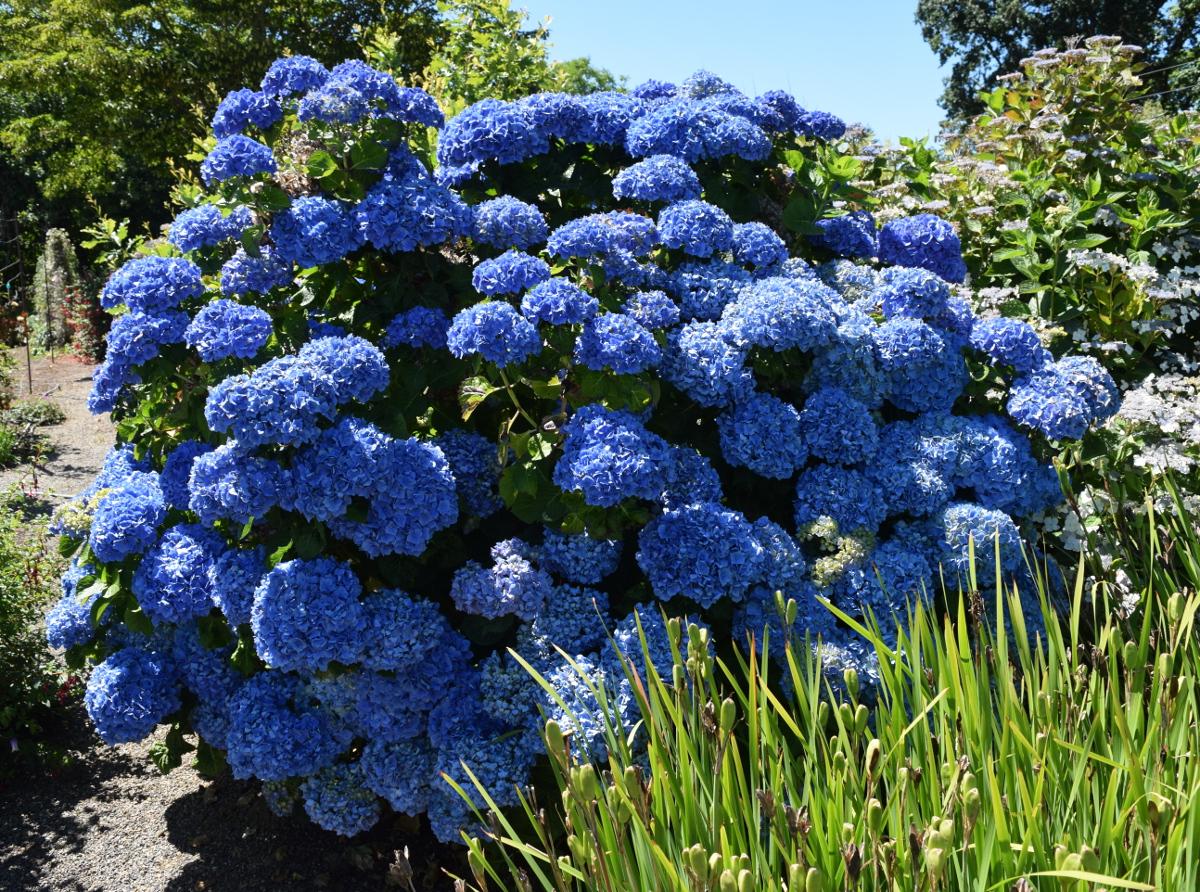
Blue hydrangeas have a way of stopping people in their tracks. They’re the flower everyone asks about at garden tours, and for good reason .
That saturated, almost electric blue doesn’t show up naturally in many other plants.
Here’s the twist: your hydrangea isn’t born blue. You can actually push it there yourself, using nothing more exotic than soil chemistry.
I’ll walk you through exactly how hydrangea color works, which varieties will actually cooperate, and the step-by-step process for coaxing your blooms toward blue.
I’ll also cover the mistakes that trip up most gardeners, because there are a few, and they’re easy to avoid once you know what to watch for.
Why Do Hydrangea Flowers Change Color in the First Place?
Here’s the part that surprises people: hydrangeas don’t have blue pigment. What they have is a colorless pigment that reacts with aluminum.
Feed the plant aluminum, and the flowers shift blue. Deny it aluminum, and you get pink.
Soil pH is the gatekeeper. Aluminum exists in most garden soil already, but plants can only absorb it under acidic conditions. Alkaline soil binds the aluminum tightly to soil particles, locking it away from the roots.
Drop the pH low enough, and suddenly that aluminum becomes available, the plant takes it up, and next year’s blooms turn blue.
This is why gardeners in naturally acidic regions, like parts of the Pacific Northwest or coastal New England, often get blue hydrangeas without lifting a finger.
Meanwhile, gardeners with alkaline or clay-heavy soil usually end up with pink, no matter how much they want blue.
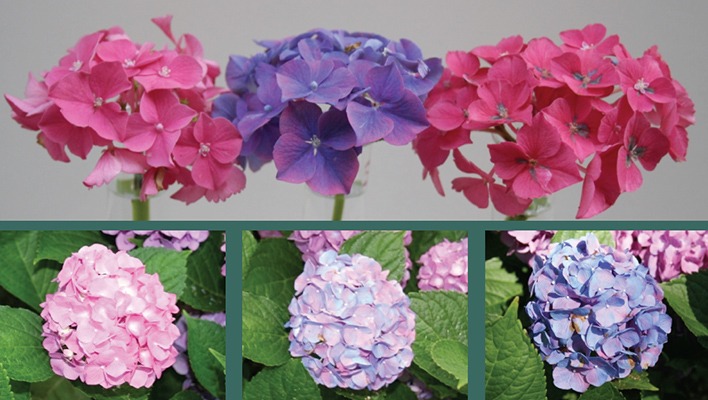
Timing matters more than people expect. Flower buds form during the previous summer and fall, not in spring right before blooming.
So whatever’s happening in your soil months before bloom time is what actually determines the color you’ll see.
This is also why color changes don’t happen overnight. You’re not painting the flowers. You’re influencing next year’s buds while they’re still forming underground.
Which Hydrangeas Can Actually Turn Blue?
This is the step people skip, and it causes more disappointment than anything else on this list. Not every hydrangea can change color, no matter what you add to the soil.
Only two species respond to soil pH:
- Bigleaf hydrangea (Hydrangea macrophylla) — the classic mophead and lacecap types, and by far the most common blue variety
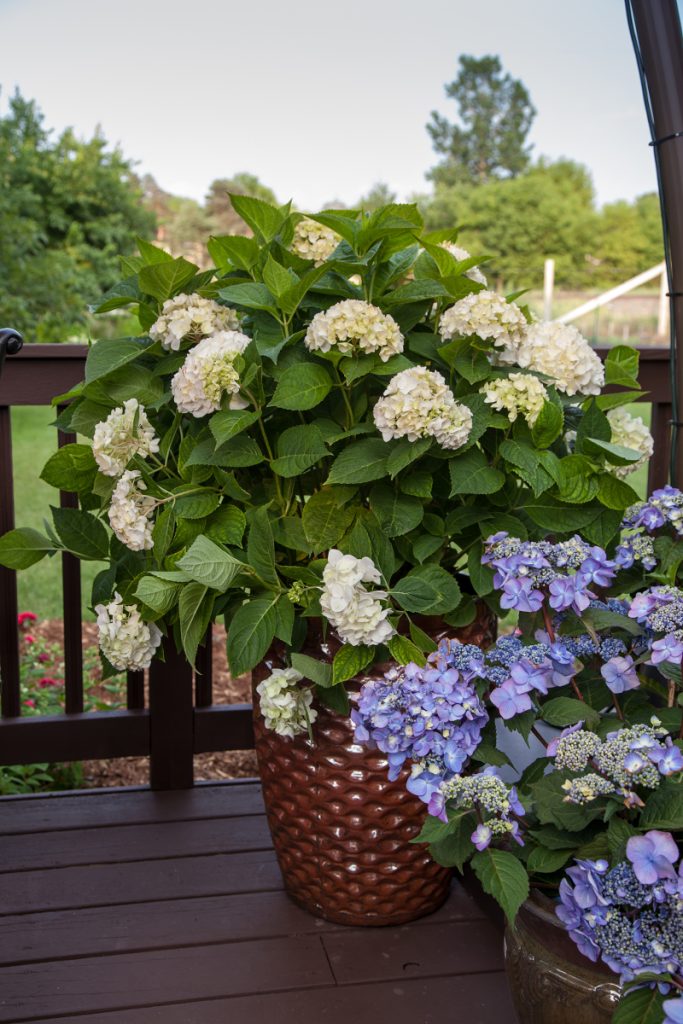
- Mountain hydrangea (Hydrangea serrata) — a close relative, slightly more cold-hardy, with the same color-shifting ability
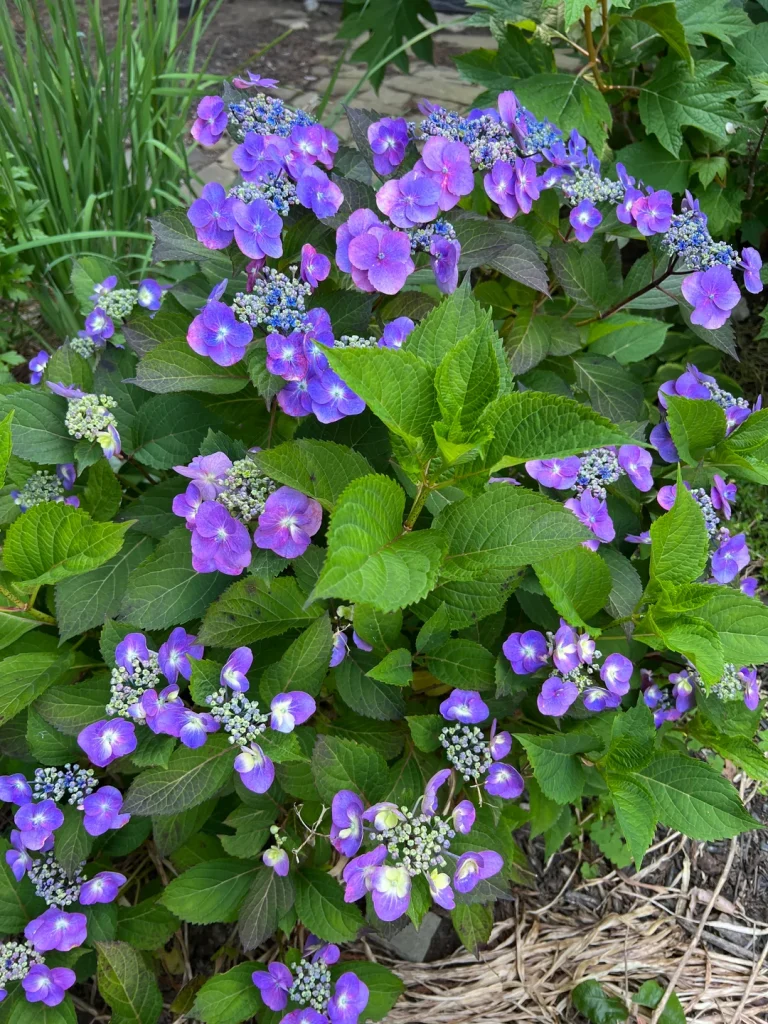
Everything else is off the table. Panicle hydrangeas (Limelight, Quickfire) and smooth hydrangeas (Annabelle) bloom white or green regardless of soil pH. Because, their pigment simply doesn’t respond to aluminum.
Oakleaf hydrangeas are the same story. If you’ve been dumping soil acidifier around one of these hoping for blue, that’s why nothing’s happened.
Even within the right species, some cultivars simply produce better blue than others. A few reliable performers worth seeking out:
- Nikko Blue — a long-time favorite, dependable and widely available
- Endless Summer — reblooms on both old and new wood, which makes it more forgiving if a late frost damages buds
- Blue Enchantress — hardy down to zone 4, with color that softens attractively as blooms age
- Let’s Dance Blue Jangles — a compact variety, well-suited to containers and small gardens
- Bloomstruck — dark stems and strong reblooming habit
One more wrinkle: deep red or very dark pink varieties usually won’t go all the way to blue, even in acidic soil.
At best, you’ll see them shift toward purple.
And white hydrangeas of any kind are locked in – there’s no pigment there to react with aluminum at all, so no amount of soil amending will change them.
What Soil pH Do You Need for Blue Hydrangeas?
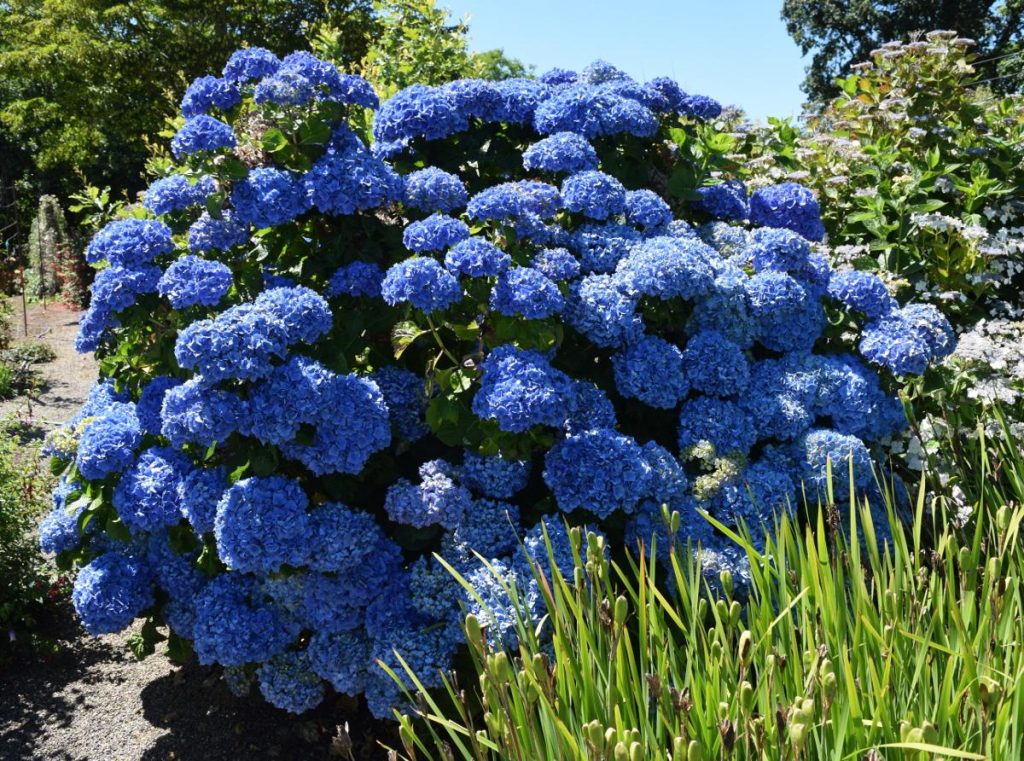
For true blue blooms, aim for a soil pH between 5.0 and 5.5. That’s quite acidic. Once the pH reaches 6.0 or higher, the flowers will usually shift back toward pink.
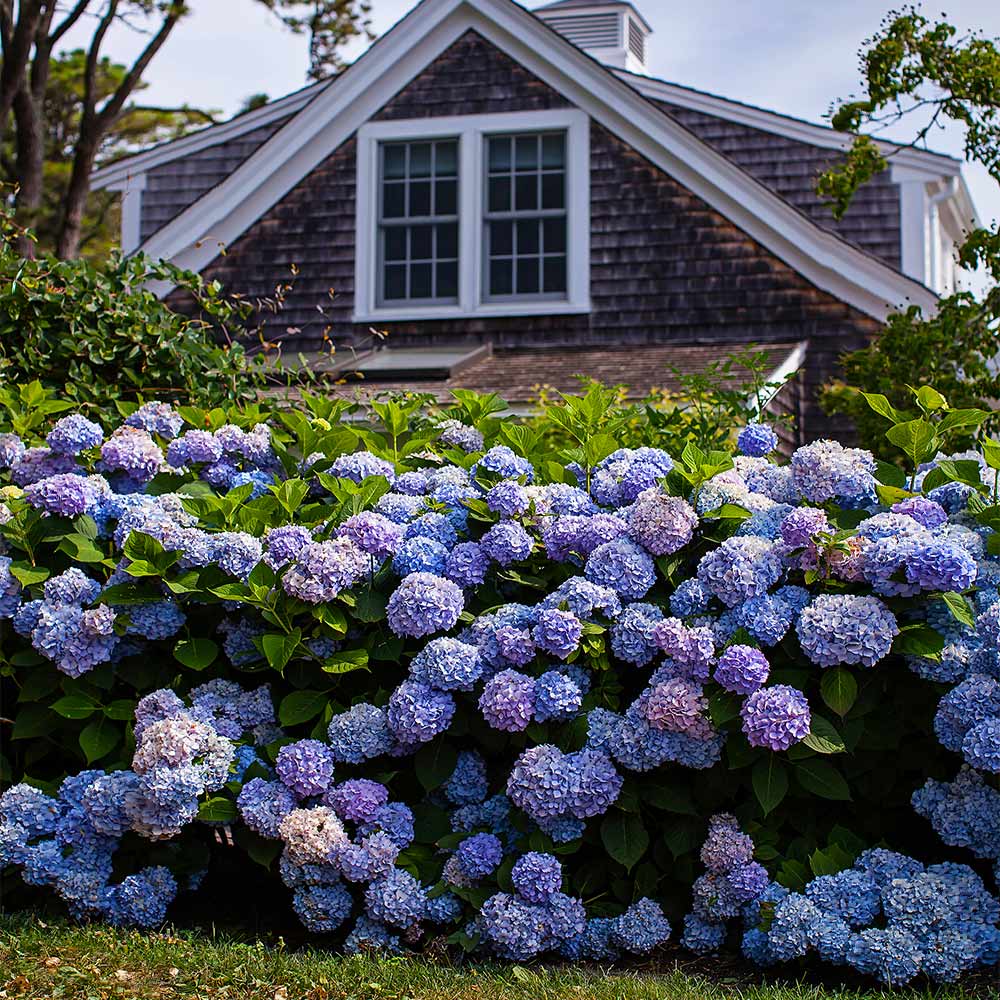
Between 5.5 and 6.0, you may see more of a purple color, or even a mix of pink, blue, and purple blooms on the same plant.
That in-between zone trips up a lot of gardeners. If your hydrangea is throwing three colors on one bush, it’s not confused. It’s just growing in soil with pH variation from one root zone to the next.
You can’t guess your way to blue. Soil pH varies wildly depending on region, and even from one corner of a yard to another.
Guessing wastes time, money, and a full growing season, since you won’t see results until next year’s buds form anyway. Test first.
You’ve got two solid options:
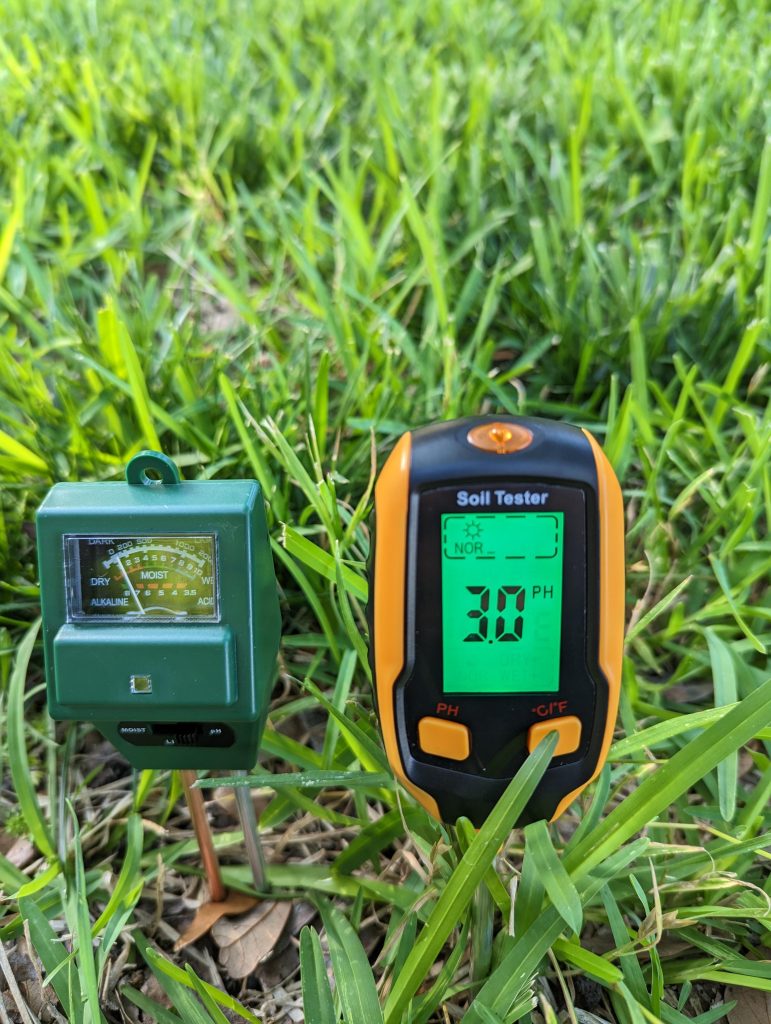
- A home soil pH meter. These run under $20 and give you an instant reading. Not lab-grade precise, but good enough to tell you which direction to move.
- A soil test through your local extension office. More accurate, and most offices will also tell you exactly how much sulfur or lime to apply based on your specific soil. Many offer this for free or for a few dollars.
Either way, test before you add anything to the soil. And test again down the road, because soil doesn’t just sit at whatever pH you push it to.
It drifts back toward its natural resting point over time, which means this isn’t a one-and-done project.
How to Actually Lower Soil pH and Turn Hydrangeas Blue
Once you know your starting point, here’s how to bring the pH down.
Aluminum Sulfate: The Fast Option
This is the most direct route, since it does two jobs at once: it acidifies the soil and adds usable aluminum in the same step.
How to apply it: Mix 1 tablespoon of aluminum sulfate per gallon of water, and drench the soil around the base of the plant, working out to the drip line.
Avoid splashing it on the leaves.
Apply in early spring, right as new growth emerges, and again in early fall when next year’s buds are forming.
I recommend to apply the solution once every 3 weeks. Don’t just keep dumping it on indefinitely.
The catch: aluminum sulfate works fast, but it’s also easy to overdo. Apply too much, and you risk burning the roots or damaging the plant outright. This isn’t a “more is better” situation. Stick to labeled rates, and when in doubt, use less.
Slower Home Options
Coffee grounds, pine needles, pine bark, and peat moss all acidify soil to some degree as they break down. They’re worth adding as a supplement, especially if you’re already mulching with pine bark anyway.
But don’t count on them as your primary strategy. They work far too slowly and unpredictably to reliably shift bloom color on their own.
You’ll also see apple cider vinegar mentioned as a quick fix in some garden blogs. I’d skip it. It’s not a method backed by any scientific evidence or hydrangea grower I’ve come across.
There’s some concern it can be harmful to nearby soil life with repeated use. Stick with sulfur or aluminum sulfate. They’re proven, and the application rates are actually documented.
A Word on Timing
Next year’s flower buds form during this summer and fall. So, changes you make this spring may not affect the blooms until next year.
You may see some color change sooner if you start early. But deep blue blooms usually take a year. In very alkaline soil, they can take two years.
Once you’ve reached your target pH, don’t stop maintaining it.
Soil naturally drifts back toward its original chemistry, so plan on reapplying each spring and fall to hold the color where you want it.
Best Care Practices for Blue Hydrangeas
Getting the color right is only half the job. Keep these habits in place, and your blue blooms will actually hold up through the season instead of wilting or fading early.
Give them morning sun, afternoon shade. Hydrangeas want about four to six hours of sun, but not the harsh midday kind. Plant them somewhere they catch morning light and then ease into shade by early afternoon.
Full sun in July will wilt the blooms fast, even if the soil underneath is perfectly moist.
Water at the base, not overhead. Wetting the leaves invites fungal problems you don’t need. Aim the hose or watering can at the soil line instead, which also happens to be exactly where you want your sulfur or aluminum sulfate solution going anyway.
Consider rainwater if you can collect it. Tap water tends to run alkaline in a lot of areas, which works against everything you’re doing to acidify the soil.
It’s not a deal breaker if you can’t manage it, but if you’ve got a rain barrel already, use that water on your hydrangeas first.
Prune at the right time, or don’t prune at all. This trips up more gardeners than almost anything else on this list. Most blue hydrangeas bloom on old wood, meaning next year’s flowers are already forming as buds by late summer of this year.
Cut the plant back in fall or early spring thinking you’re “tidying up,” and you’ve just removed next year’s flowers along with the mess.
If you need to prune, do it within a few weeks after the current blooms fade, and never later than August. When in doubt, leave it alone.
Watch for cold damage. Flower buds on bigleaf hydrangeas are surprisingly tender. Temperatures that dip much below 15°F can kill them outright, and there’s no amount of wrapping or mulching that reliably protects them.
If you’re gardening somewhere with harsh winters, a compact variety in a container that you can move into an unheated garage for the season is a far more reliable strategy than hoping the mulch does its job.
Common Mistakes That Keep Hydrangeas from Turning Blue
If you’ve done everything above and you’re still seeing pink, one of these is probably the culprit.
- Wrong species. No amount of soil amending will turn a panicle or smooth hydrangea blue. If it’s not a bigleaf or mountain hydrangea, this whole process doesn’t apply.
- Impatience. Expecting results within a few weeks is the most common letdown. Buds that are already formed won’t change color. You’re always working on next year’s flowers.
- Overcorrecting with aluminum sulfate. More isn’t faster, it’s just riskier. Heavy applications can burn roots and stress the plant, sometimes setting you back further than doing nothing at all.
- Skipping the soil test. Without knowing your starting pH, you’re applying amendments blind, which usually means either not enough to make a difference or way too much.
- Pruning at the wrong time. Worth repeating, because it’s that common. A hydrangea that never blooms is often a hydrangea that got “cleaned up” at the wrong moment.
- Fighting soil that keeps reverting. If your soil is naturally alkaline, one application won’t hold. You’re maintaining a chemistry that wants to snap back, so ongoing upkeep is part of the deal, not a one-time fix.
Turning the Blues Into a Habit, Not a One-Time Trick
Getting hydrangeas to bloom blue really comes down to two things: picking the right plant, and being willing to play soil chemist for a season or two.
Once you’ve got the pH where it needs to be, keeping it there is mostly a matter of staying consistent, testing occasionally, and not overreacting when a bloom or two comes back a little more purple than you’d hoped.
Start with a soil test, pick a variety known for good blue color, and give the process the time it actually needs.
By next summer, you’ll have a much better shot at the hydrangea you were picturing in the first place.