Bare House Walls? 15 Front Yard Foundation Planting Ideas That Fix It Fast

A bare strip of dirt along the house makes even a beautiful home look unfinished. I see it all the time. The walls look flat, and the front door gets lost.
Foundation plants fix that fast. They soften hard lines, frame your windows, and give your house a real welcome. But you need the right mix. Plants that grow too big or sit too close to the wall cause headaches later.
I picked 15 ideas that get the balance right. You’ll see tropical, cottage, modern, and classic looks. Grab the one that fits your house.
What Makes Foundation Planting Work
- Layer by height: Put tall plants at the back, mid-size shrubs in the middle, and low plants in front. This stair-step shape lets every plant get seen. It also hides the base of the house without blocking your windows. I always check the mature height on the plant tag before I buy.
- Repeat your favorites: Use the same plant three or four times along the bed. Repetition tells the eye the design is planned, not random. You can repeat one shrub, one flower color, or one leaf shape. Even a small bed feels calmer this way.
- Leave breathing room: Plant shrubs two to four feet away from the wall, depending on their mature size. Your plants need airflow to stay healthy. Space also lets you reach the siding for paint and repairs. Don’t judge the gap by how small the plant looks today. It will grow.
- Mix evergreens with color: Evergreens give the bed shape all year, even in winter. Flowers and colorful leaves add the seasonal fun on top. I like a simple split. Use evergreens for the backbone, then fill in with blooms you love.
15 Stunning Front Yard Foundation Planting Ideas
1. Tropical Palm and Ti Plant Beds
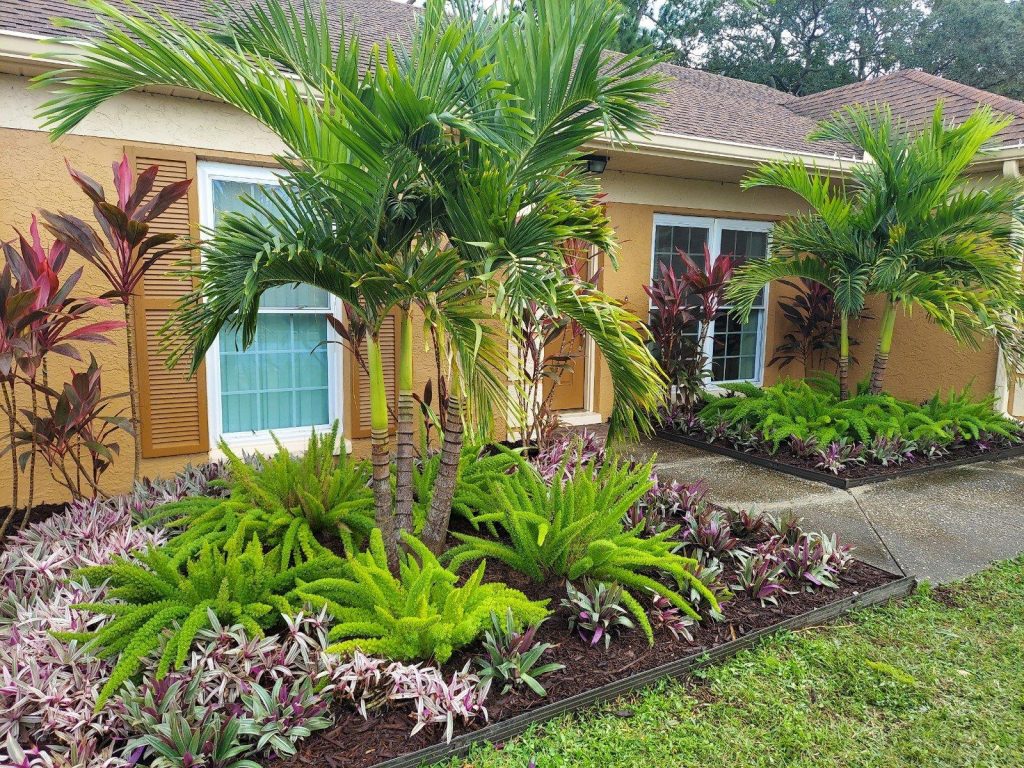
Plant formula: Christmas palm + red ti plant + foxtail fern + purple oyster plant
This Florida-style front yard feels like a vacation. Tall palms rise above the windows and add instant height. Red and pink ti plants bring bold color against the warm tan walls. Below them, bright green foxtail ferns spill over the mulch.
I love the purple oyster plant along the front edge. Its striped leaves tie the whole bed together. The dark mulch makes every color pop.
Landscape note: Notice how the beds sit in two matching islands on each side of the walkway. That repeat gives the house a balanced, tidy look. A simple metal edge keeps the mulch off the lawn.
2. Cottage Hydrangeas Along a Brick Edge
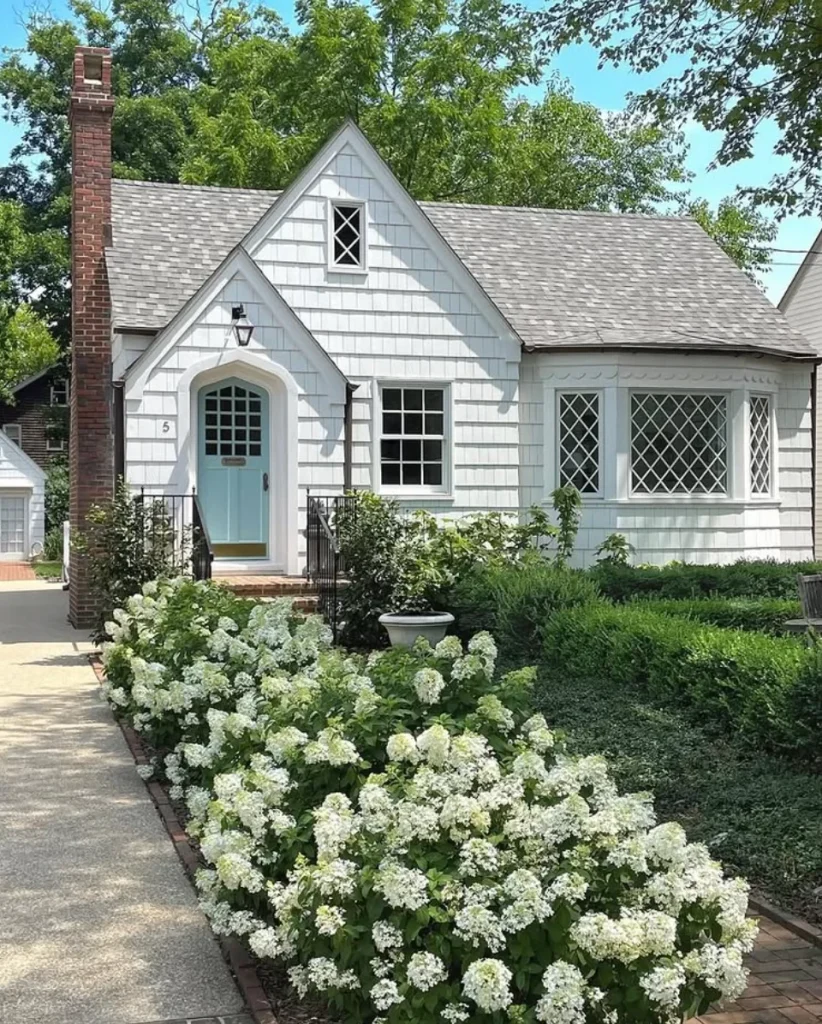
A white cottage with a soft blue door deserves a soft planting. Here, panicle hydrangeas sweep along the front in big, creamy waves. The blooms echo the white siding and make the whole house glow.
Why It Works:
- The white flowers match the house, so nothing fights for attention.
- A low boxwood hedge on the right adds clean structure.
- The brick edging gives the bed a crisp, finished line.
Upgrade idea: Add a large stone pot beside the steps, like this one. Fill it with a simple evergreen. You get a strong focal point without adding clutter.
3. Hydrangeas, Boxwoods, and Color Along Red Brick
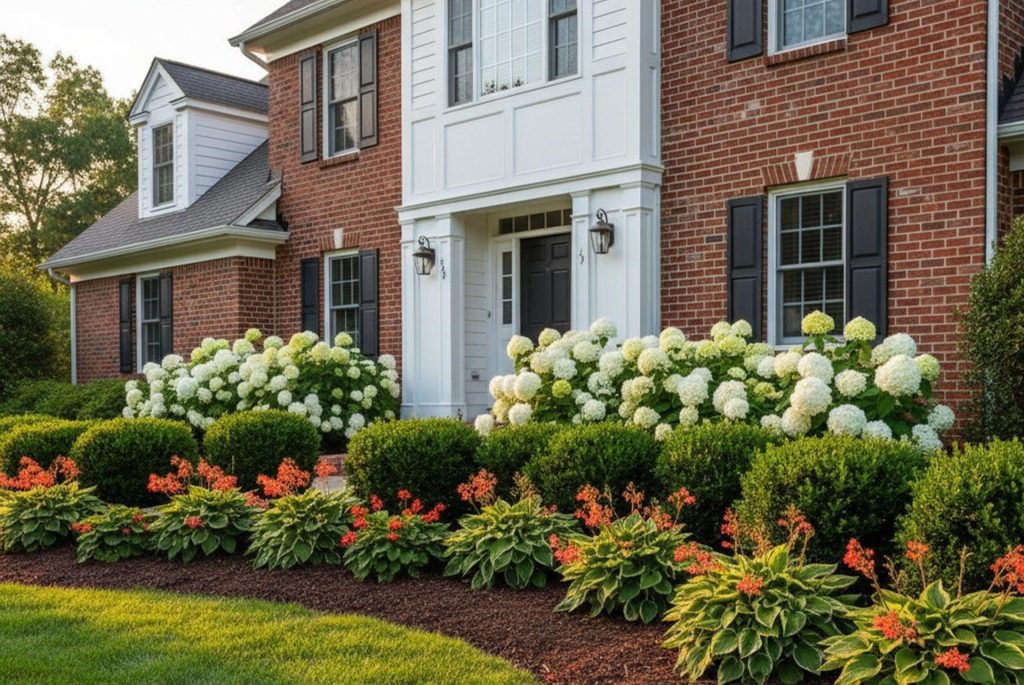
Red brick and white hydrangeas make a classic pair. This bed uses three clear layers, and I’d copy every one of them.
Layer guide:
- Back: Big white hydrangeas frame the entry and soften the tall brick walls.
- Middle: Round boxwoods add deep green shape all year.
- Front: Low, leafy plants topped with coral-red blooms spill toward the lawn.
The coral color is the secret here. It pops against the green and echoes the warm brick. Your eye travels from the flowers up to the front door.
Spacing tip: Give each hydrangea at least three feet of room. They look small when you plant them. They grow fast. Here’re some front yard hydrangea landscaping ideas worth checking/
4. Ninebark and Roses Against Warm Brick
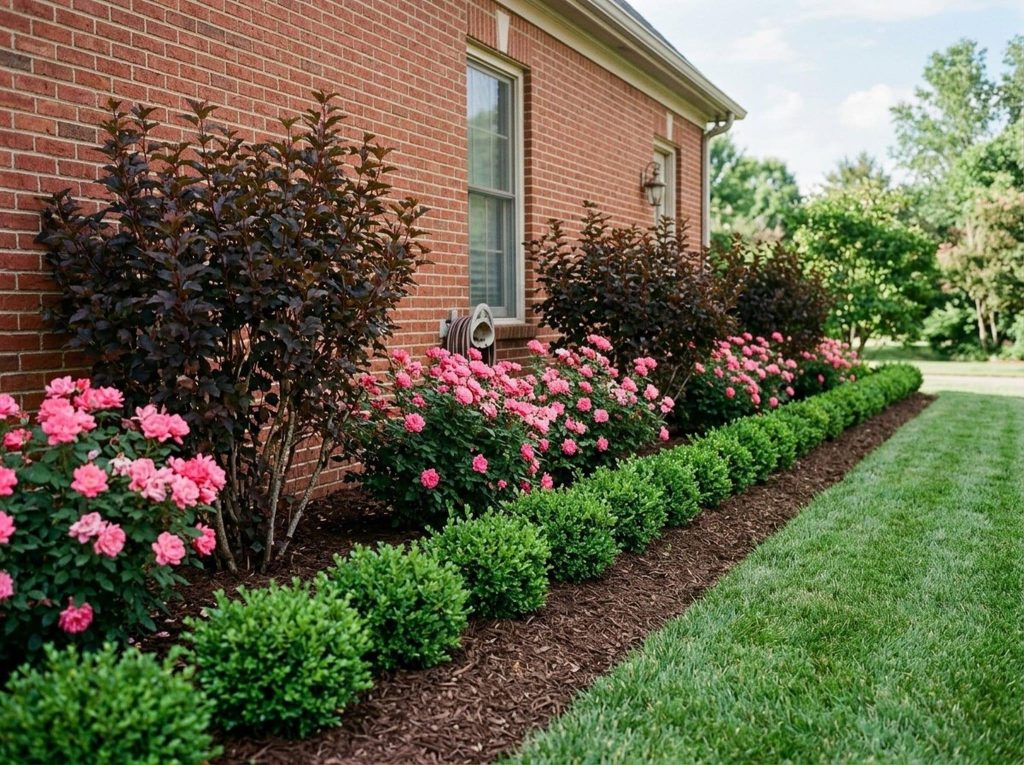
Best for: Long side walls and brick homes that need color without fuss.
Dark burgundy shrubs stand tall against the brick. In front of them, pink roses bloom in soft, rounded clumps. A low boxwood border runs along the mulch like a neat ribbon.
The dark leaves make the pink flowers look brighter. And the boxwoods keep the bed tidy, even when the roses rest in winter.
I like how the plants step down in height. The tallest sit near the wall. The shortest hug the lawn edge.
Mistake to avoid: Don’t plant the tall shrubs right against the brick. Leave a foot or two of space. Air can move, and you can still reach the wall for repairs.
5. Evergreen Shrubs With Rock and Stone Edging
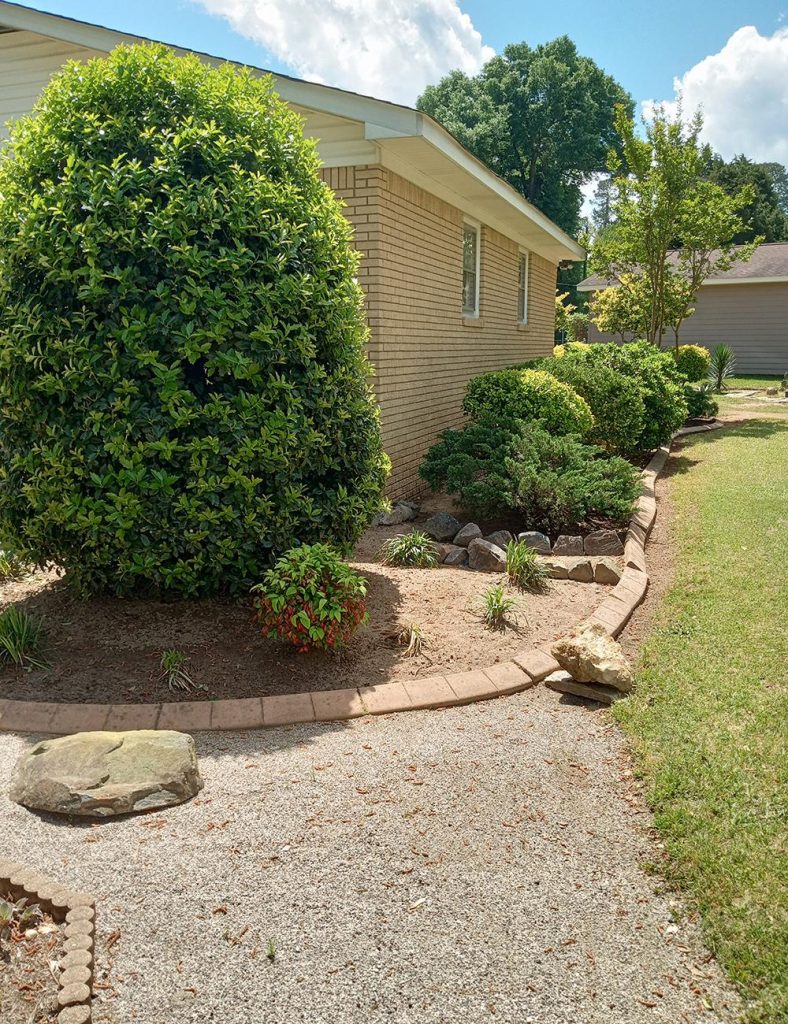
Not every foundation bed needs flowers. This one wins with shape, texture, and a few smart stones.
A large, rounded evergreen anchors the corner of the house. A low juniper and a small red-leaved nandina sit nearby.
Grassy tufts and a row of small rocks fill the gaps. A curved stone edge pulls everything together.
Copy the look:
- Use one big shrub as the anchor.
- Add a few low shrubs in different leaf shapes.
- Tuck in rocks for a natural, relaxed feel.
- Curve the bed edge instead of cutting a straight line.
Care note: Trim the big shrub once or twice a year to keep its shape. Mulch the bare soil, and the bed will look even fuller.
6. Variegated Grass Under the Windows
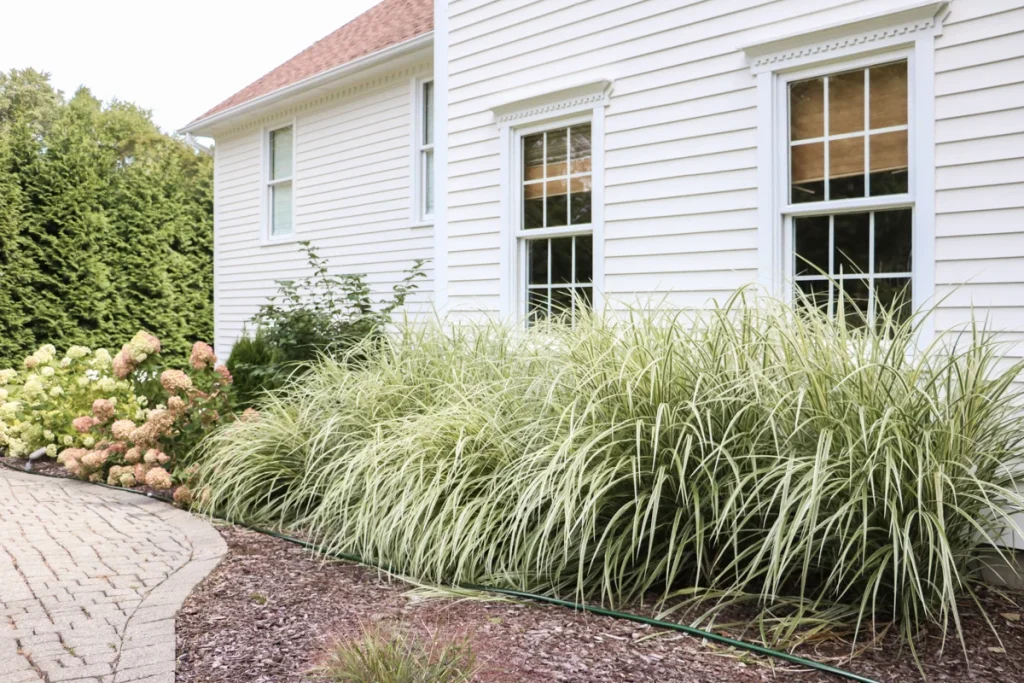
This idea breaks the shrub habit, and I love it. A big clump of striped ornamental grass fills the space under two tall windows.
The blades arch and sway in the breeze. The cream and green stripes brighten the white siding.
At the left end, a hydrangea fades from cream to dusty pink. That soft color shift adds a nice fall touch.
A tall evergreen hedge behind it gives the whole scene a deep green backdrop.
Plant formula: variegated maiden grass + hydrangea + evergreen backdrop
Spacing tip: This grass grows tall and wide. Plant it far enough from the windows that the blades don’t block your view. Cut it back hard in late winter. Fresh growth will fill in by early summer.
7. Hydrangeas, Catmint, and a Bold Black Planter
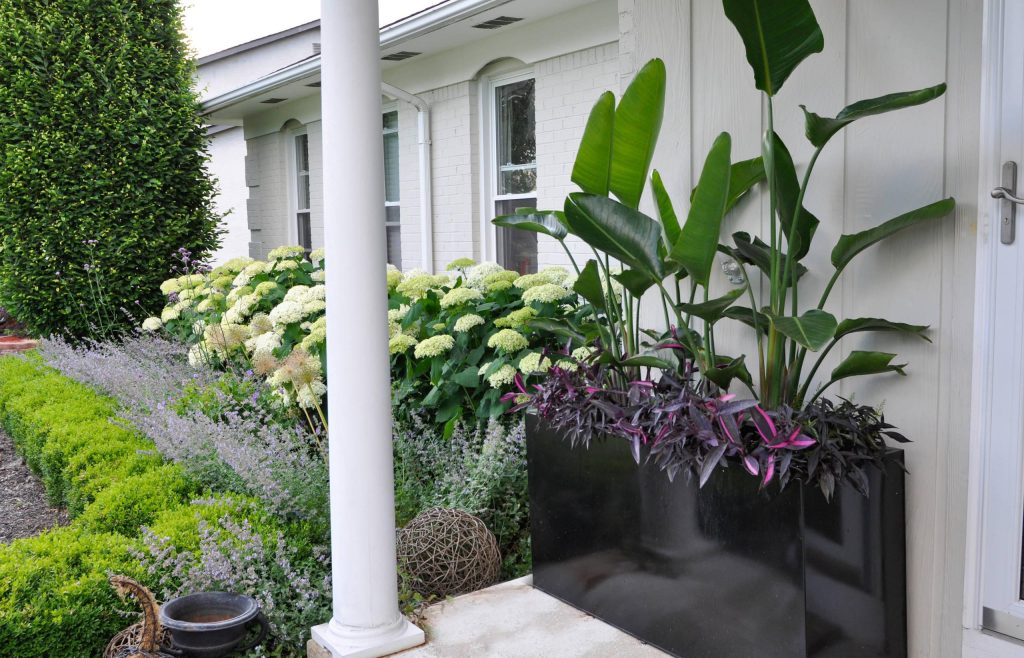
This entry mixes soft and bold in one small space. Creamy hydrangeas fill the bed beside the porch. Purple catmint spills over a boxwood hedge in front. Tall allium blooms float above the flowers like little fireworks.
Then comes the black planter by the door. A bird of paradise rises from it, with purple foliage tucked around the base. That contrast makes the whole entry feel designed.
Container tip: A tall, simple planter works best on a narrow porch. Pick one dramatic plant, then add one trailing plant at the front.
Mistake to avoid: Don’t crowd the planter with too many colors. Two or three tones keep it sharp.
8. Boxwood Globes Under Small Trees
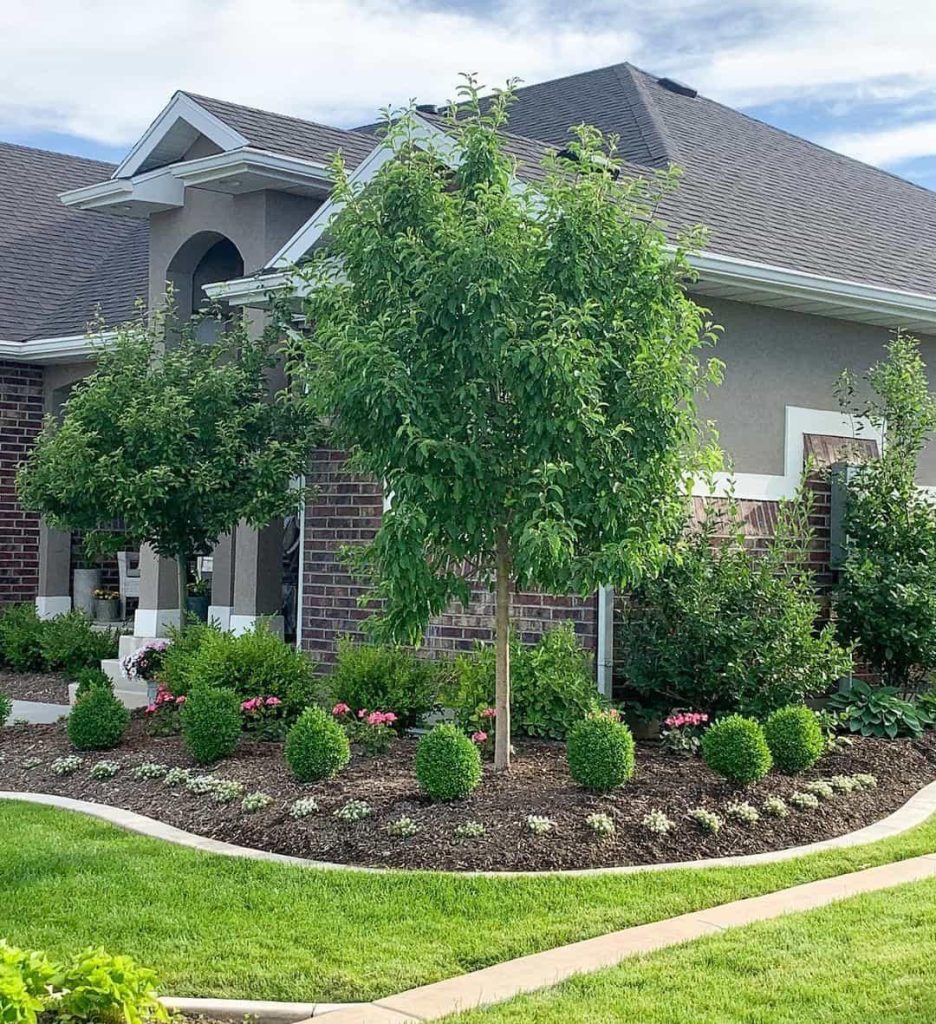
Plant formula: small ornamental tree + boxwood globes + pink perennials + low white groundcover
This bed proves that a tidy design never gets boring. A slim tree rises from the center and adds height.
Round boxwoods march across the mulch in an easy rhythm. Pink flowers peek out between them for a soft pop of color.
I love the tiny white edge plants along the front. They soften the curved border and give the bed a finished look. A smooth concrete edge keeps the lawn and mulch apart.
Spacing tip: Plant the boxwoods in a loose, staggered line. A perfectly straight row looks stiff. A gentle zigzag looks natural, and it still feels neat.
9. Japanese Maple With a Purple Door
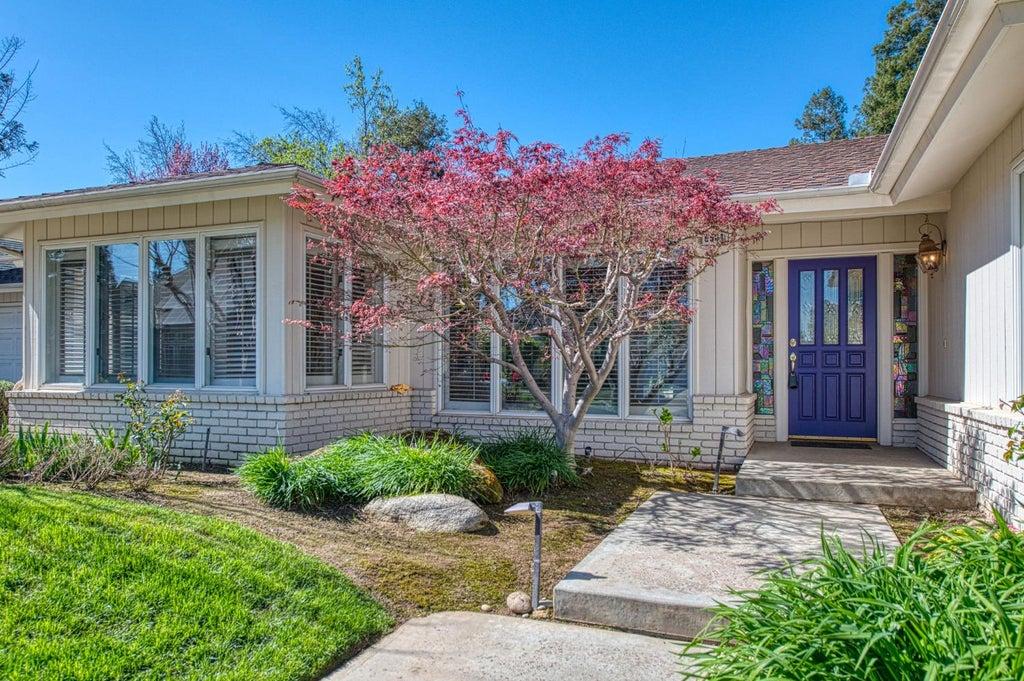
Sometimes one great tree does all the work. A red-leaf Japanese maple stands right in front of the windows here. Its lacy branches catch the light, and the pink-red leaves stand out against the pale siding.
Why it works
- The tree hides part of the big window without blocking the light.
- The purple door repeats the maple’s cool, rich color.
- A large boulder and grassy tufts at the base look calm and natural.
I like that the bed stays simple. The tree is the star, and everything else plays a small part.
Care note: Japanese maples like afternoon shade and steady moisture. Mulch the roots, and water deeply in hot spells. Skip heavy pruning. Light shaping in winter is plenty.
10. Lollipop Trees and Burgundy Foliage
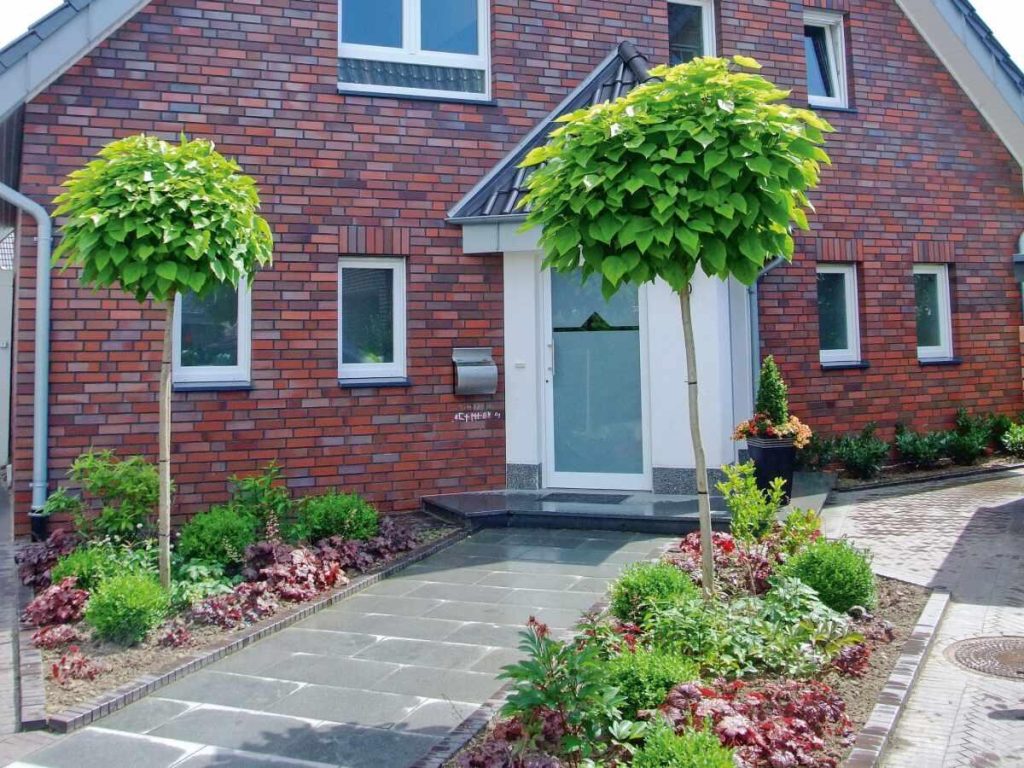
This entry has a sharp, modern feel. Two round-topped trees flank the front door like green lollipops. Their bright leaves look fresh against the deep red brick.
Below them, purple coral bells and neat boxwood balls fill the beds. That burgundy foliage echoes the brick tones, so the whole front feels connected.
Copy the look:
- Pick two matching trees and place them evenly on each side of the door.
- Choose one dark-leaf plant and repeat it in both beds.
- Add a few round shrubs for structure.
- Edge each bed with a thin brick or stone border.
Best for: Small front yards with a straight path. The symmetry makes a tight space feel organized and welcoming.
11. Native Grasses and Winter Berries Along Stone
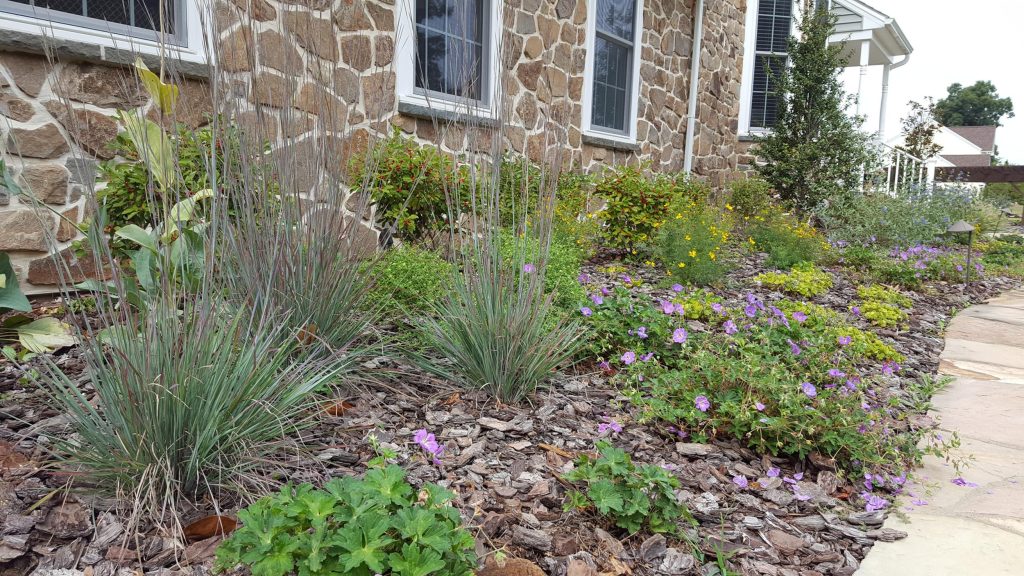
A stone house deserves a bed with a little wildness. This one mixes airy grasses, red berries, and soft purple flowers. It feels like a meadow that wandered up to the front wall.
Blue-green grass tufts rise in the front and sway in the breeze. Red-berried shrubs stand behind them and hold their color into fall.
Purple geraniums and yellow flowers fill the gaps. Bark mulch keeps the soil cool and the weeds down.
Best for: Homes with rustic or stone walls, and gardeners who love bees and butterflies.
I like how this bed changes with the seasons. Spring brings flowers. Fall brings berries and golden grass. Winter leaves interesting seed heads and structure.
Upgrade idea: Add a few path lights along the flagstone walk. They make the bed glow at night.
12. Clipped Boxwood and White Impatiens
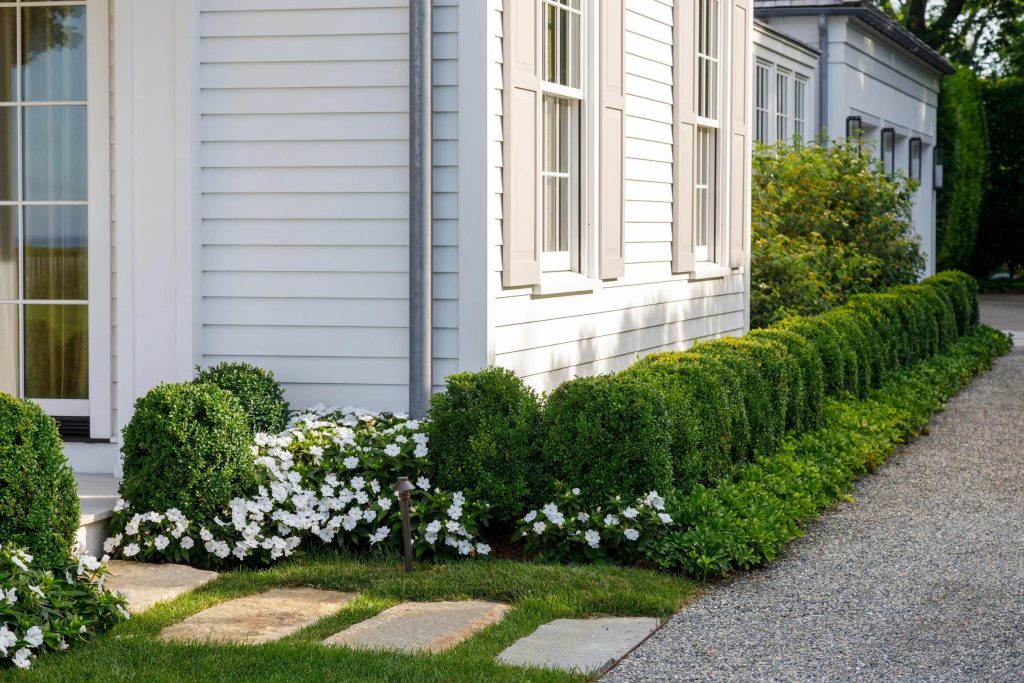
Plant formula: boxwood globes + clipped boxwood hedge + white impatiens + pachysandra
White siding calls for a clean, quiet planting. Here, round boxwoods sit near the corner and a smooth hedge runs along the drive. White impatiens tuck in between them. Their blooms look like little lights against the deep green.
The green groundcover along the gravel edge ties it all together. It also keeps weeds out of the strip.
Landscape note: The stepping stones across the lawn add charm. They guide you to the door without a heavy paved path. A single path light keeps the walk safe at night.
This look works all year. The evergreens hold the shape in winter. The flowers refresh the bed each summer.
13. Hydrangeas and Chartreuse Grass at the Porch
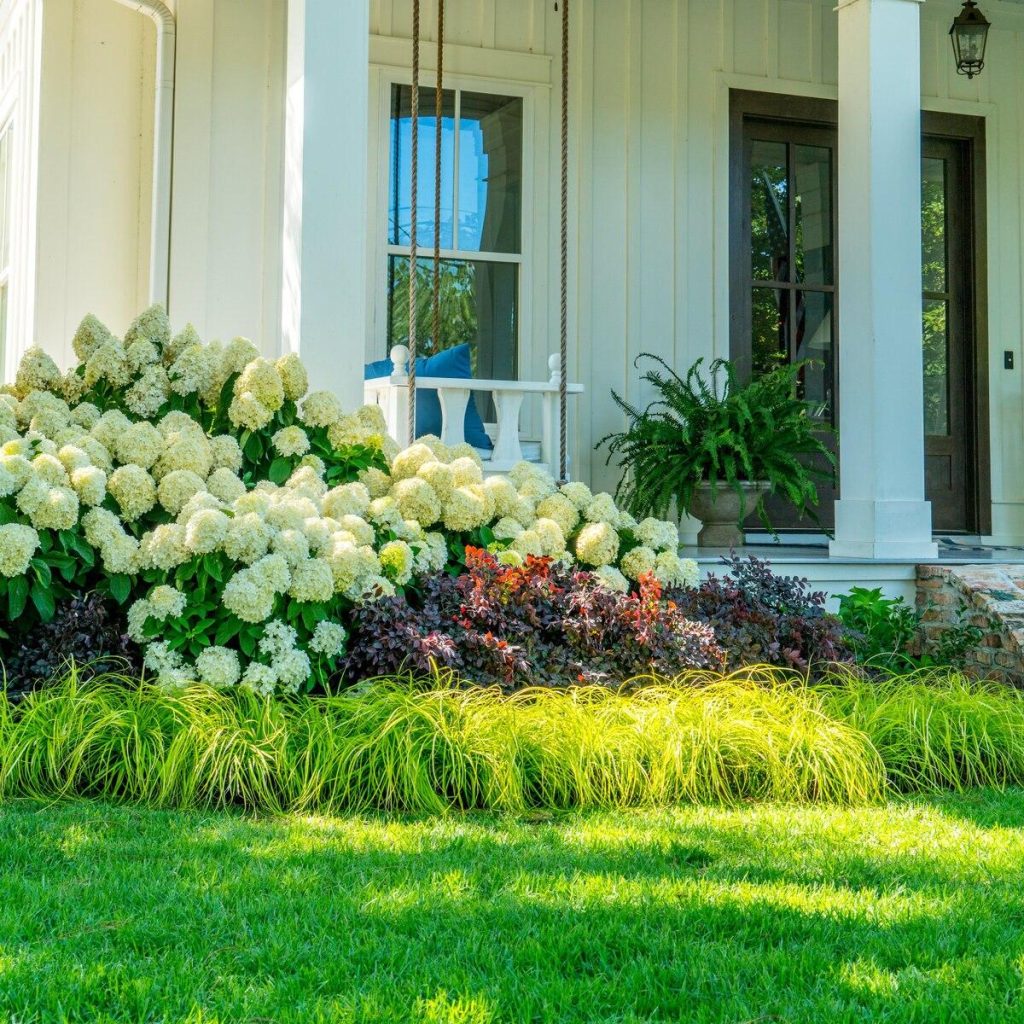
This porch bed lights up the whole front of the house. Big cream hydrangeas fill the corner by the swing. A bright chartreuse grass runs along the front like a glowing ribbon.
Layer guide:
- Back: Tall hydrangeas hide the porch base and add big blooms.
- Middle: Dark burgundy shrubs bring deep contrast.
- Front: Bright, arching grass softens the edge and brightens the lawn line.
A Boston fern in a stone urn finishes the porch. It adds a leafy, welcoming touch beside the door.
Upgrade idea: Swap the burgundy shrub for a purple-leaf plant that fits your climate. That dark tone makes every other color pop, so keep one in the mix.
14. Cottage-Style Layers Beside a Colonial Porch
A white colonial with black shutters looks even better with a soft, flowery bed. This one mixes pink astilbe, blue hydrangea, and billowy shrubs. A small evergreen cone sits near the steps and adds a neat accent.
Why it works:
- The pink and blue flowers look pretty against the black shutters.
- The shrubs grow in layers, so the bed feels full without feeling messy.
- The curved mulch edge flows gently with the lawn.
Spacing tip: Plant the tallest shrubs near the corner of the house. Then step down toward the walkway. That slope draws your eye to the front door.
I’d add catmint along the front edge, as this bed shows. It blooms for weeks and needs little care.
15. Hostas and Gravel in a Tight Corner
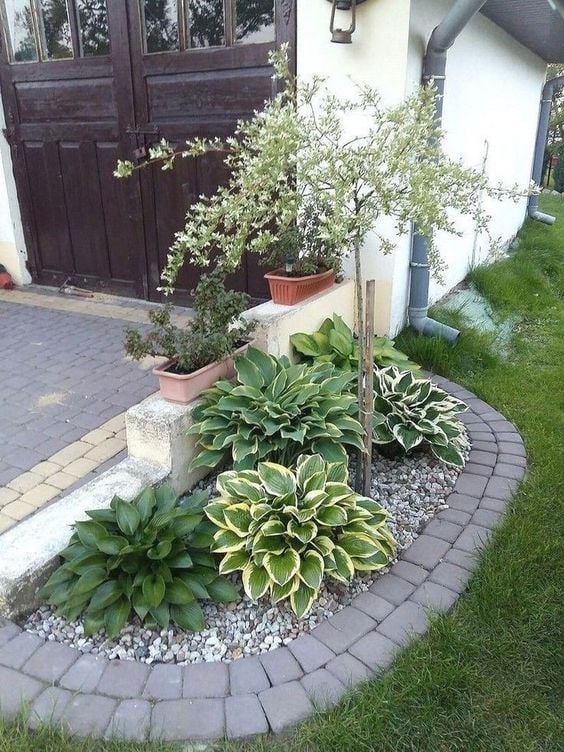
You don’t need a big yard for a great planting. This tiny corner proves it. Three hostas sit on a bed of pale gravel. A variegated willow stands above them and adds airy height. Terracotta pots on the ledge add a warm touch.
A curved brick border holds everything in place. It makes the small bed look planned and polished.
Best for: Shady corners, small entries, and tight spots by a garage or porch.
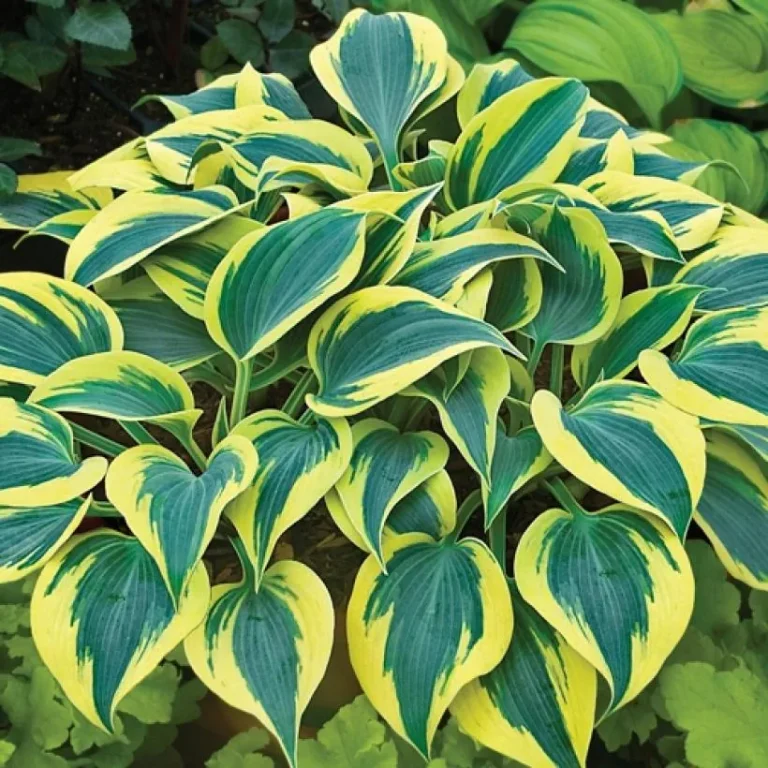
I love the mix of leaf colors here. One hosta is solid green. Two have creamy edges. That variety keeps the eye moving.
Mistake to avoid: Don’t pack in too many plants. Small spaces look best with two or three types, repeated.
Care note: Hostas love shade and steady moisture. Slugs love them too, so check the leaves after rain.
Final Thoughts
Great foundation planting comes down to a few simple moves. Layer your heights. Repeat your plants. Give them room to grow. Add one feature that makes people look twice.
Pick the idea that fits your house, then adjust it for your sun and climate. Start small if you need to. One good bed can change your whole front yard.