Christmas Cactus Potting Soil Mix: 3 Easy Recipes That Prevent Root Rot

You bought a Christmas cactus, so you grabbed cactus soil. Smart guess, but cactus soil alone is rarely the best match. This plant is not a desert cactus.
It’s a rainforest plant that grows on tree branches. Its roots hate sitting wet, and they hate drying out to dust. The right mix sits between those two extremes.
Below, I share three easy recipes, a buying guide for bagged mixes, and the signs your current soil has to go.
Why Cactus Soil Alone Falls Short
In the wild, Christmas cactus clings to tree branches in Brazilian mountain forests. Its roots grip the bark and tuck into small pockets of rotting leaves. Rain falls often, but the water runs off fast. The roots stay damp and never soak.
Your pot needs to copy that feeling. Think light, fluffy, and gently moist. The flat stem segments also work like leaves, so the roots need a steady drink, not a long drought.
Online advice splits into two camps. One camp says use cactus mix. The other says use plain potting soil. Both are half right.
Cactus mix drains well, but many bags run sandy and dry out fast. Plain potting soil holds moisture, but it packs down and can drown the roots. The best mix borrows from both.
Also read: Christmas Cactus Fertilizer: What to Feed, When to Stop, and How to Get More Blooms
The 4 Jobs Your Potting Mix Must Do
Every good mix does the same four jobs. Check any recipe or bag against this list.
Drain fast. Water should leave the pot quickly. Standing water cuts off air, and root rot follows.
Hold light moisture. The mix should stay slightly damp between waterings. Not soggy. Not dusty.
Stay slightly acidic. Aim for a pH of about 5.5 to 6.5. Most bagged peat-based mixes land close to that range already.
Stay fluffy over time. Peat, bark, and coir all break down. The mix packs tighter, and drainage drops. That’s why an old pot can fail even when you water perfectly.
Ingredient Cheat Sheet
You don’t need a fancy shopping list. These ingredients cover every recipe below.
- All-purpose potting mix: The easy base. It holds water and carries a few nutrients.
- Peat moss: A classic base that holds a lot of water. It has almost no nutrients, so you feed the plant yourself.
- Coco coir: The peat-free swap. It holds water and adds air gaps. Like peat, it breaks down over time.
- Orchid bark: Chunky pieces that open up the mix. Bark dries faster than peat or coir, which suits a tree-branch plant.
- Perlite: Light, white volcanic rock. It adds air pockets and speeds up drainage.
- Pumice: A heavier cousin of perlite. It stays mixed in instead of floating to the top when you water.
- Coarse sand or fine grit: Adds drainage and weight. Skip fine sand because it packs tight and blocks water.
Also read: Christmas Cactus Care: A Year-Round Calendar for Blooms Every December
3 Christmas Cactus Potting Soil Mix Recipes
Measure by parts. A part can be a cup, a scoop, or a yogurt tub. Just use the same measure for every ingredient.
Recipe 1: The Easy Upgrade Mix
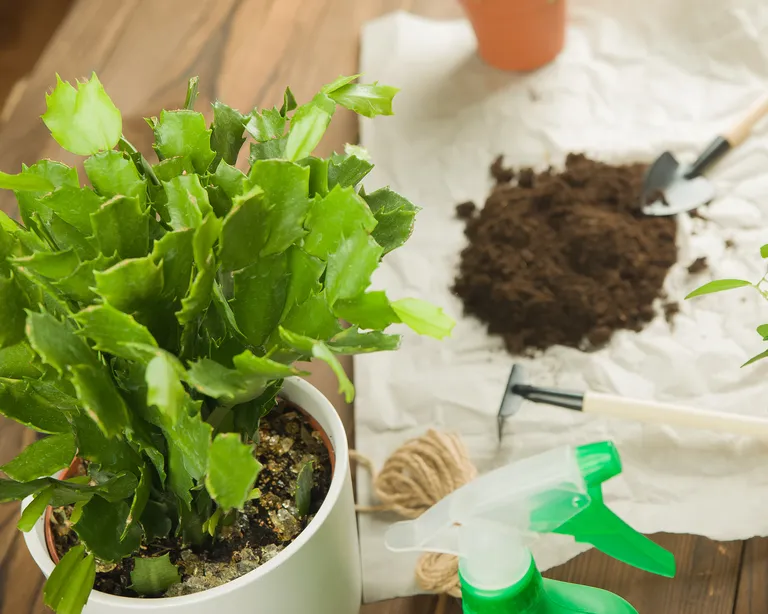
- 3 parts all-purpose potting mix
- 1 part perlite
Stir both in a bucket until the white flecks spread evenly. That’s it. The perlite makes up about a quarter of the mix, which opens it up without drying it out.
If your pot stays soggy after watering, go to 2 parts perlite.
Best for: Beginners and anyone who wants a no-fuss fix.
Recipe 2: The Airy Orchid-Style Mix
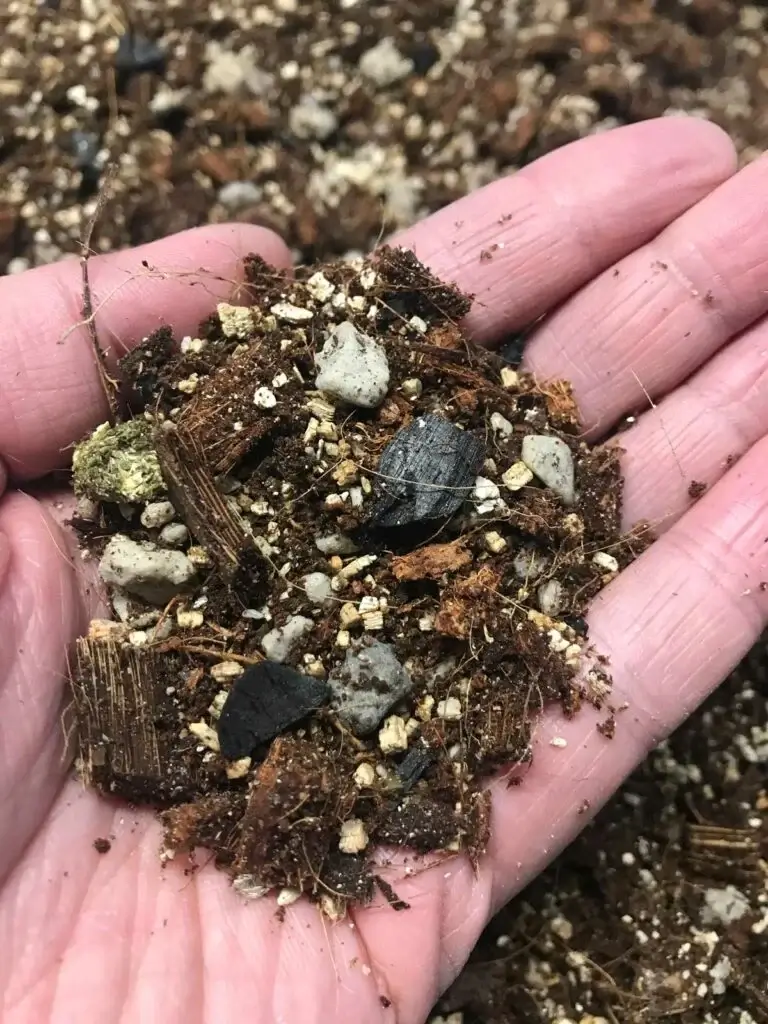
- 1 part cactus and succulent mix
- 1 part orchid mix
- 1 part pumice, coarse sand, or fine grit
Orchid mix brings big air gaps. Cactus mix adds quick drainage. The pumice keeps everything loose.
Water runs through fast, yet the bark and mix still hold enough moisture. Because it drains so well, you can water a little more often with less worry about rot.
Best for: Heavy waterers, and rooms where pots dry slowly.
Read more: How to Propagate Christmas Cactus in Water
Recipe 3: The Grower’s Mix
- 3 parts peat moss or coco coir
- 2 parts perlite
That’s a 60/40 blend, a long-time favorite with plant growers. It stays light and holds steady moisture. It has almost no nutrients, so feed your plant monthly in spring and summer.
Best for: Gardeners who like a simple blend and feed on a schedule.
Not sure where to start? I’d begin with Recipe 1. Switch to Recipe 2 if the pot stays wet for days after watering.
What to Look For in a Bagged Mix
Don’t want to mix your own? Bagged mixes work fine if you read the label.
- Look for perlite, pumice, bark, or coir in the ingredient list. These keep air in the mix.
- Skip bags that promise extra moisture control or water retention. Thirsty plants love them. Epiphytes don’t.
- Skip garden soil and topsoil. They run heavy and pack down in pots.
- Squeeze a damp handful. It should crumble apart. If it forms a tight, muddy ball, stir in more perlite.
- If you buy cactus mix, blend it with some orchid mix or regular potting mix for steadier moisture.
How to Pot Your Christmas Cactus in 5 Steps
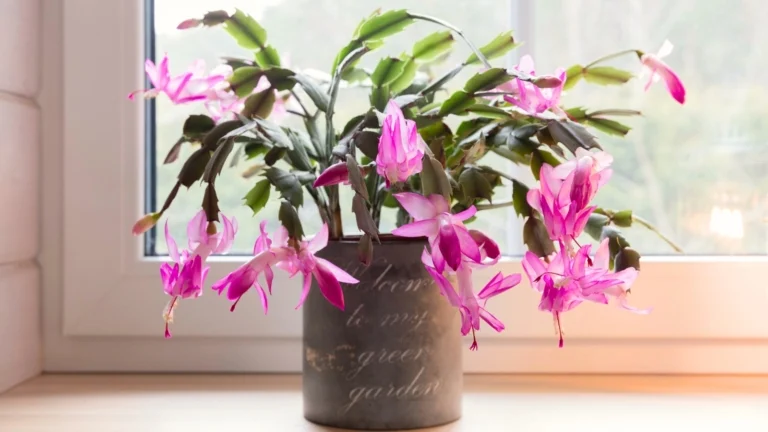
- Pick the right moment. Repot after flowering ends, in late winter or early spring. If your plant is in bud or bloom, leave it alone. Moving and repotting can make buds drop.
- Choose a snug pot. Go up one size, or about 1 to 2 inches wider. Make sure it has drainage holes. A pot that’s too big holds extra wet mix and slows growth. Terracotta dries faster than plastic, so pick the one that fits your watering habits.
- Dampen your mix. Stir in a splash of water until the blend feels evenly damp, like a wrung-out sponge. Dry peat repels water, so this step prevents dry pockets.
- Loosen the roots and plant. Slide the plant out and shake off the old mix. Trim any brown or mushy roots. Set the plant at the same depth as before, with the root ball about an inch below the rim. Fill in around the roots and press lightly.
- Water lightly. Give it a small drink. Let the top inch dry before the next watering. Hold off on fertilizer until you see fresh growth.
5 Signs Your Potting Mix Has Gone Bad
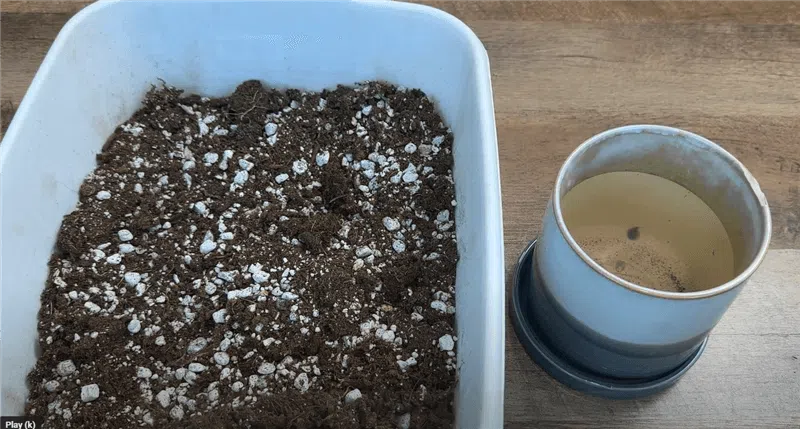
Good mix turns bad slowly. Watch for these signs.
Water runs straight through. The mix has dried into a hard block that repels water. Set the pot in a basin of water until the top turns damp. Repot soon after.
The pot stays wet for days. The mix has packed down, or it was too dense from the start. Slide the plant out, check the roots, and repot in an airier blend.
Stems shrivel while the soil is damp. Damaged roots can’t drink, even in wet soil. Trim brown or mushy roots and repot into fresh mix.
A white crust forms on the soil or pot rim. That’s fertilizer or mineral salt buildup. Flush the pot with plain water, let it drain fully, and repeat a few times. Or repot.
The mix is more than four years old. Peat, bark, and coir wear out. Repot even if the plant looks fine.
FAQ
Can I use regular potting soil for Christmas cactus?
Yes, with a boost. Mix 3 parts potting soil with 1 part perlite. Straight from the bag, most potting soil holds too much water for this plant.
Is cactus soil enough on its own?
It works in a pinch. Many cactus mixes run sandy and dry fast, though. Blend yours with orchid mix or regular potting soil for steadier moisture.
What pH does Christmas cactus need?
Slightly acidic, around 5.5 to 6.5. Most peat-based potting mixes already fit. Skip lime unless a test shows your mix is too acidic.
Will the right soil make my Christmas cactus bloom?
Not by itself. Long nights and cool temperatures set the buds. Good soil keeps the roots healthy so the plant can carry those buds to full bloom. Soggy roots can cause bud drop and weak growth.
How often should I replace the potting mix?
Plan on every three to four years. Don’t wait past five. Repot sooner if roots fill the pot or the mix packs down.
Christmas cactus asks for very little. Give it a light, airy mix and a snug pot, and it can live for decades. Mix a small batch now, then repot once the blooms fade.