Christmas Cactus Care: A Year-Round Calendar for Blooms Every December

Your Christmas cactus doesn’t need much. It needs a plan. Most people buy one in full bloom, enjoy it for a month, then forget it until next December. That gap is where the flowers go missing.
This guide gives you the plan. You’ll set up the right spot first.
Then you’ll follow a month-by-month calendar that tells you when to water, feed, prune, and move the plant into the dark. Do it right, and this plant can outlive you.
Also read: How & When to Prune Your Christmas Cactus Plant
First, Check Which Holiday Cactus You Own
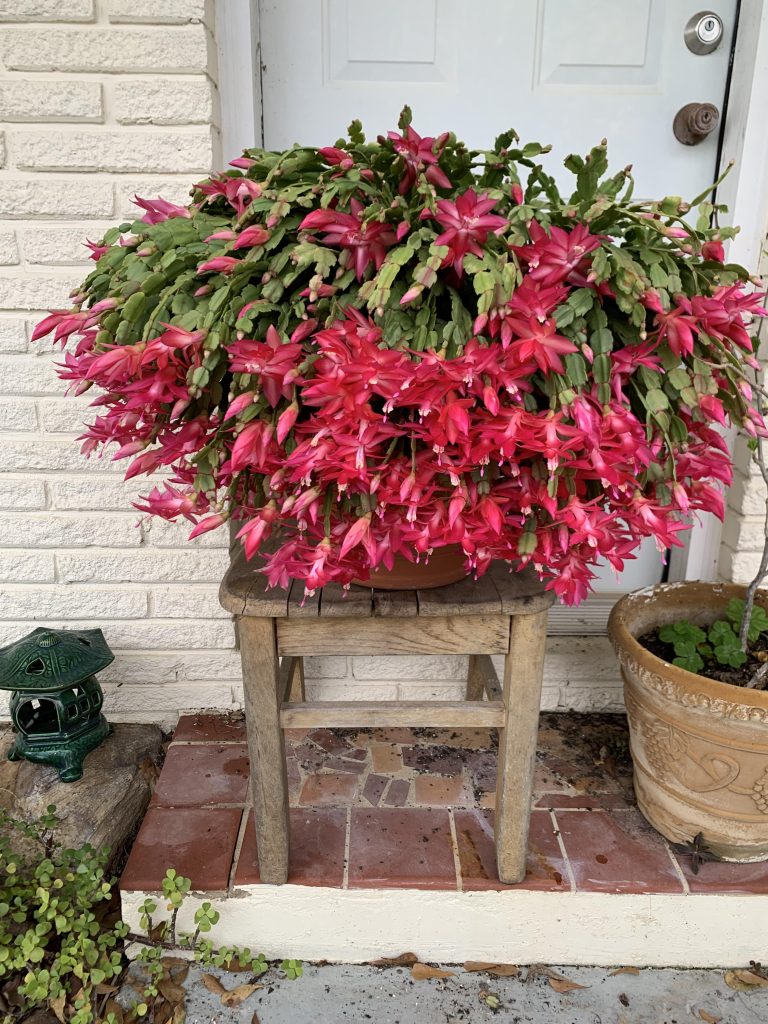
Many “Christmas cacti” at the store are really Thanksgiving cacti. They look alike, but they bloom about a month apart. The care is the same. Only the timing shifts.
Look at the edges of the flat green segments. Those segments are stems, not leaves. A true Christmas cactus has smooth, rounded edges.
A Thanksgiving cactus has two to four pointed teeth on each segment.
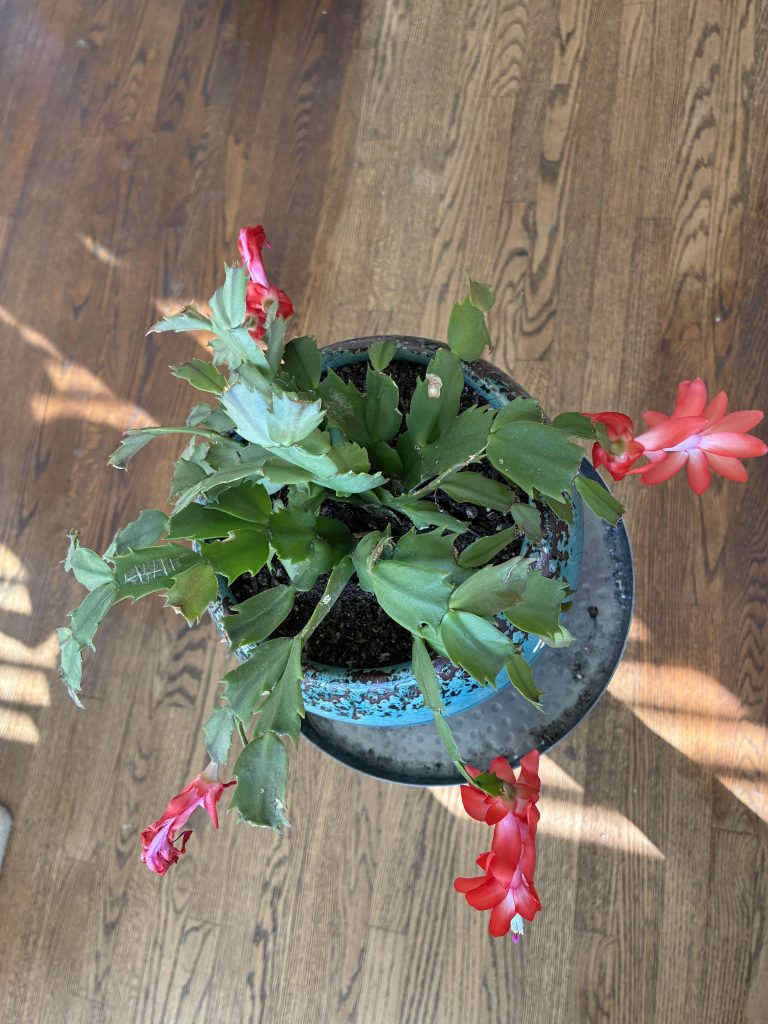
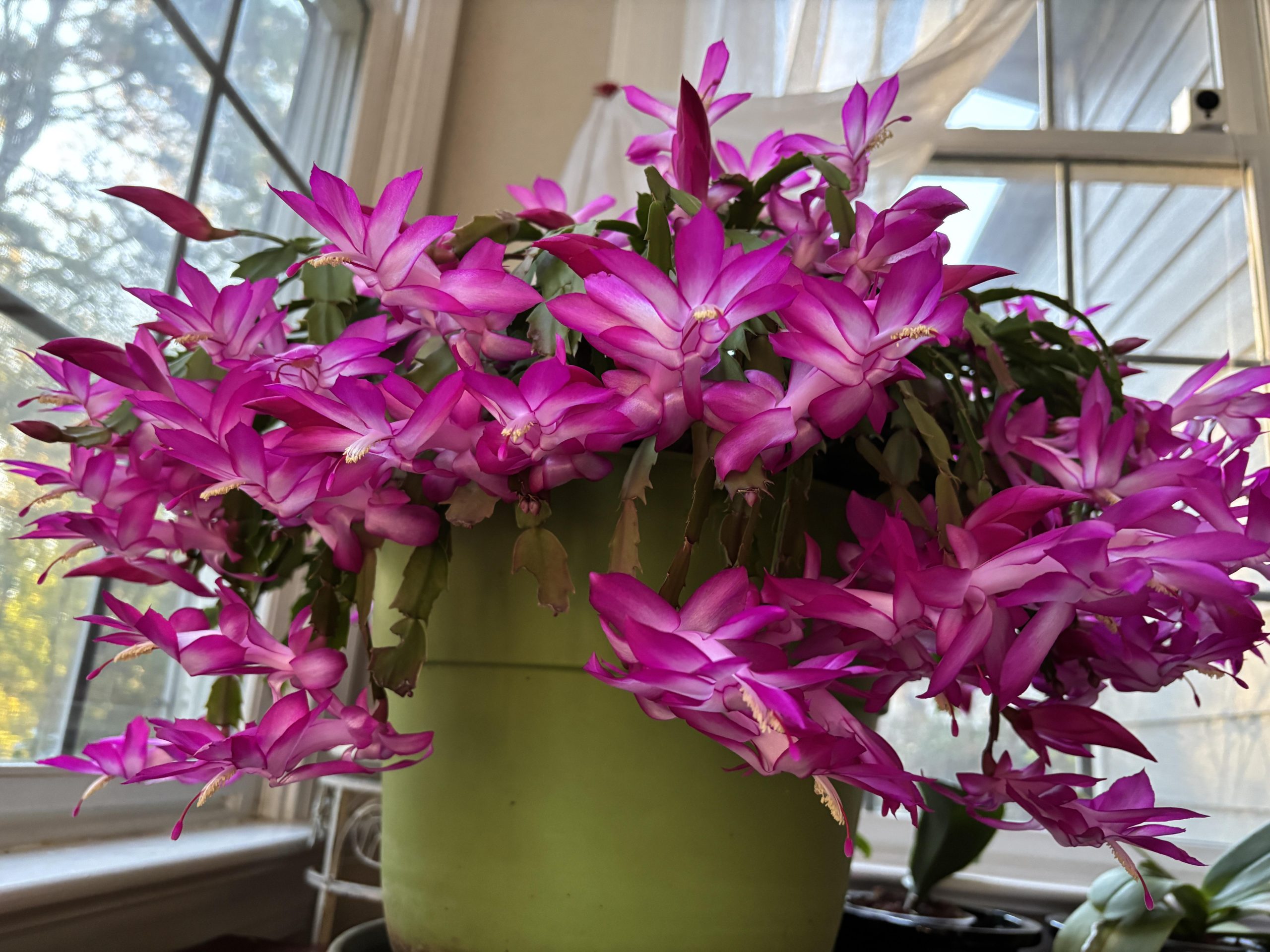
The flowers give you a second clue. Thanksgiving cactus has yellow pollen tips. Christmas cactus has purple to brown ones.
An Easter cactus is a different plant. Its segments are even rounder, and it blooms in spring. If yours flowers in late November, treat it as a Thanksgiving cactus. Start the fall routine about a month earlier.
Read more: How to Repot a Christmas Cactus Without Killing the Blooms
Get the Setup Right Once
In the wild, this plant grows on tree branches in shady Brazilian rainforests. It’s a cactus, but it’s not a desert plant. Build its home around that.
Light
Give it bright, indirect light. A spot within about six feet of an east, west, or south window works well. Skip the hot afternoon sun.
Direct rays turn the stems pale, then purple or red. Too little light means fewer buds.
Soil
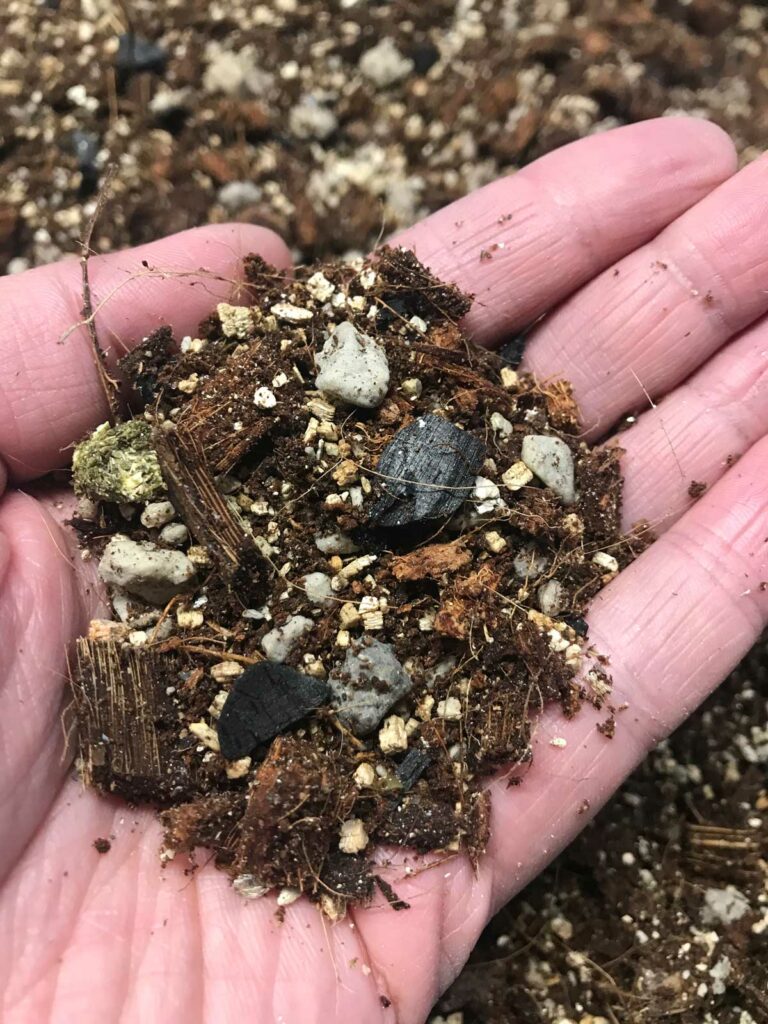
Use a light, fast-draining mix. A bagged cactus and succulent mix works.
I like to stir in some orchid bark or perlite to make it fluffier. Its roots are used to air, not soggy soil.
Read more: How to Propagate Christmas Cactus in Water
Pot
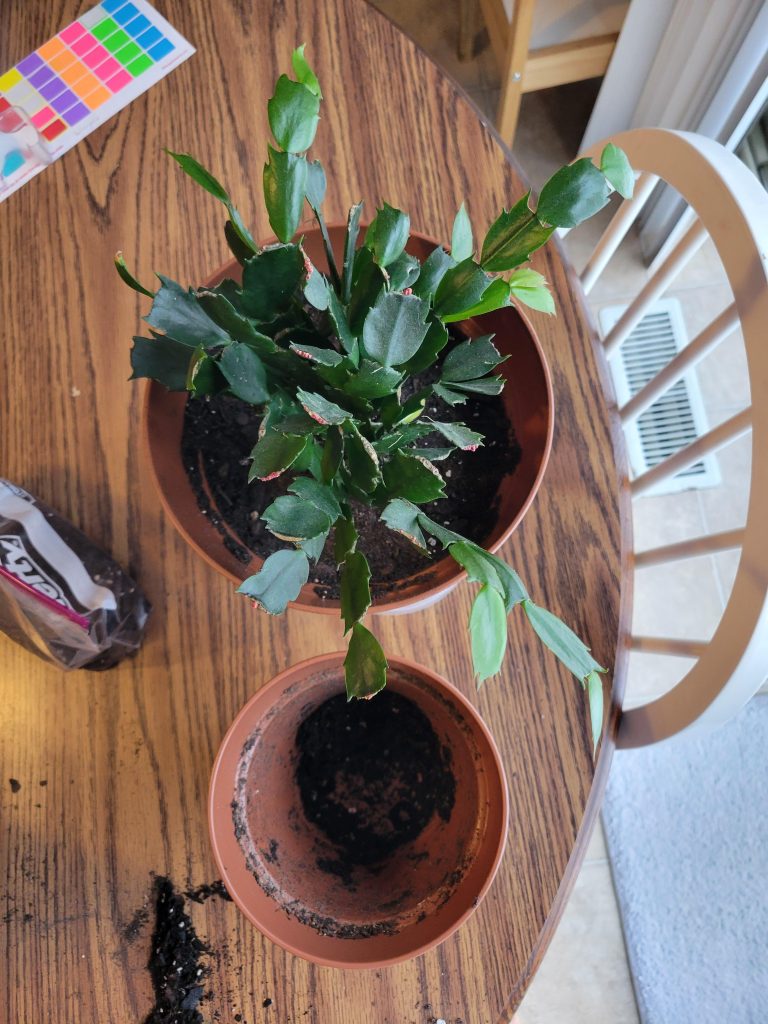
Pick a pot with a drainage hole. Go up only one size when you repot. This plant blooms best when its roots feel snug.
A pot that’s too big holds extra wet soil and invites root rot. Terra cotta helps because it dries faster than plastic.
Temperature
Aim for 60 to 70°F most of the year. It can handle dips to about 50°F, but frost damages it. Keep it away from heat vents, radiators, and drafty doors. Hot, dry air makes buds drop.
Humidity
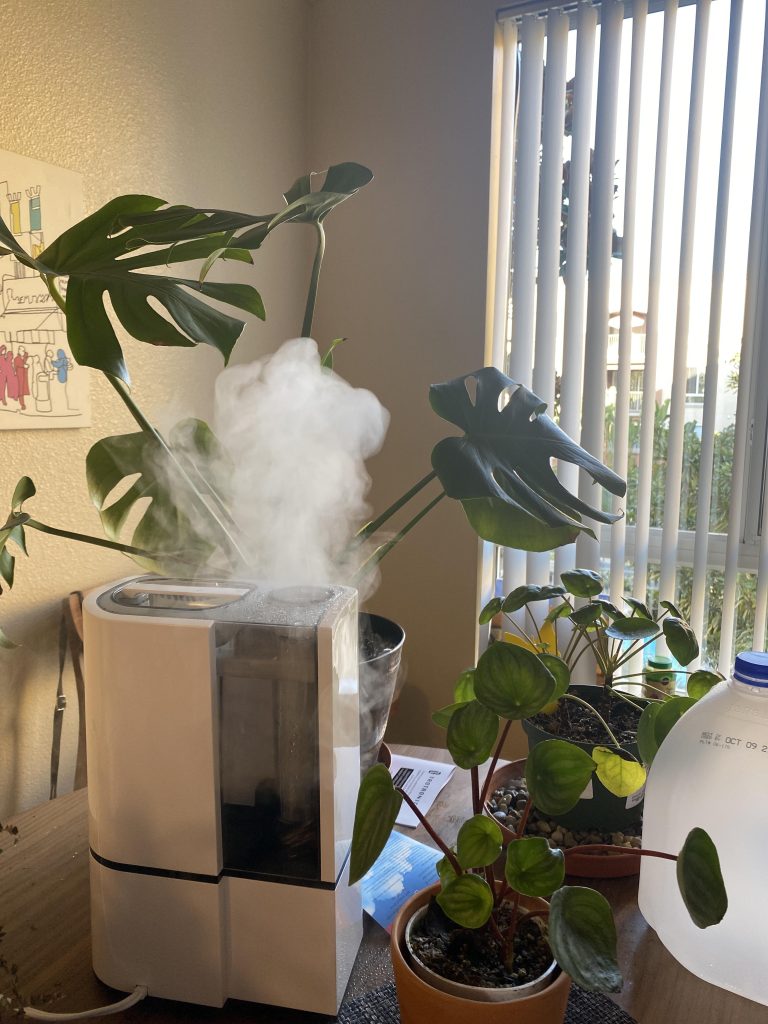
This plant likes humid air, around 50 to 60 percent. Most heated homes run drier. Set the pot on a tray of pebbles with water in it.
Keep the water below the top of the stones so the roots never sit in it. Grouping plants together also raises humidity.
Water the Simple Way
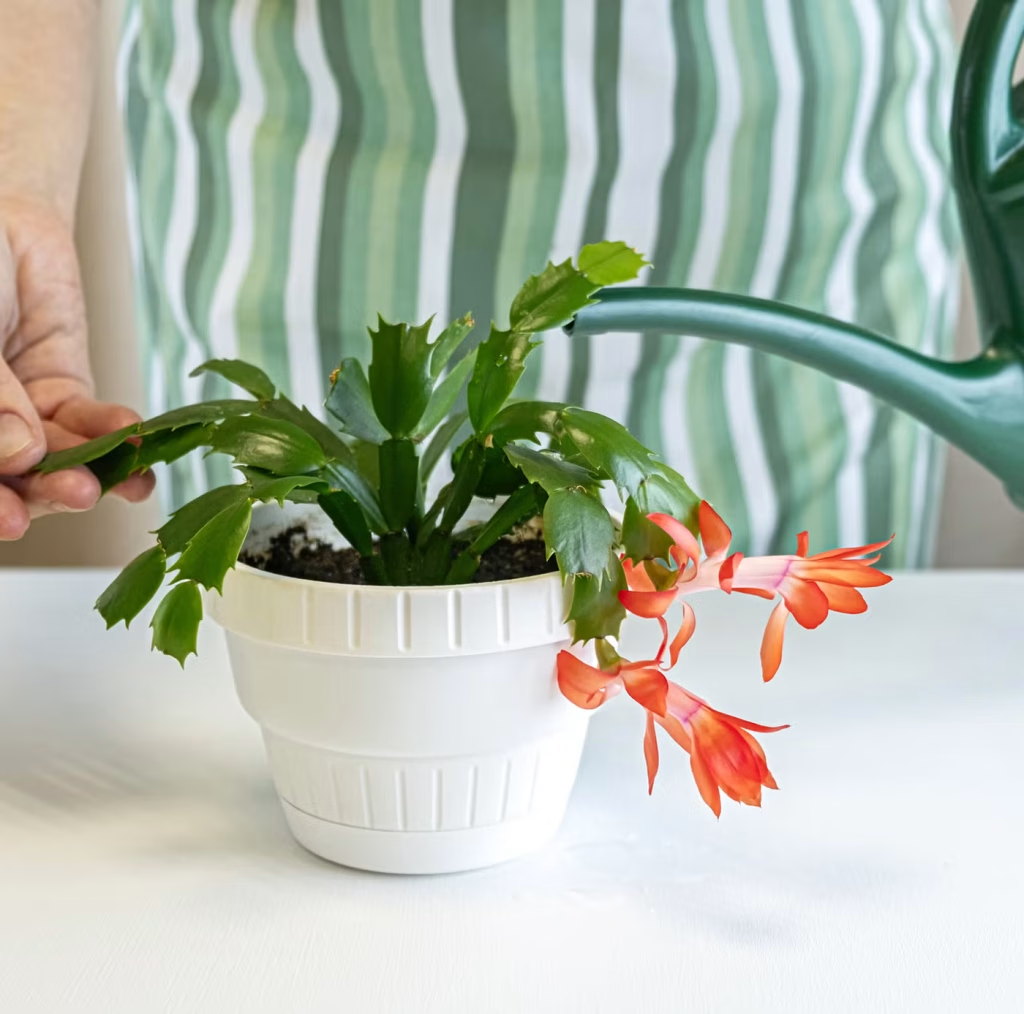
Use the finger test. Push a finger into the soil. If the top inch feels dry, water. If it feels damp, wait.
Water slowly until the extra drains out of the pot. Then empty the saucer. The stems store water, so a late drink hurts less than soggy roots.
Both extremes cause trouble. Too much water rots the roots and drops buds. Too little leaves stems limp and wrinkled. Your watering also changes through the year, and the calendar covers each shift.
Your Christmas Cactus Care Calendar
These dates fit the Northern Hemisphere. If you garden in the Southern Hemisphere, shift everything by six months.
January to February: Rest After Blooming
Your plant just spent a lot of energy on flowers. Let it rest. Move it to a slightly cooler spot if you can, around 55 to 60°F.
Water less and keep the soil on the dry side. Water only if the stems start to shrivel. Skip fertilizer for now.
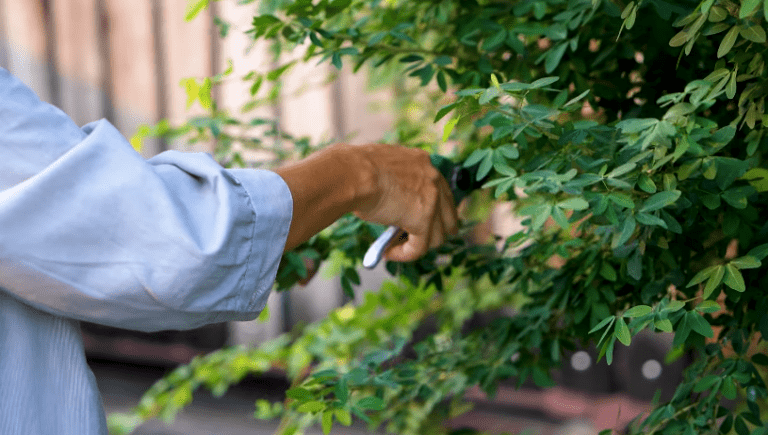
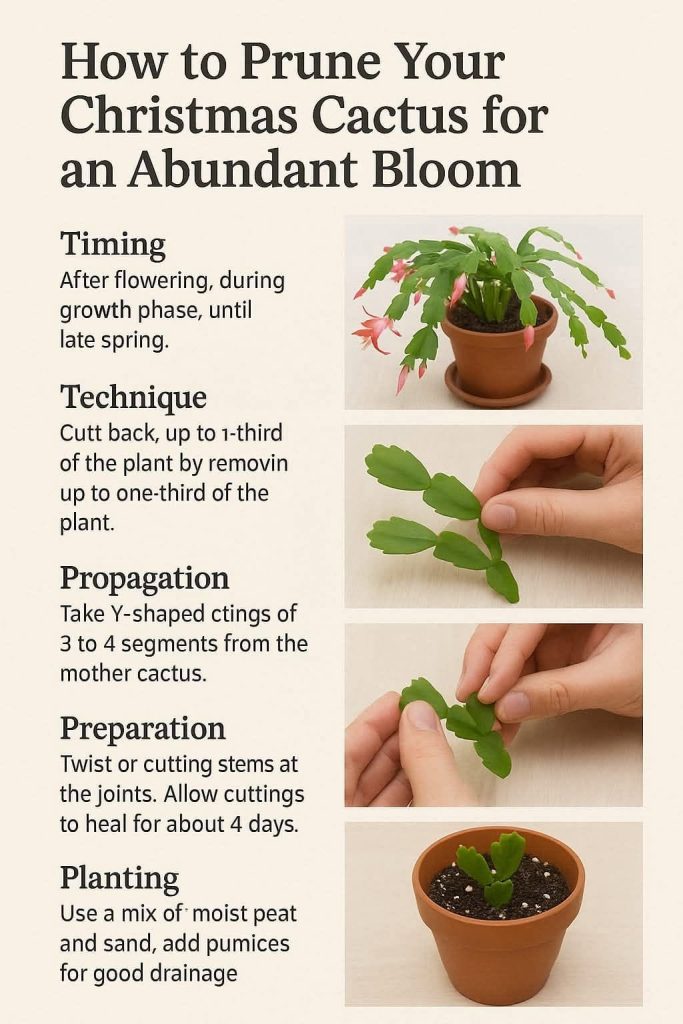
This is also the best time to prune. Twist or snip off a segment at the joint. The plant branches out where you cut, and more branches mean more flowers.
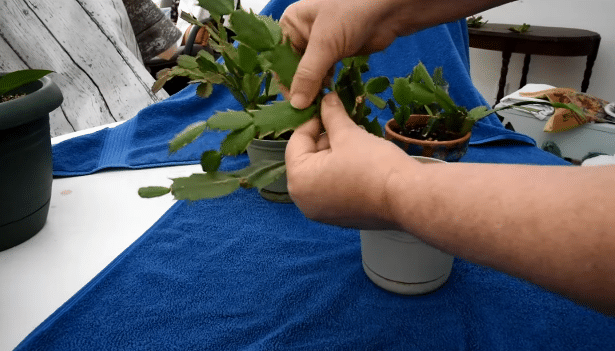
You can root the pieces you remove. Our Christmas cactus pruning guide covers the cuts step by step.
March to May: Spring Wake-Up
Look for small, bright green segments at the stem tips. That’s your signal. Move the plant back to bright, indirect light. Water when the top inch of soil feels dry.
Start feeding again. Use a balanced houseplant fertilizer at half strength every two to four weeks.
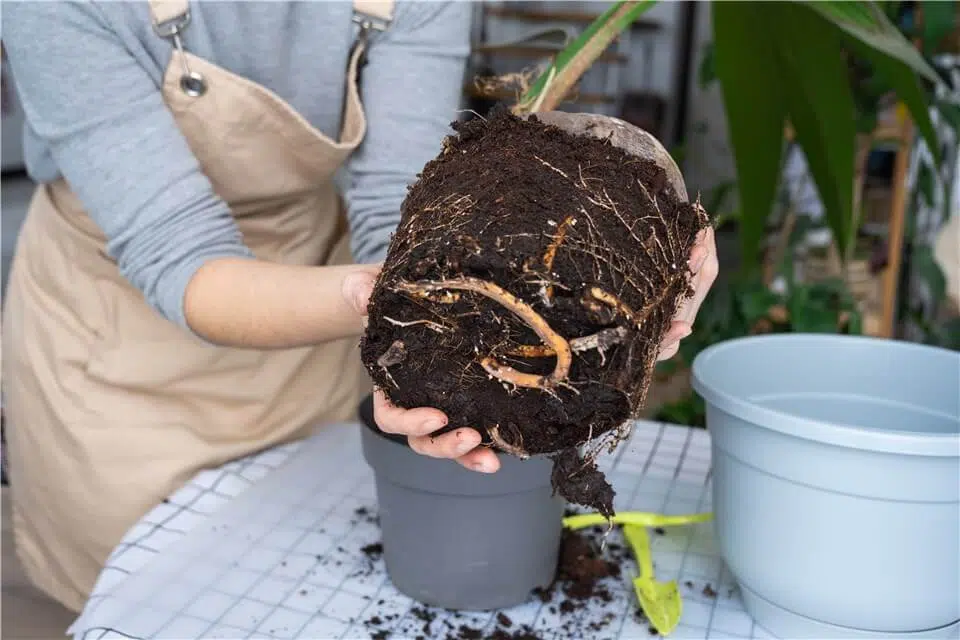
Spring is also the best time to repot. Repot every two to four years, or when roots fill the pot or poke out of the drainage holes.
Go up one pot size only. Wait about a month after repotting before you feed.
June to August: Summer Growth
Your cactus can spend summer outdoors. Pick a shady spot, like a covered porch. Bring it inside if nights drop below 50°F. Direct sun burns the stems fast.
Keep using the finger test. Warm weather dries the soil quickly, so check more often. Keep feeding every two to four weeks. Stop pruning by midsummer.
September: Switch Gears
Stop fertilizing. This one step tells the plant the growing season is over.
If your cactus spent summer outside, bring it in slowly. Add a few more hours indoors each day for a week or so. Then let the soil dry a little more between drinks.
Late September to November: The Bud-Setting Treatment
This step decides whether you get flowers. The plant sets buds when nights are long and cool.
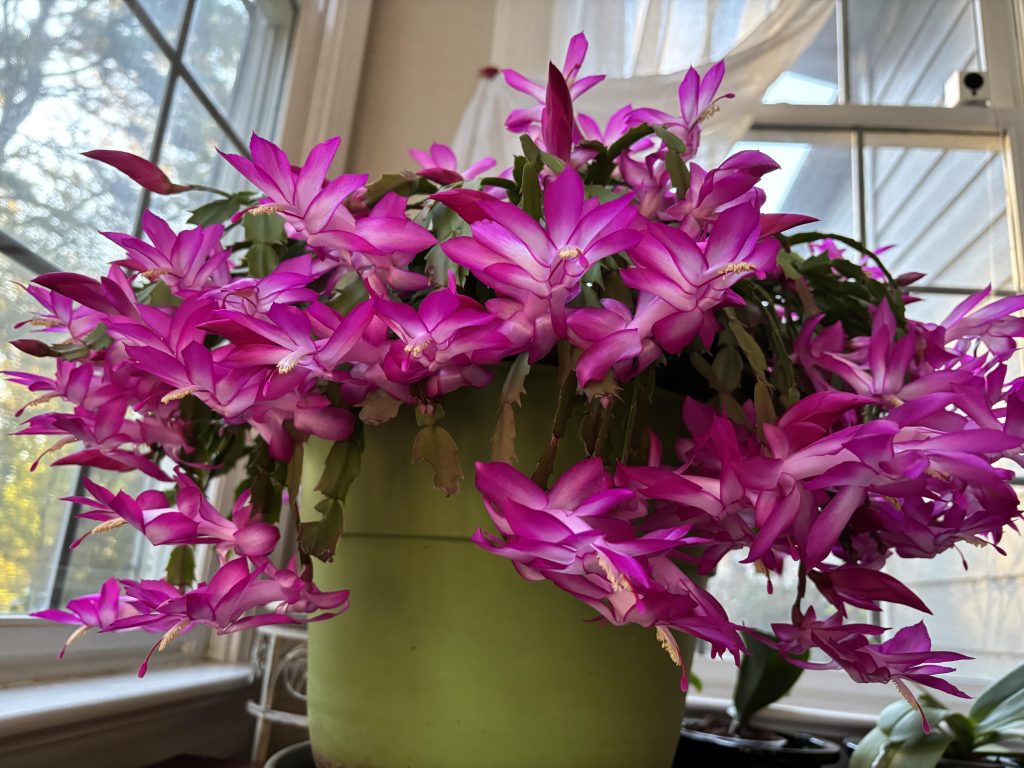
Start in late September or early October for Christmas blooms. If you own a Thanksgiving cactus, start about a month earlier.
You have two ways to trigger buds.
Long, dark nights. Give the plant 13 to 14 hours of total darkness every night for about six weeks. Put it in a closet or spare room in the evening.
Bring it back to bright light each morning. Set a phone reminder so you don’t forget. Even a reading lamp or street light can delay buds.
Cool nights. Keep night temperatures between 50 and 55°F. At that range, the plant sets buds even with normal day length. Don’t go lower, because cold can injure it. Nights above 70°F can block buds, so a warm bedroom works against you.
Water a little less than you did in summer while you do this. When tiny buds appear at the stem tips, go back to regular watering. Dry soil at this stage makes buds fall. Then set the plant where you want it to bloom.
December: Bloom Time, Hands Off
Don’t turn the pot. Don’t move it. Don’t repot it. Buds are touchy. A sudden change in light, temperature, or water makes them drop.
Keep the plant away from heaters and hot drafts. Flowers last longer in a cooler room. Water when the top inch of soil is dry. Skip fertilizer until the blooms finish.
Troubleshooting: What Your Plant Is Telling You
Buds Falling Off
Stress is the usual cause. The common triggers are moving the plant, hot drafts, dry air, uneven watering, and light breaking up the dark nights.
Find what changed and fix it. Then leave the plant alone. It often recovers and blooms again later.
Limp, Wrinkled Stems
Check the soil first. Dry soil means thirsty stems, so give it a good drink. Wet soil with limp stems points to root rot.
Slide the plant out of its pot. Healthy roots look pale and firm. Brown, mushy roots mean rot. Cut away the soft parts and repot in fresh, dry mix.
Purple or Red Stems
Too much direct sun is the most common cause. Move the plant back from the window or hang a sheer curtain.
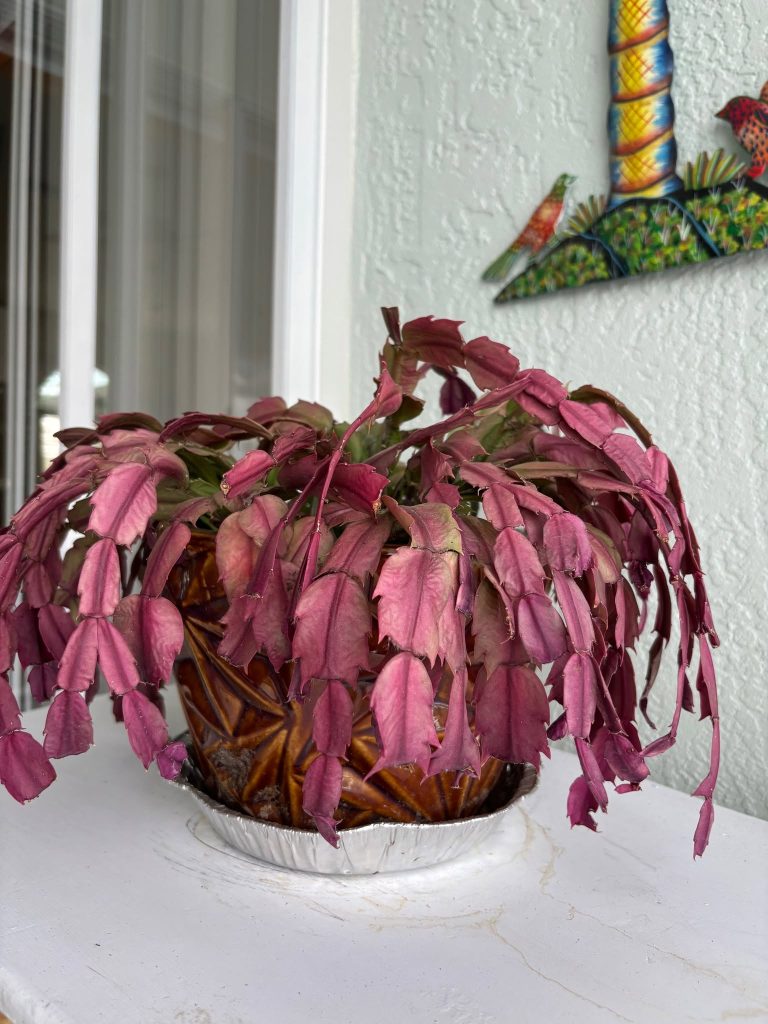
A tight pot with worn-out soil can cause it too. Refresh the soil if you haven’t repotted in years. A faint purple edge is not a worry.
Yellow Stems
Yellowing can come from too much sun, too much water, or too little. Feel the soil first. Then look at where the plant sits. Pale, bleached stems on the sunny side point to sun damage.
Dark Spots or White Fuzz
Spots on the stems often come from soggy soil, dim light, and stale air. Water less and add light. White, powdery bugs are mealybugs. They leave a sticky film on the plant. Wipe them off and spray with insecticidal soap.
Is Christmas Cactus Safe for Pets?
Mostly, yes. The ASPCA lists Christmas cactus as non-toxic to cats, dogs, and horses. That makes it a safer holiday pick than amaryllis or true lilies. The stems have no sharp spines either.
A pet that eats a lot may still get an upset stomach or vomit. Call your vet if the symptoms last or your pet eats a large amount.
If your cat loves to chew, put the plant on a high shelf or in a hanging basket.
Christmas Cactus Care FAQ
Why won’t my Christmas cactus bloom?
The usual causes are too little darkness, nights above 70°F, or feeding into the fall. Give it the bud-setting treatment from late September. Check that no light reaches it at night.
How often should I water a Christmas cactus?
There’s no fixed schedule. Pot size, light, and room temperature all change how fast the soil dries. Water when the top inch feels dry.
When should I repot it?
Repot in spring every two to four years. Do it sooner if roots fill the pot or push through the drainage holes. A snug pot is fine, because this plant blooms best with tight roots.
How long does a Christmas cactus live?
A healthy one can live for decades. Some reach 100 years. A 20-year-old plant is still considered young.
Can I move it after the buds form?
Move it once, right when you see the first buds. Pick the spot where you want it to bloom. After that, leave it alone. Turning or moving it again can drop the buds.
Final Thoughts
Once the calendar becomes a habit, this plant mostly looks after itself. Add the September and October dates to your phone today. Those two steps matter most. Do them well, and December will take care of the rest.