How to Prepare Hydrangeas for Winter (So They Actually Bloom Next Summer)

Picture this. Spring is here. Your hydrangea has fresh green leaves. It looks healthy. But there’s not a single flower.
Frustrating, right? Winter cold is often the culprit.
Many hydrangeas form next summer’s buds in fall. They sit on bare stems all winter. One hard freeze can kill them. The fix is easy and cheap.
I’ll show you which types need help, when to start, and seven simple steps to protect those buds. I’ll also tell you when to unwrap in spring.
Does Your Hydrangea Need Winter Protection?
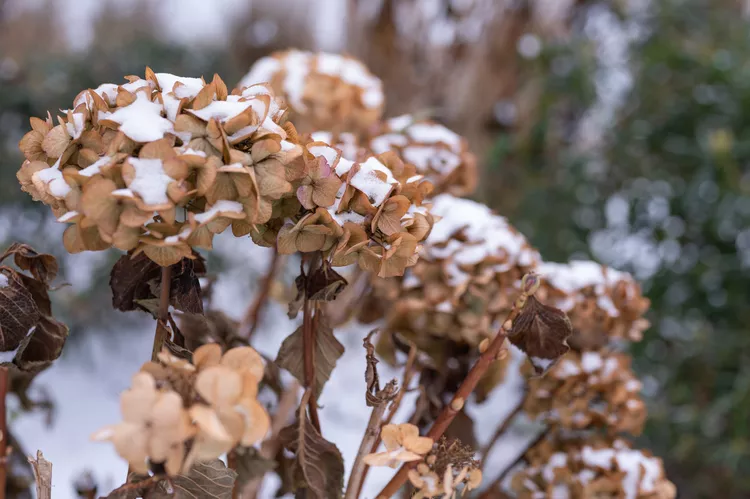
Not always. It comes down to one thing: when your hydrangea makes its flower buds. Some types make them in fall. Those buds face the cold all winter. Others make buds in spring. Those are much safer.
Here’s how your hydrangea stacks up.
Bigleaf and mountain: These make buds in fall. They’re hardy in zones 5 to 9. Mountain types cope with cold a bit better. These need the most help. Mulch them. In zone 6 and colder, add a cage.
Oakleaf: These also make buds in fall. They’re hardy in zones 5 to 9. A harsh winter can cost you blooms. Mulch every plant. Wrap it in cold zones or windy spots.
Panicle: These make buds in spring. They’re the toughest of the bunch. They’re hardy in zones 3 to 7. Mulch young plants and relax.
Smooth: These also make buds in spring. They’re hardy in zones 4 to 7. Mulch is plenty.
Climbing: These are hardy in zones 4 to 8. Mulch young plants.
Two quick notes.
First, Endless Summer and other rebloomers? Treat them like bigleaf. Their first flush still comes from fall buds.
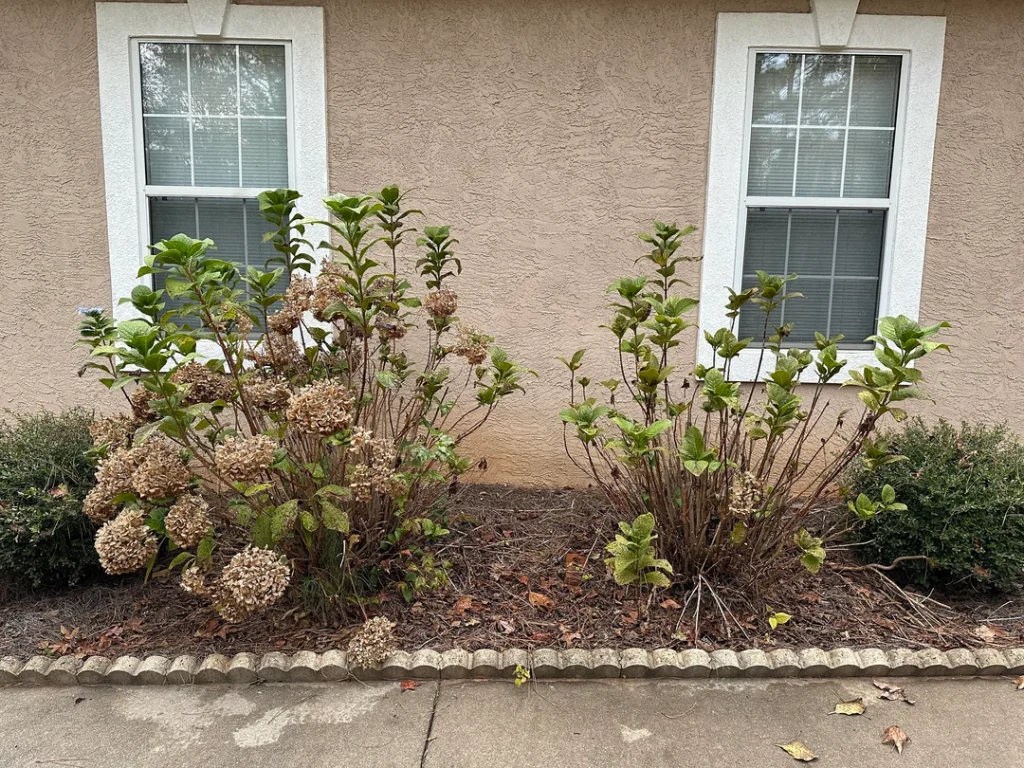
Second, growing yours in a pot? Protect it, whatever the type. Pots expose roots to far more cold.
Also read: 13 Stunning Hydrangeas for Shade Garden
When to Start Protecting Your Hydrangeas
Skip the calendar. Watch your plant instead.
Leaves are dropping. That means your plant has gone dormant. You want it asleep before you wrap it.
A few frosts have passed. Light frost is fine. It helps the plant slow down.
The ground isn’t frozen. You need soft soil to push in stakes. Mulch goes down once the soil cools.
For many gardeners, that’s November. Still, keep an eye on your forecast. Early freezes love to sneak up on us.
Also read: 10 Plants to Prune in October Before It’s Too Late for Next Year’s Blooms
Preparing Hydrangeas for Cold Weather
1. Stop Feeding and Pruning in Fall
Your hydrangea needs to slow down now. Fertilizer says the opposite. It triggers soft new growth. Frost kills that growth fast.
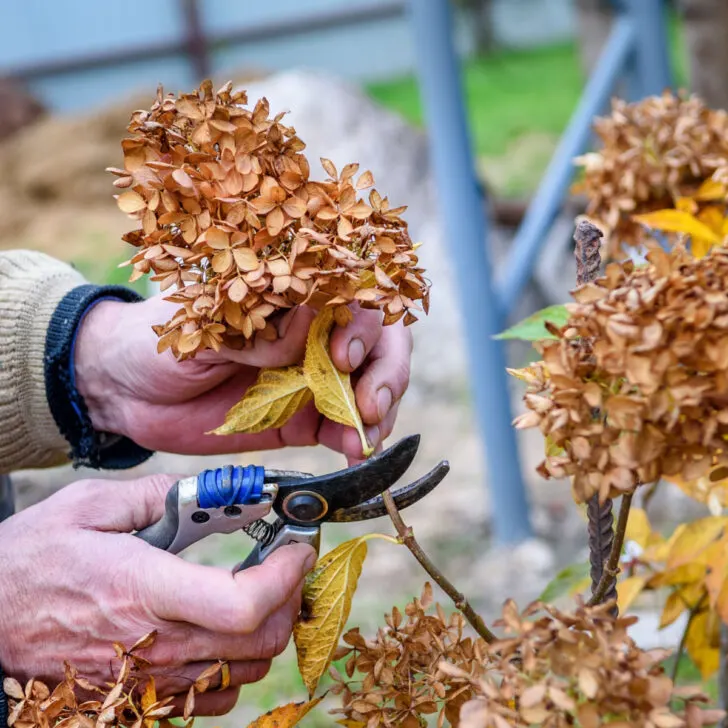
So stop feeding once summer fades. Then hide the pruners. Bigleaf and oakleaf types carry next year’s buds on their stems right now.
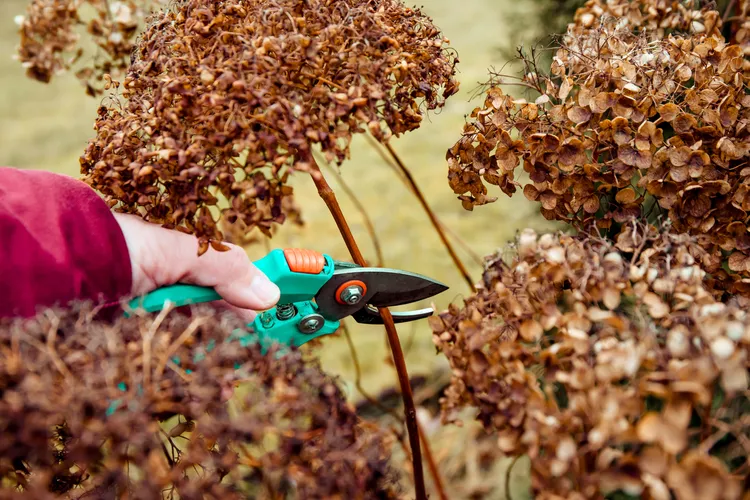
Cut the stems and you cut the flowers. Yes, that includes Endless Summer. Only snip stems you know are dead. Real pruning can wait until spring.
Read more: Pruning Hydrangeas in Fall: What to Know Before You Make the First Cut
2. Water Deeply Before the Ground Freezes
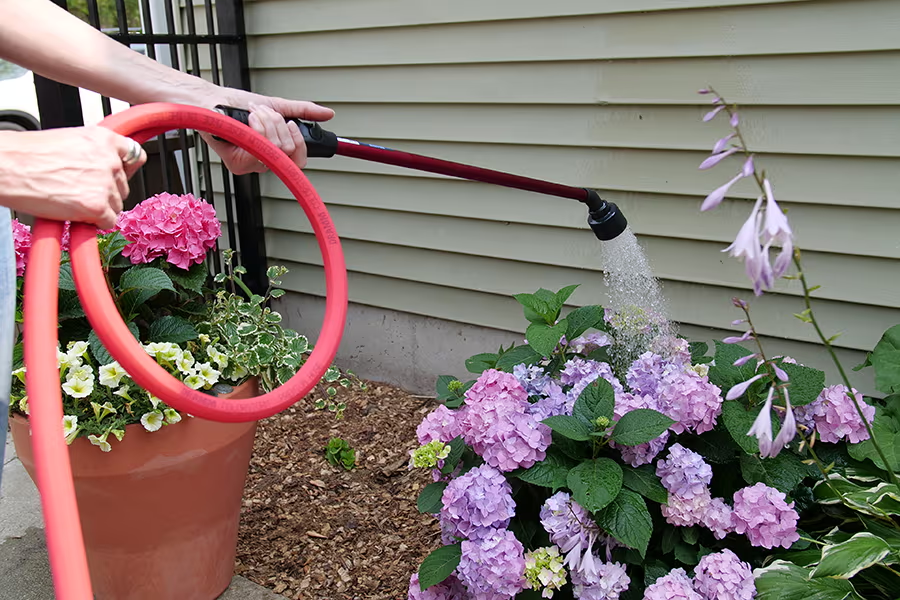
Dry roots and icy wind are a bad mix. Keep watering through fall while the soil is workable. Then give each plant one big soak right before the freeze.
Set a hose at the base. Let it trickle slowly. Stop when the soil feels damp several inches down. Skip this if the soil is already soggy.
A well-watered plant handles winter wind much better than a thirsty one.
3. Mulch the Base of the Plant
Mulch is your easiest win. It works like a blanket for the roots. Wait until the soil cools. Then spread a 3-inch layer around the plant.
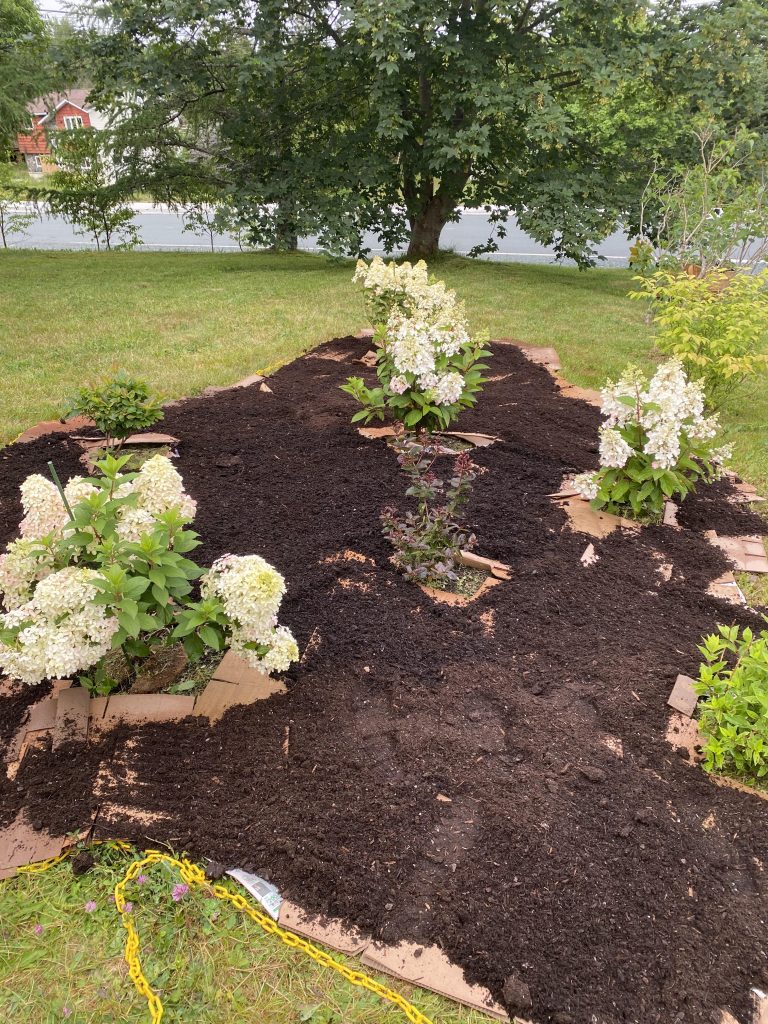
Shredded leaves, bark, and pine straw all work well. Cover the ground out to the edge of the branches.
Keep the mulch an inch or two away from the stems. That keeps them dry. In very cold zones, go up to 4 inches. The layer also stops frost heaving.
4. Build a Leaf Cage for Bigleaf and Oakleaf Types
Live in zone 6 or colder? Bigleaf and oakleaf types need a cage. Push sturdy stakes into the ground around the plant.
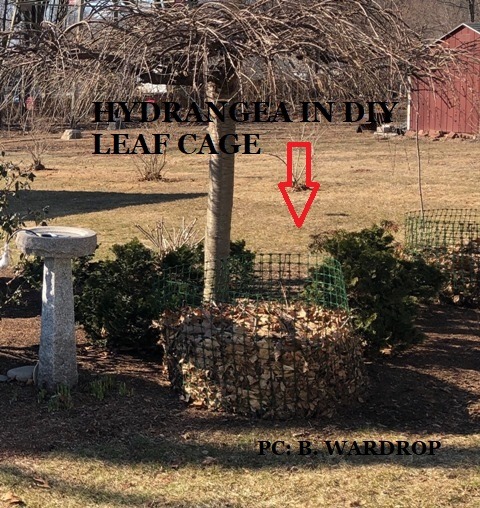
Wrap wire mesh around them. Make it at least 6 inches taller than the shrub. Fill it with dry leaves or pine straw. Oak leaves are best.
They stay fluffy. Go slowly, though. The branch tips hold your flower buds. Don’t snap them. Leave the top open so heavy snow can’t crush the cage.
5. Keep Frost Cloth Ready for Cold Snaps
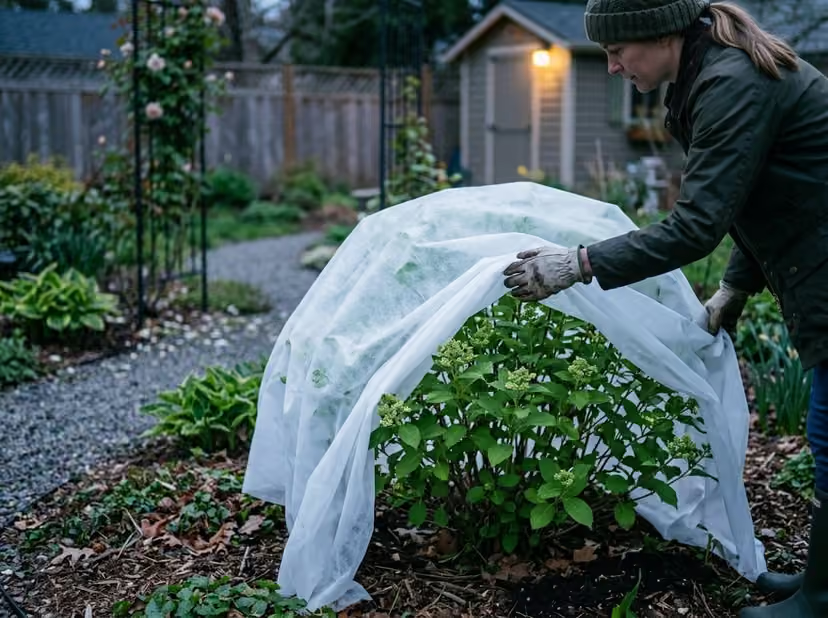
Not every cold snap needs a full cage. Sometimes a sudden freeze just shows up in the forecast. That’s when frost cloth shines.
Drape it over the whole shrub before dark. Let it reach the ground. Weigh the edges with bricks, stones, or heavy pots so wind can’t steal it.
No frost cloth? An old bedsheet works fine. Pull it off once the cold snap passes.
6. Shield Your Plant From Wind and Snow
Wind dries out buds. Heavy snow snaps stems. Both cost you flowers. Set up a burlap screen on the windy side. Use two or three stakes and staple the burlap on.
In snowy areas, loosely tie the stems together with soft twine. This keeps them from splaying open under the weight.
Brush off heavy snow with a gentle upward sweep. Never shake icy branches. Ice makes stems brittle.
7. Shelter Your Potted Hydrangeas
Pots freeze faster than the ground. Roots have no soil buffer. Once your plant is dormant, move it to an unheated garage or shed.
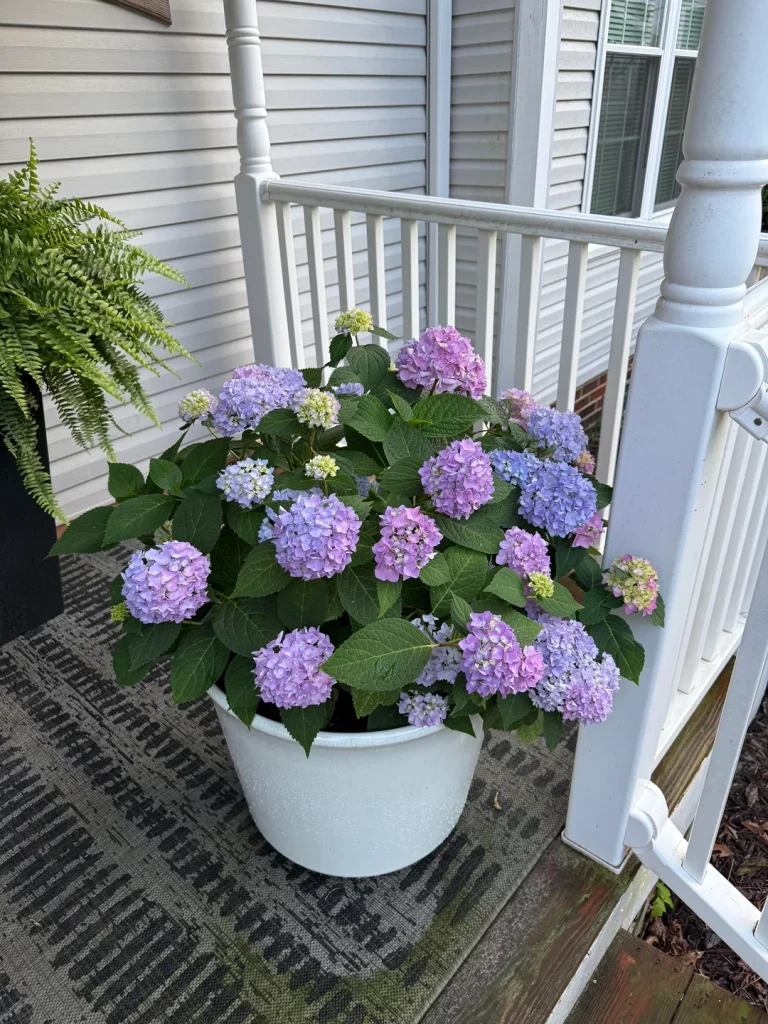
Aim for a spot that stays above freezing. Water lightly every 3 to 4 weeks. Just keep the roots from drying out.
Empty any saucer so water can’t pool. No garage? Sink the pot into the ground. Or wrap it in burlap and pack leaves around it.
When to Take the Winter Protection Off
This is where many gardeners slip up. The sun comes out. You feel spring in the air. So you pull everything off. Please wait.
Bigleaf buds wake up early. Once they wake, they lose their cold hardiness. A light frost around 31°F can then kill the flower buds. So leave the cage on until your last frost has passed. In some areas, that means waiting until late spring.
When the time comes, remove the cage, wire, and burlap. Scrape the mulch back a little, or leave it to block weeds. Don’t panic if you see green growth. That’s normal.
Now check for damage. Black, brittle stems are dead. If you’re unsure, wait for leaves to appear. Then cut just above healthy green growth. Any living stems will still bloom for you.
Potted plants can head back outside once the weather warms. Bring them out gradually. Start watering and feeding again as new growth appears.
Common Winter Protection Mistakes
Wrapping in plastic. Plastic traps moisture and blocks airflow. Use burlap, wire, or frost cloth instead.
Wrapping too early. Your plant needs to go dormant first. Wait for leaf drop and a few light frosts.
Packing in wet leaves. Wet leaves freeze into a cold, soggy block around your buds. Use dry leaves or pine straw.
Unwrapping too early. A warm week in March can fool you. Wait until the last frost is behind you.
What If Your Bigleaf Still Won’t Bloom?
You did everything right. The buds still died. Don’t give up on hydrangeas. Your plant may just be a poor match for your spot. Try one of these fixes.
Move it. A spot shielded by a fence, wall, or building makes a big difference. Fall is a good time to relocate it.
Switch to a reblooming bigleaf. Endless Summer BloomStruck and Twist-n-Shout make flowers on new wood more readily.
Try a mountain hydrangea. These handle cold better than standard bigleaf types.
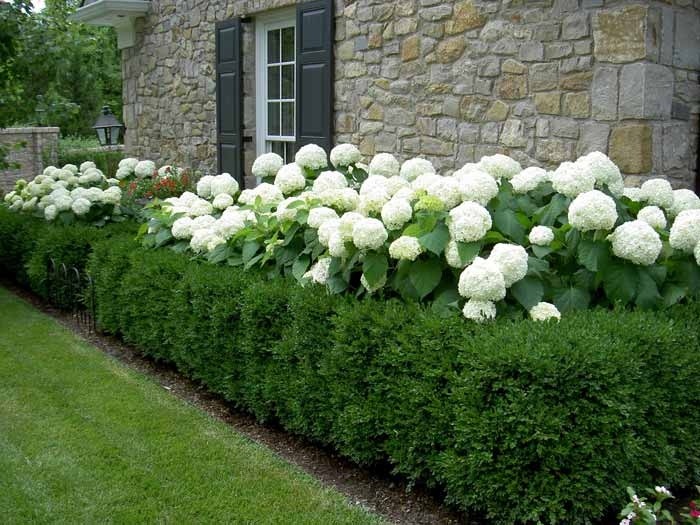
Go with a panicle or smooth. Limelight (panicle) and Annabelle (smooth) form buds in spring. Winter can’t touch them. They’re the safest picks in cold zones.
FAQ
Can I leave my hydrangea alone over winter?
It depends on the type. Panicle and smooth hydrangeas usually do fine with just mulch. Bigleaf types in zone 6 and colder need a cage or wrap.
Should I cut my hydrangea back before winter?
Not the old-wood types. Bigleaf and oakleaf hydrangeas carry next year’s buds on their stems. Cut only stems you know are dead. Panicle and smooth types can be cut in late winter or early spring.
How cold is too cold for hydrangeas?
Old-wood buds start to struggle when winter lows drop below about 5 to 10°F. Oakleaf buds can die when it falls below -10°F. A frost after spring growth starts can also kill buds.
Can I cover my hydrangea with plastic or a tarp?
I’d skip both. They trap moisture and heat. Burlap, frost cloth, or a wire cage filled with dry leaves all let the plant breathe.
Do potted hydrangeas need to come inside?
They need shelter, not warmth. An unheated garage or shed is perfect. A heated room is too warm and dry. Your plant needs a cold rest to bloom well.
Your Hydrangeas Will Reward You
Winter protection sounds like a big job. It’s really one afternoon of work. Mulch the base, build a cage, and then leave it alone. Grab a few stakes, some wire, and a pile of dry leaves this fall. Your future summer self will be glad you did.