Repotting Peace Lily: When to Do It and Exactly How

Your peace lily droops an hour after watering. Roots poke out of the drainage holes. The soil looks tired, and the leaf tips are turning brown.
These problems are not random. Your plant has run out of room and fresh soil. Repotting fixes both, and it takes about 20 minutes.
This guide shows you when to repot, what to buy, and how to do it step by step. You will also learn which mistakes to avoid.
Does Your Peace Lily Really Need Repotting?
Most peace lilies need fresh soil every 1 to 3 years. Growth speed decides, not the calendar. A fast grower in bright light fills its pot sooner than a slow one in a dim corner.
Check for these six signs:
- Roots at the surface or the drainage holes. Roots circling the soil line or sneaking out the bottom mean the pot is full.
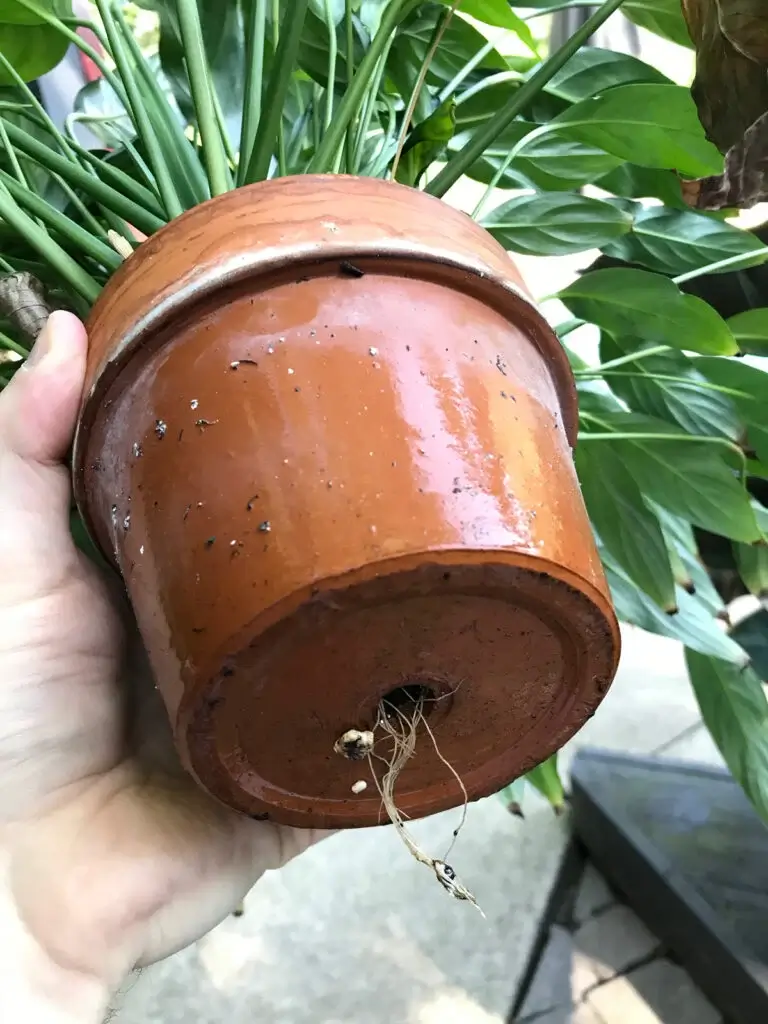
- Water that rushes straight through. The pot drains in seconds and the soil soaks up almost nothing.
- Soil that dries out too fast. You water, and the plant wilts again within a day or two.
- Soggy soil with a sour smell. Old mix breaks down and holds water unevenly. That stresses the roots.
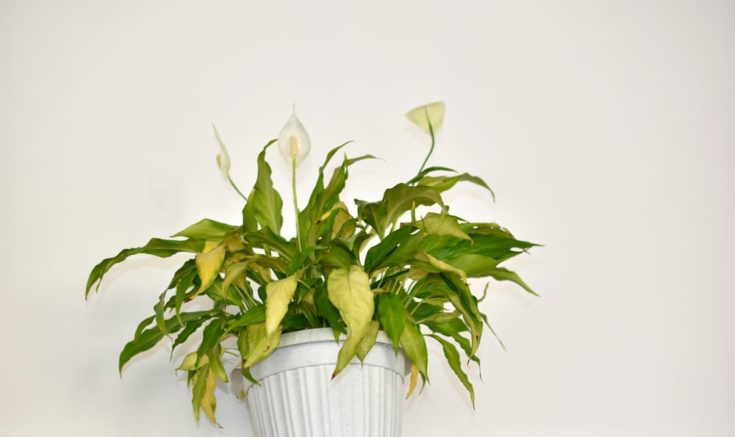
- Brown tips and yellow lower leaves. Tired soil can no longer feed the plant.
- Stems crowding the rim. A plant that lifts up out of its pot is asking for more room.
Brown tips alone can also come from dry air or minerals in tap water. Slide the plant out and look at the roots before you decide.
Also read: Peace Lily Care Indoors: How to Stop the Droop and Get More Blooms
When You Should Wait
Peace lilies like a snug pot. Hold off if the plant is only slightly crowded and growing well.
A plant in full bloom can also wait a few weeks, so you don’t interrupt the show.
The Same-Pot Option
Roots not crowded, but the soil looks flat and compacted? Skip the bigger pot. Tip the plant out, trim any mushy roots, and put it back in the same pot with fresh mix.
The Best Time to Repot a Peace Lily
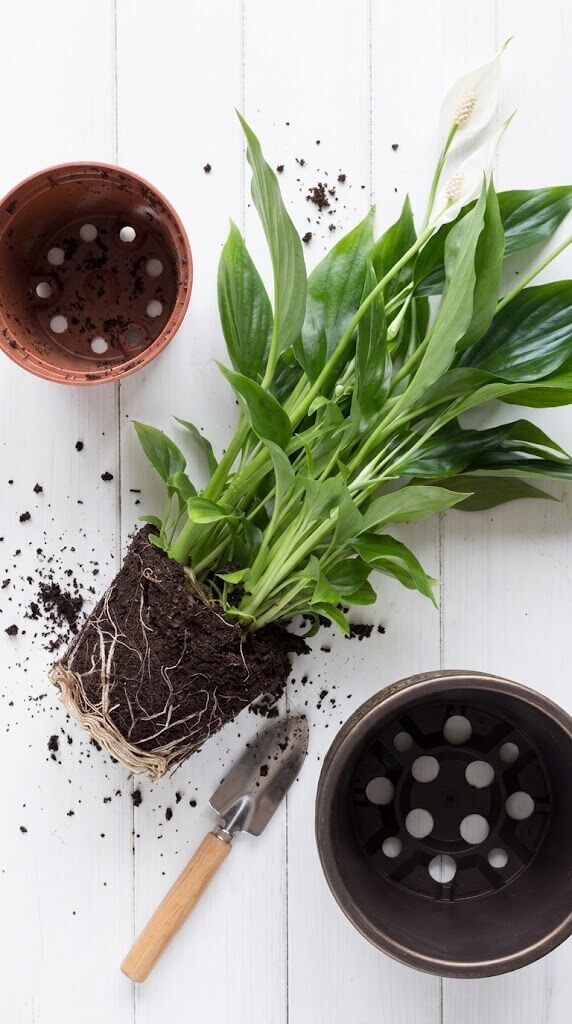
Early spring is the sweet spot, around March. Growth picks up then, so the plant bounces back fast.
Summer and fall work too if your plant is clearly cramped. Avoid midwinter. Growth slows down, and recovery takes much longer.
What You Need Before You Start
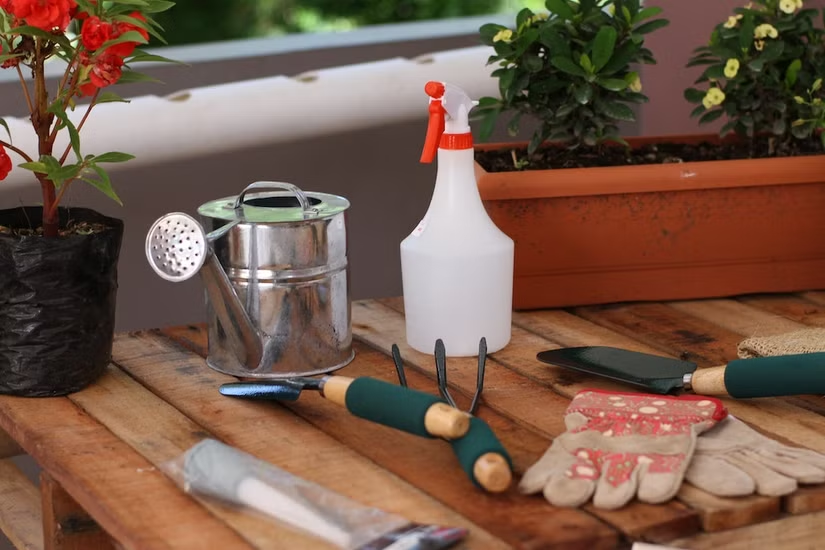
Gather everything first. Repotting goes fast when your tools sit within reach.
- A new pot, 1 to 2 inches wider than the old one
- Fresh potting mix and perlite or orchid bark
- Clean pruning shears or scissors
- A butter knife for stuck roots
- Newspaper or a tray to catch the mess
Pick the Right Pot
Go only 1 to 2 inches wider. Peace lilies like tight roots. A pot that is much bigger holds too much wet soil, and that leads to root rot.
Drainage holes are not optional. Without them, water pools at the bottom and drowns the roots.
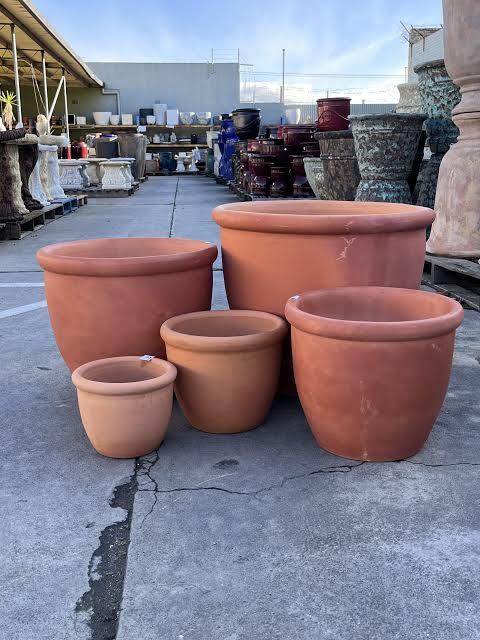
Terracotta is a smart pick because it pulls extra moisture out of the soil. Plastic works too. It just needs a lighter hand with the watering can.
Mix the Right Soil
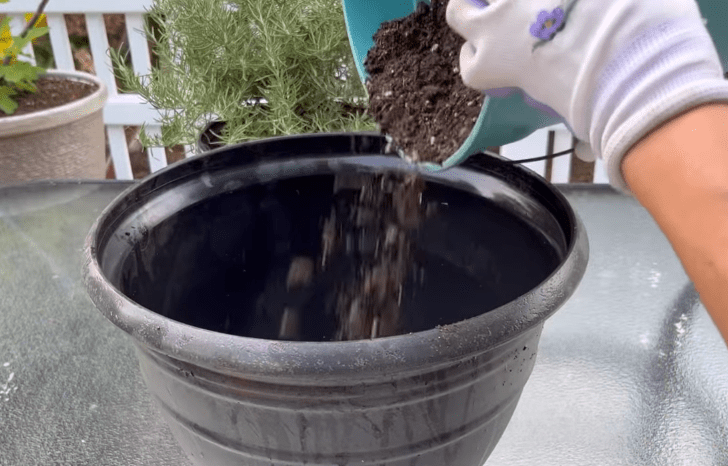
Peace lilies want soil that holds some moisture but drains fast. Standard houseplant mix is a good start. It can pack down over time, so I add something chunky.
Try this blend: 3 parts houseplant mix to 1 part perlite or orchid bark. The mix stays airy, and water flows through without leaving the roots soggy.
How to Repot a Peace Lily in 8 Steps
1. Water the Plant First
Water it a few hours before, or the day before. Moist soil holds the root ball together and slides out easily. Soggy soil turns into mud, so don’t water right before you start.
2. Add Soil to the New Pot
Spread a layer of fresh mix across the bottom. Make it deep enough that the plant sits at the right height. You can adjust this later.
3. Slide the Plant Out
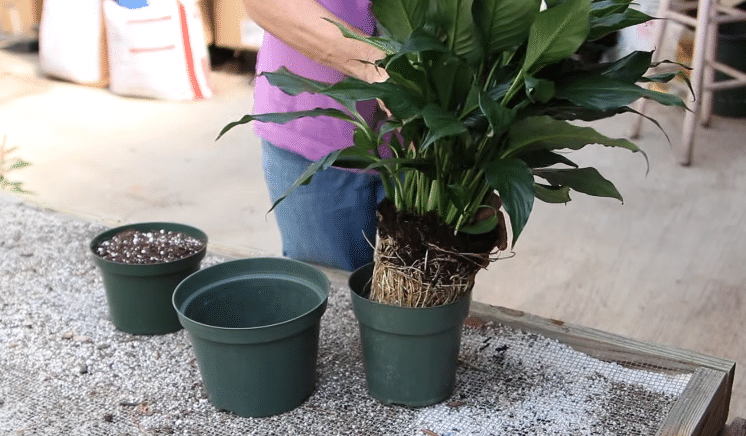
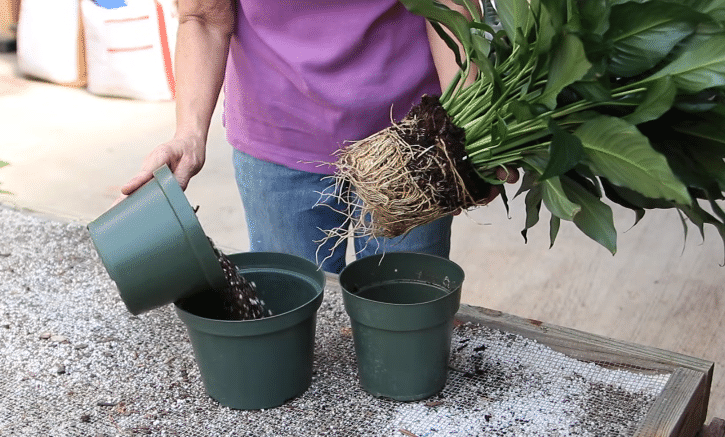
Tip the pot on its side. Support the base of the stems with one hand. Squeeze the sides of a plastic pot, or tap the bottom. Stuck? Run a butter knife around the inside edge.
Never yank the plant by its stems. You will snap them.
4. Loosen and Check the Roots
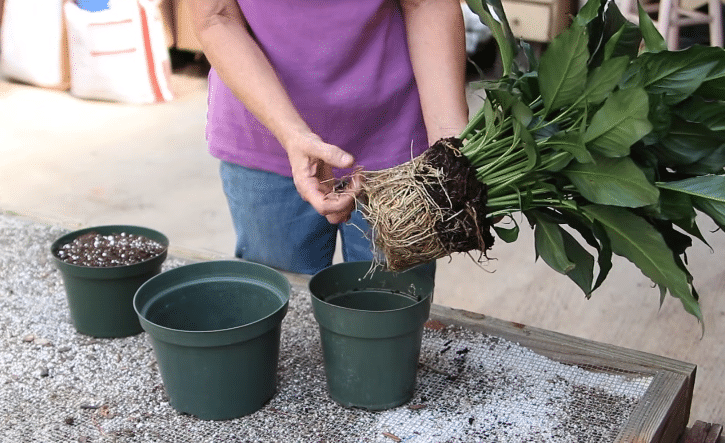
Look at the root ball. Roots circling the outside are a sign the plant was root bound. Tease them apart with your fingers. Brush off the old soil.
This step matters. Tight roots left in a tight clump will keep growing in circles, and the plant gets no benefit from the new pot.
Healthy roots are white or tan and firm. Trim anything black, mushy, or foul smelling. Use clean shears.
5. Set the Plant at the Right Depth
Place the plant in the center of the new pot. It should sit at the same depth as before. The top of the root ball should land about 1 inch below the rim.
That gap holds water when you pour. Add or remove soil underneath until the height is right.
6. Fill In Around the Roots
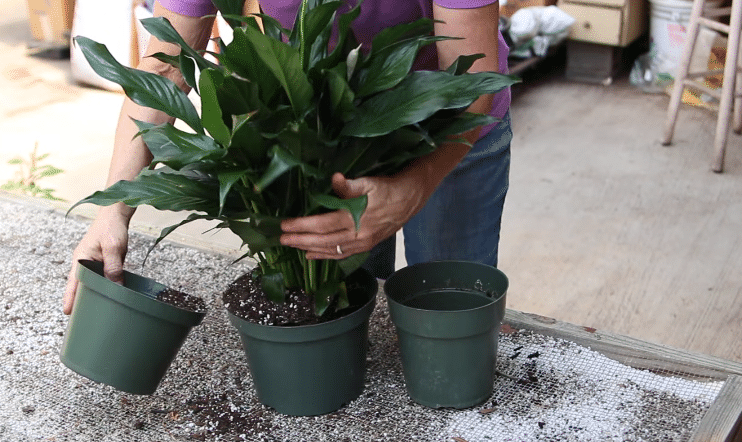
Add fresh mix around the root ball. Press it down gently to close big air pockets.
Don’t pack it hard. Compacted soil blocks water and air, and the roots suffocate.
7. Water Until It Drains
Water slowly until it runs out of the drainage holes. This settles the soil around the roots. Let the pot drain fully. Then empty the saucer so the roots never sit in standing water.
8. Move It to Bright, Indirect Light
Place your plant in bright light without direct sun. Harsh rays scorch leaves that are already stressed. Keep it there for 2 to 3 weeks while the roots settle.
6 Repotting Mistakes That Make Peace Lilies Droop
Most repotting problems come from the same few slips. Here is what goes wrong and how to fix it.
1. Using a Pot That Is Too Big
A huge pot looks like a generous upgrade. It is not. The extra soil stays wet for days, and the roots start to rot.
The fix: Go up by 1 to 2 inches only. If you already used a big pot, add less water and let the top of the soil dry before you pour again.
2. Skipping Drainage Holes
Pretty ceramic pots often have no holes. Water collects at the bottom and the roots drown.
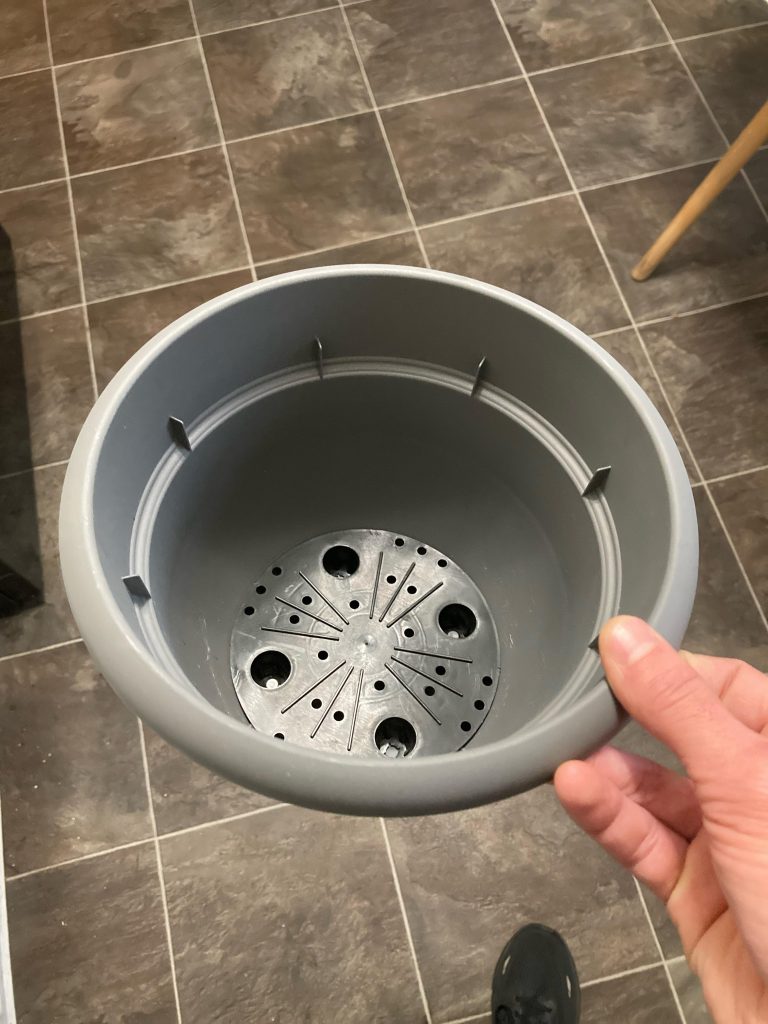
The fix: Plant in a plastic nursery pot with holes. Then set it inside the decorative pot. Pull it out to water, and let it drain before you put it back.
3. Packing the Soil Too Tight
Pressing hard feels like you are giving the plant support. You are squeezing out the air the roots need.
The fix: Press gently, just enough to close big air pockets. Loose, airy soil lets water move through.
4. Fertilizing Right Away
Fresh mix and a recovering plant tempt you to feed it. Fertilizer burns roots that are still healing.
The fix: Wait 4 to 6 weeks. The new potting mix will cover the plant’s needs until then.
5. Moving the Plant Into Direct Sun
A stressed plant wants a bright spot, but strong sun scorches the leaves.
The fix: Place it in bright, indirect light. An east-facing window works well. Keep it there for 2 to 3 weeks.
6. Watering Too Much to Help It Recover
A drooping plant looks thirsty. After repotting, it is often just adjusting. Extra water turns a small wilt into root rot.
The fix: Check the soil first. Water again when the top ½ to 1 inch feels dry. Mild drooping for a few days is normal.
FAQ’s
How often should I repot a peace lily?
Every 1 to 3 years is typical. Watch the plant instead of the calendar. Roots at the drainage holes, fast-drying soil, and water rushing straight through all mean it is time.
Why is my peace lily drooping after repotting?
It is adjusting to new soil and a new pot. This is called transplant shock. Keep it out of direct sun, hold off on fertilizer, and water only when the top of the soil dries. Most plants perk up within a week or two.
Can I repot a peace lily while it is blooming?
Yes, if the plant is badly root bound. Otherwise, wait until the flowers fade. You will protect the blooms and give the plant an easier recovery.
Can I use regular potting soil?
Yes. Standard houseplant mix works. Stir in perlite or orchid bark so the soil drains fast and stays airy.
Can I split my peace lily instead of moving it to a bigger pot?
Yes. Peace lilies divide well, and repotting time is the perfect moment. Keep at least 2 to 3 leaves on each section. Pot each one in a small container, and skip fertilizer for about three months.
Your Peace Lily Will Thank You
Repotting sounds scary, but it is one of the easiest ways to help your peace lily. Fresh soil, the right pot, and a calm recovery period make a big difference.
Give it a few weeks. Soon you will see strong new leaves and, with luck, a fresh round of white blooms.