Christmas Cactus Fertilizer: What to Feed, When to Stop, and How to Get More Blooms

Your Christmas cactus looks healthy. The stems are plump and green. Then December comes, and you get three buds. Sound familiar?
Feeding is often the reason. Plants get too much food, or food at the wrong time.
This guide shows you what to use, how much to mix, and when to stop. You also get a month-by-month calendar to follow.
Why Christmas Cactus Feeding Is Different
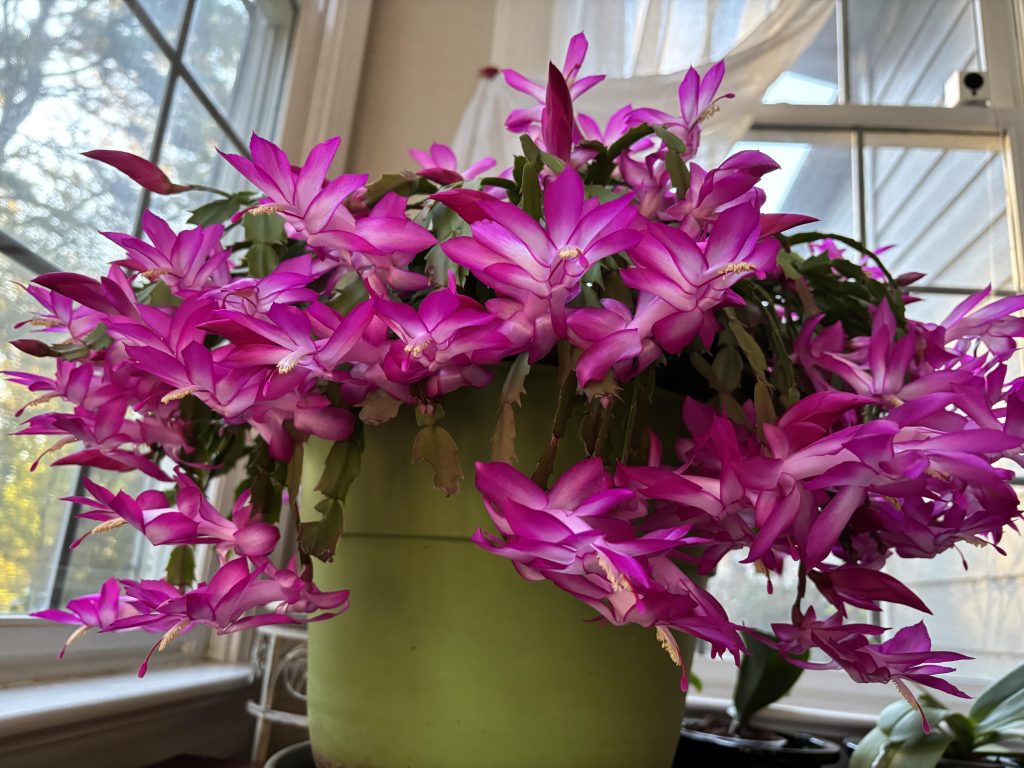
Forget what you know about desert cacti. A Christmas cactus is a rainforest plant. In the wild, it grows on tree branches. It gets its food from rain and bits of rotting leaves. That is a very light diet.
So your plant wants small, steady meals. Big doses burn its fine, shallow roots.
Here is the part most people miss. Fertilizer does not make this plant bloom. Long, dark nights and cool air do that.
Food builds strong stems to carry the flowers. Think of feeding as setting the stage. Light and temperature start the show.
You may also like:
Christmas Cactus Care: A Year-Round Calendar for Blooms Every December
How & When to Prune Your Christmas Cactus Plant
How to Repot a Christmas Cactus Without Killing the Blooms
How to Propagate Christmas Cactus in Water
The Best Fertilizer for Christmas Cactus
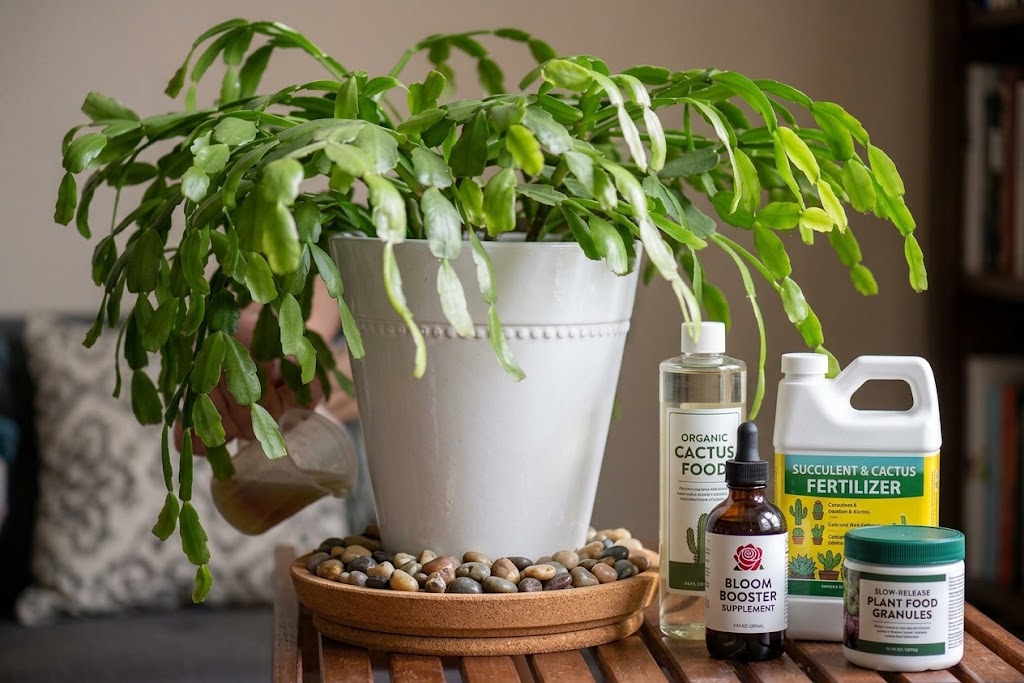
You have three good options. Pick one for the growing season.
Balanced liquid fertilizer. Look for a 10-10-10 or 20-20-20 houseplant formula. It is the easiest to control. You mix it fresh each time, so you decide the strength.
Slow-release granules. These feed the plant for weeks. They work as well as liquid feed, and you do less work. Check your potting mix first.
Some mixes already contain slow-release food. If yours does, wait until it runs out before you add more.
Low-nitrogen bloom formula. This has less nitrogen and more phosphorus and potassium. A 0-15-10 ratio is a good example. Some growers use it in early fall while buds form. It limits leafy growth and supports flowers.
My advice? Use a balanced feed in spring and summer. Then stop. A bloom formula is optional, and skipping it keeps things simple.
Christmas Cactus Feeding Calendar
Save this part. It is the whole plan in one place.
Late winter (after flowers fade): rest. No food yet. The plant just spent a lot of energy on blooms. Water lightly and give it bright, indirect light. Feeding a resting plant lets salts build up in the soil.
Early spring: first feeding. Wait until you see small new segments at the stem tips. That is your signal. Feed at half strength. If you plan to repot, do it first. Then wait until the plant settles before you feed.
Spring and summer: monthly feeding. Feed once a month at half strength. Mark the same day on your calendar each month. This is the stretch when the plant grows fastest.
Late August to early September: last feeding. Give one final light feed. After that, put the fertilizer away.
Fall: bud-setting time. No food. Now the plant needs about 14 hours of unbroken darkness each night. It also needs cool nights. Temperatures above 65°F can stop buds from forming. Water when the top of the soil feels dry.
Late fall through winter: bloom time. Still no food. Keep the soil lightly moist. Move the plant as little as possible.
A Thanksgiving cactus follows the same pattern. It blooms earlier, so stop feeding a bit sooner.
How to Fertilize Christmas Cactus Step by Step
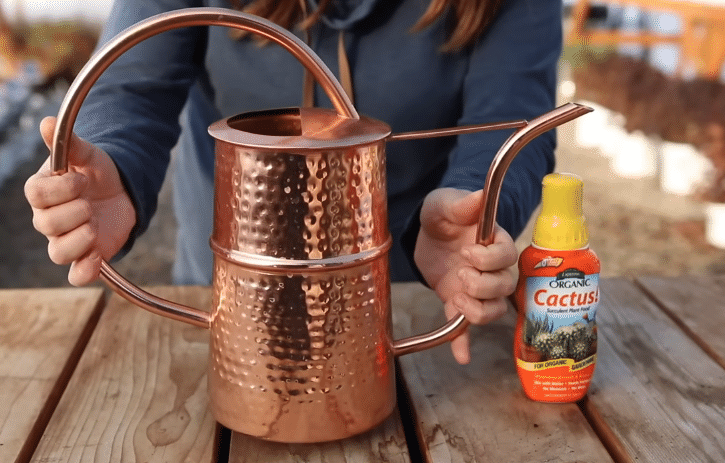
The method is simple. Dilution matters most.
- Read the label. Find the usual amount per gallon of water.
- Use half of that amount. Mix it well in your watering can.
- Use the mix in place of a normal watering. Pour it slowly over the soil.
- Let the extra water drain out. Empty the saucer so the roots don’t sit in it.
Some growers prefer a “weak and often” plan. They mix the fertilizer at one quarter strength.
Then they use it at every watering. If you try this, stop in September like everyone else. Never combine it with the monthly half-strength method.
Do You Need Epsom Salt?
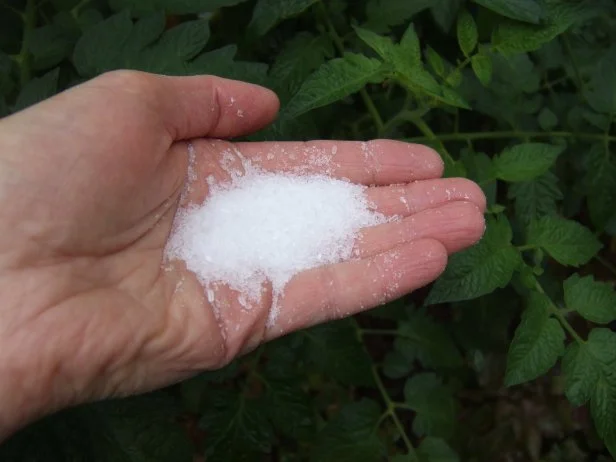
You will see this tip everywhere. Christmas cacti like magnesium. So many guides say to add one teaspoon of Epsom salt to a gallon of water once a month.
Some extension horticulturists push back. They say extra magnesium does not help unless your soil is low in it. Too much can even block calcium uptake.
Here is my rule of thumb. Skip it if your plant looks healthy. Also skip it if your fertilizer lists magnesium on the label.
If you want to try it, use the one-teaspoon mix once a month. Apply it in a different week than your regular feed. Stop when the growing season ends.
Signs You’re Overfeeding
Too much fertilizer is the bigger risk. Fertilizer is made of salts. The extra salts stay in the soil when water evaporates. At high levels, they pull water out of the root tips. The roots dry out, even when the soil is damp.
Watch for these signs:
- A white or yellow crust on the soil
- A white ring on a clay pot’s rim or around the drainage hole
- Slow growth
- Brown stem tips
- Wilting in damp soil
How to Flush the Soil
Flushing clears the salts. Do it every four to six months, even if the plant looks fine.
- Scrape off any crust. You do not need to remove more than a quarter inch of soil.
- Set the pot in a sink or tub.
- Pour water over the soil slowly. Use twice the pot’s volume. A 6-inch pot needs about 10 cups.
- Let all the water drain out.
- Wait until the soil dries to its normal level before you water again.
Signs You’re Underfeeding
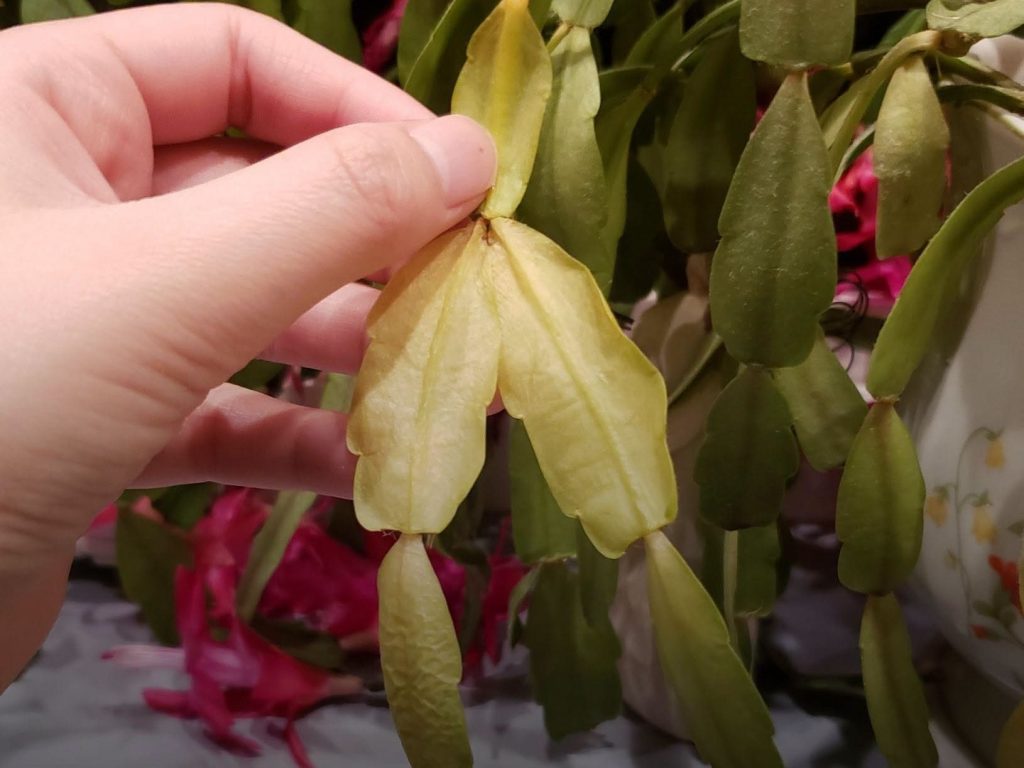
Hungry plants look pale and grow very little. They may also skip flowers even with the right light.
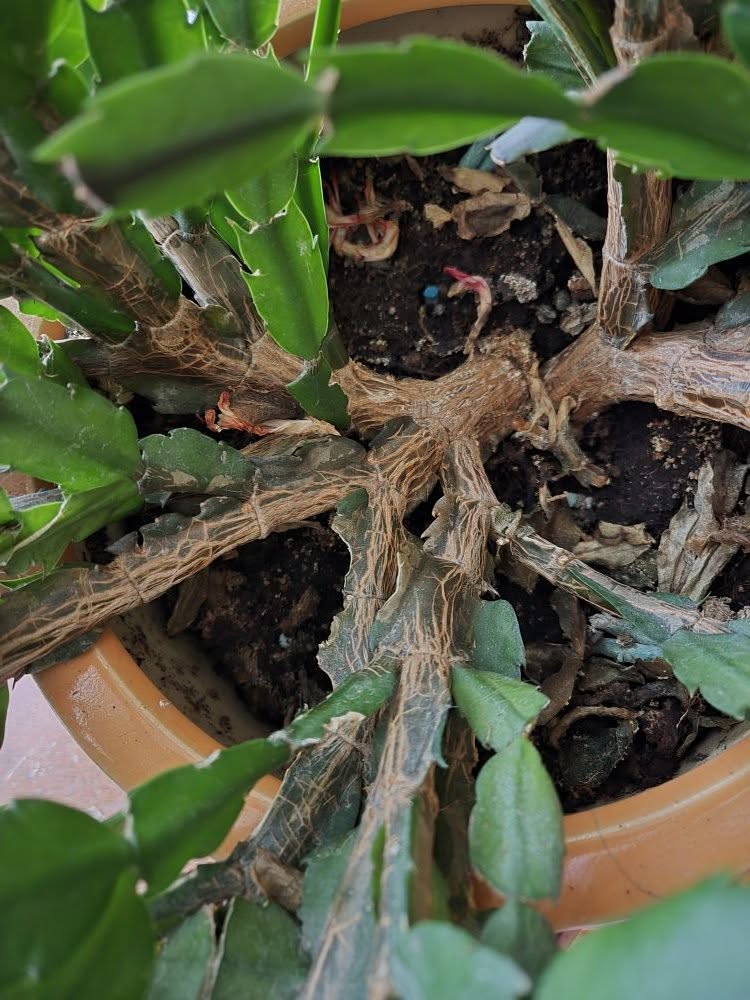
Check the basics first. Pale or purple-tinged stems can come from strong sun or cold drafts. If light is fine, look at the soil. Old mix runs out of nutrients.
Repot every two to three years after the plant has bloomed. A Christmas cactus blooms best when its roots are a bit snug, so choose a pot only one size up.
5 Fertilizing Mistakes to Avoid
Mixing at full strength. Half strength is the safe default. Full strength burns the roots.
Feeding once buds appear. Buds are tiny and easy to miss. So stop in September, whether you see them or not.
Feeding a store-bought plant in bloom. Plants often arrive in full flower. Skip food until the blooms fade.
Skipping the flush. Salts build up quietly. A flush twice a year keeps roots healthy.
Blaming food for a light problem. If your plant won’t bloom, check the nights first. Warm rooms and evening lamps ruin bud set faster than any fertilizer mistake.
Christmas Cactus Fertilizer FAQ
Can I use cactus fertilizer on a Christmas cactus?
Yes, with one tweak. Cactus formulas are low in nitrogen. That suits the bud-setting stretch. For spring and summer growth, a balanced formula works better.
When do I start feeding again after the flowers fade?
Wait for new growth at the stem tips. That usually happens in late winter or spring. Feeding earlier can build up salts in the soil.
My cactus has buds right now. Should I feed it?
No. Hold off until the flowers fade and new growth appears. Keep the soil lightly moist and leave the plant where it is.
What if I forget a month of feeding?
Nothing bad happens. Light feeding is easier to fix than overfeeding. Just pick up where you left off.
Does this schedule work for Easter cactus?
Not quite. Easter cactus blooms in spring, so its timing is different. Use the half-strength rule, but don’t copy the calendar.
Final Thoughts
A Christmas cactus does not need much food. It needs the right food, in small doses, at the right time. Feed it from spring to late summer. Stop in September. Then give it long, cool nights and let it do its thing.