15 Drought Tolerant Landscaping Ides For California

Your lawn drinks a lot of water. Your water bill shows it.
California yards don’t need that thirst. I’ve seen dry-climate gardens that look richer than any patch of grass. They bring color, texture, and pollinators, and they use a fraction of the water.
These 15 ideas prove it. Scroll through, save your favorites, and pick a look that fits your home.
What Makes a California Yard Truly Drought Tolerant
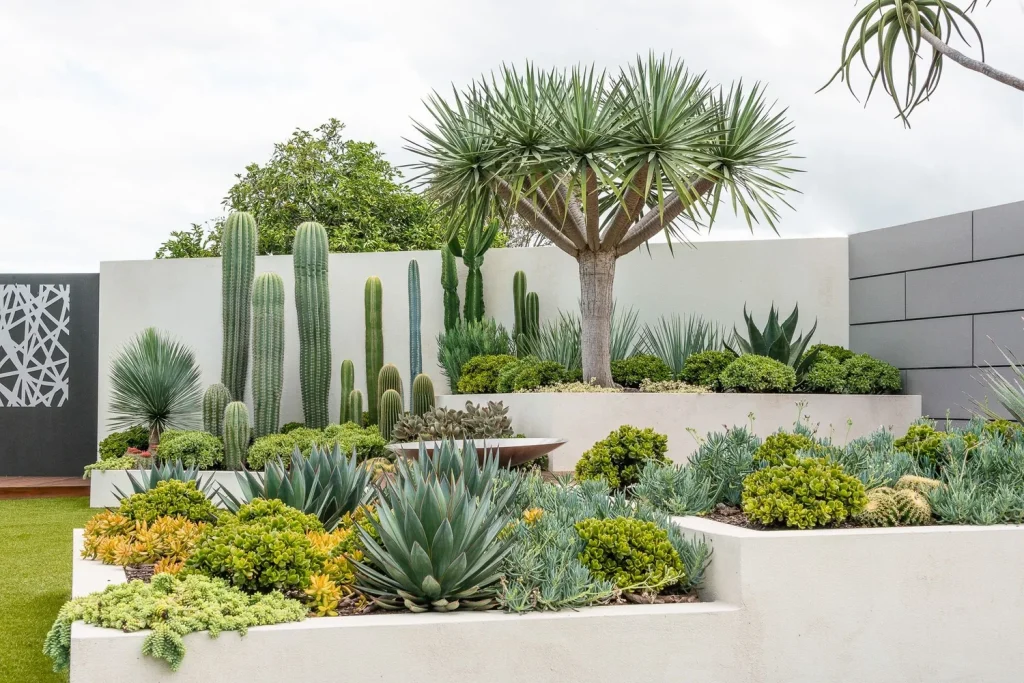
Group plants by water needs:
Plants drink differently. Lavender and sage sip. Roses and ferns gulp. If you mix them, one group always suffers. I group plants by thirst instead.
Put your low-water plants in one zone. Keep your thirstier ones near the door or a downspout. Then you can water each zone on its own schedule.
Your plants stay healthier, and you stop wasting water on plants that don’t need it.
Mulch 3 inches deep:
Mulch is your yard’s sunscreen. A 3-inch layer keeps soil cool, slows evaporation, and blocks weeds.
I like shredded bark or wood chips because they break down and feed the soil. Leave a few inches of bare space around trunks and stems.
Piled mulch traps moisture and can cause rot. Refresh the layer once a year, and your soil stays cooler through the hottest weeks.
Drip irrigation:
Sprinklers throw water into the air. Much of it drifts away or evaporates. Drip irrigation puts water right at the roots, where plants use it. I’d run drip lines under your mulch.
Water deeply and less often, so roots grow down instead of staying shallow. Deep roots handle heat far better.
New plants still need regular water their first year. Add a timer, and water early in the morning.
Match plants to your region:
California isn’t one climate. A coastal yard, an inland valley, and a desert lot all need different plants. Coastal yards enjoy cool fog and mild winters. Inland yards face hot summers and some frost.
Desert yards need true heat lovers. Ask your local nursery what thrives near you. Check your Sunset zone, too. It fits Western climates well.
Look for California natives and Mediterranean plants. They already know how to handle dry summers.
15 Drought Tolerant Landscape Ideas for California
1. Modern Entry with Poppies and River Rock
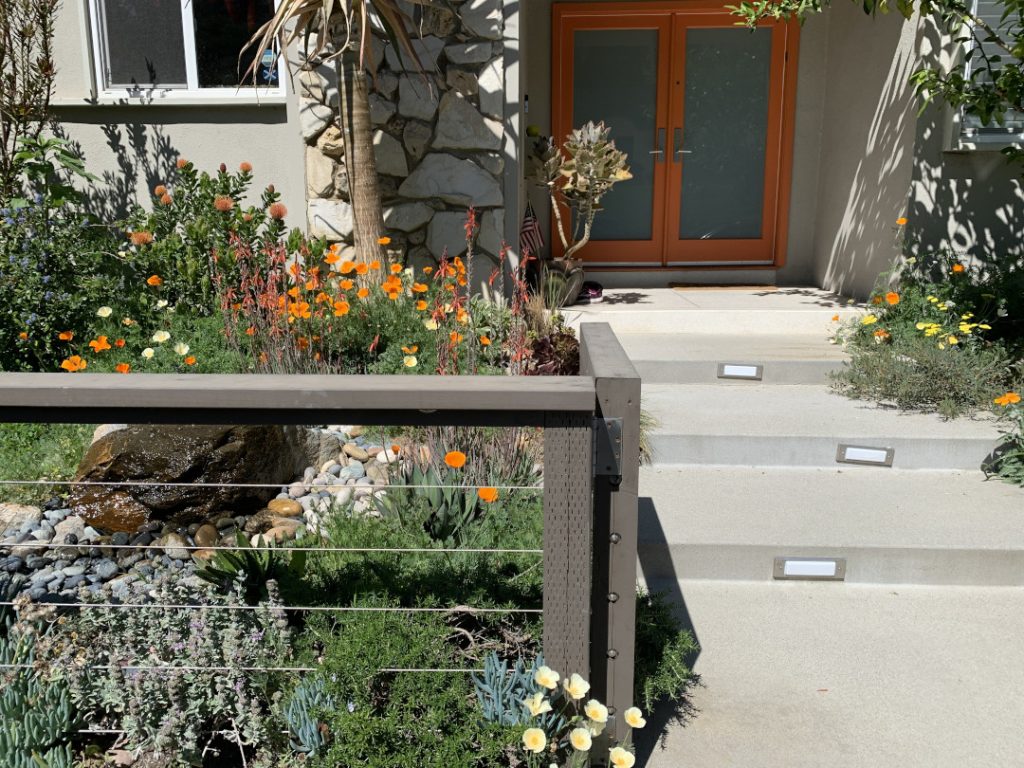
I love how this entry mixes modern lines with a wild garden. A slim cable railing frames the planting bed.
Orange California poppies spill through it. River rock and a mossy boulder sit below, and they give the bed a calm, natural base.
Why it works:
- The cable railing lets you see the garden instead of blocking it.
- Rock and pebbles cut down on thirsty planting space.
- Orange flowers echo the warm front doors.
- Small step lights make the path safe at night.
Plant formula: California poppy + aloe + silvery groundcover + succulents + river rock.
Upgrade idea: Add a low-voltage light near the boulder. It will wash the rock in warm light after dark.
2. Cottage Yard Packed with Color
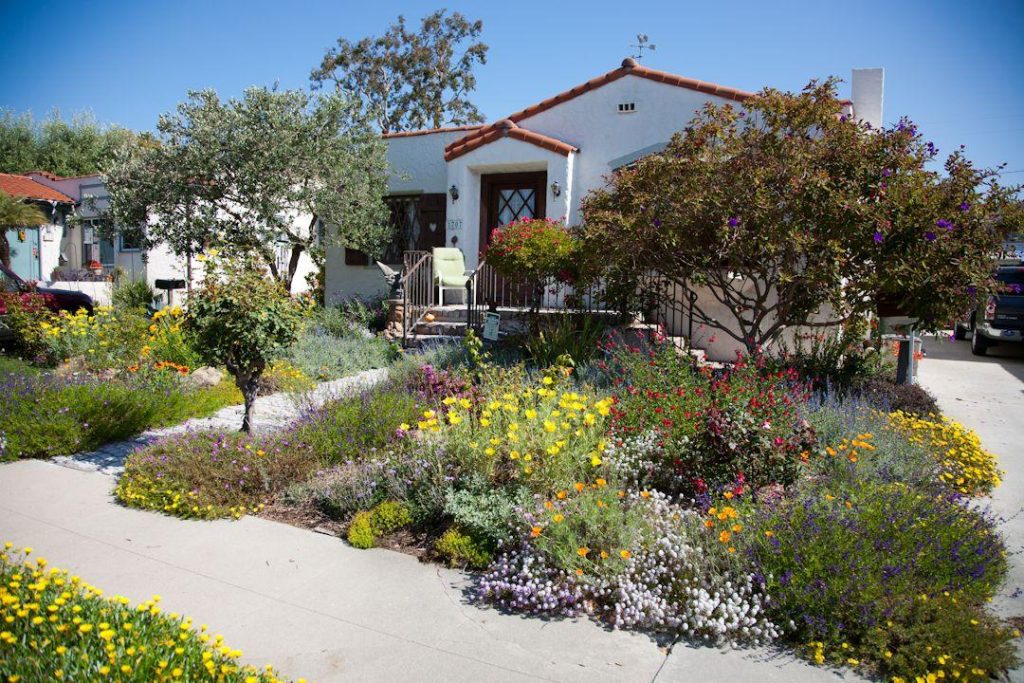
This yard proves you can skip the lawn and still wow the street. Every foot holds something in bloom. Yellow flowers, lavender-blue mounds, red salvia, and white alyssum weave together like a quilt.
Best for: Spanish, bungalow, and cottage-style homes in mild coastal climates.
Landscape note: A narrow decomposed granite path winds through the beds. It gives you a place to step and a way to reach every plant.
An olive tree and a flowering tree add height. They also give the yard a layered look.
Water-wise note: Mix mounding plants with low spreaders. They shade the soil and slow evaporation. I’d add a thin layer of mulch between the plants for extra protection.
3. Courtyard Gravel Garden with a Red Pot
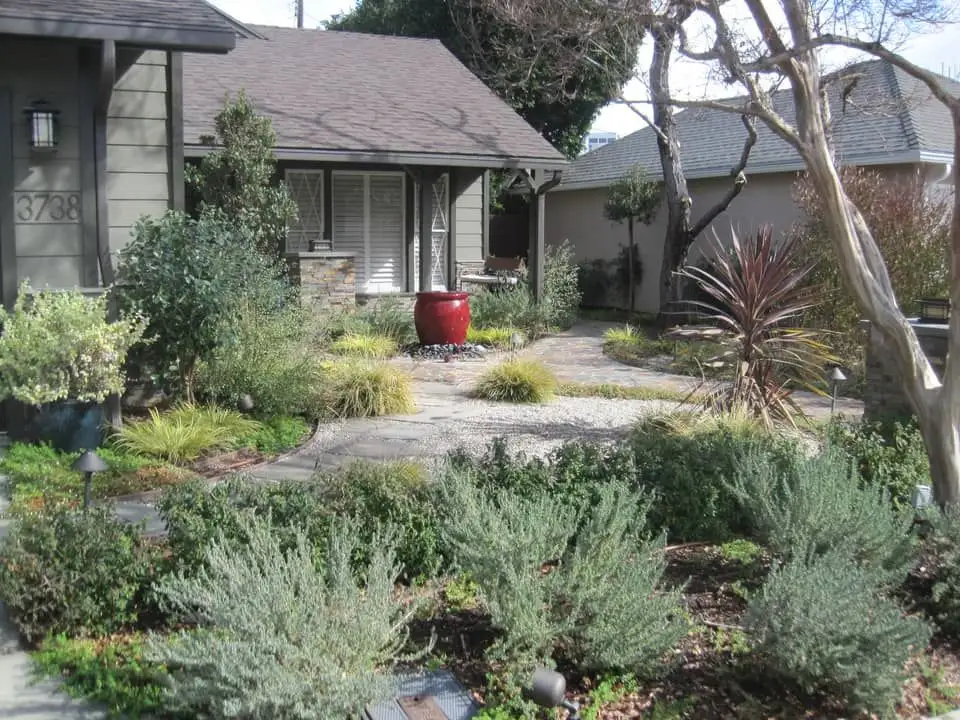
One red pot changes everything here. It pulls your eye straight to the porch. Gravel and flagstone form a small courtyard. Soft gray shrubs and golden grasses wrap around it.
Design formula: gravel + flagstone path + gray-green shrubs + golden grasses + one bold pot.
Proportion tip: Keep the focal pot tall and simple. This one works because everything around it stays calm. Too many accents would compete with it.
Lighting idea: Path lights sit low in the beds. They glow softly at night. They also guide guests to the door without harsh glare.
The burgundy spiky plant on the right adds a dramatic twist. Repeat that color once or twice. It ties the whole front yard together.
4. Mulch and Stepping Stones on a Corner Lot
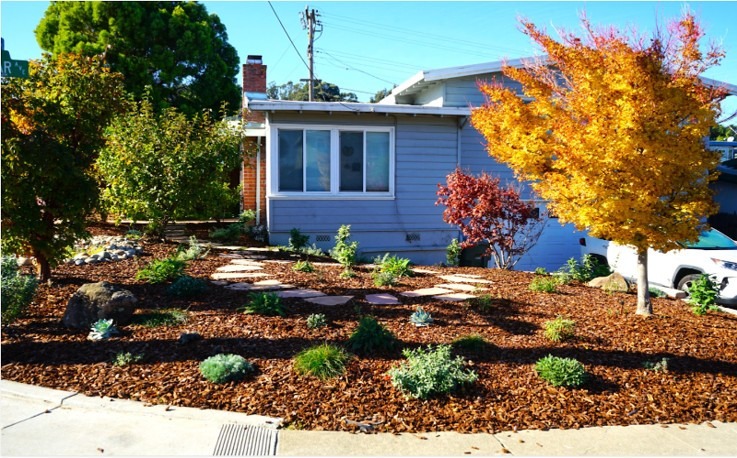
Corner lots feel big. This yard tackles that with a sea of warm mulch and a few well-placed plants. Flagstone steps wind across the slope. A few boulders anchor the design.
Why it feels calm:
- Wide open mulch gives your eyes a place to rest.
- Small mounds of succulents and grasses stay spaced apart.
- A golden fall tree and a red maple add seasonal color.
Budget tip: Start with mulch and stepping stones. Then add plants slowly. Small pots cost less, and they fill in faster than you’d think.
Water-wise note: Spread mulch about 3 inches deep. It keeps roots cool in summer. It also blocks weeds.
5. Native Blooms Along a Curving Path
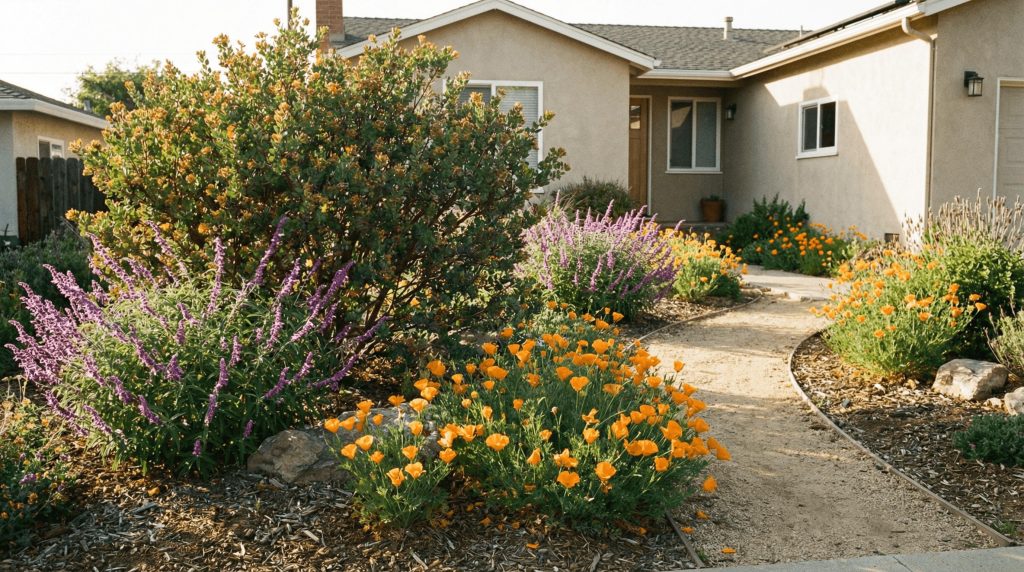
This front yard feels like a California hillside in spring. A big manzanita-style shrub anchors the left side. Purple sage rises beside it. Poppies glow at its feet, and a soft gravel path curves toward the door.
Copy the look:
- Plant one large evergreen shrub as your anchor.
- Layer purple sage and poppies around it.
- Curve a decomposed granite path between the beds.
Landscape note: Slim metal edging keeps the gravel and mulch apart. It gives the yard a clean line without a stiff feel.
Best for: Ranch-style homes and sunny front yards that get little summer water.
Poppies reseed on their own. Let a few go to seed each year. You’ll get a fresh wave of orange every spring.
6. Dry Creek Bed with Climbing Roses
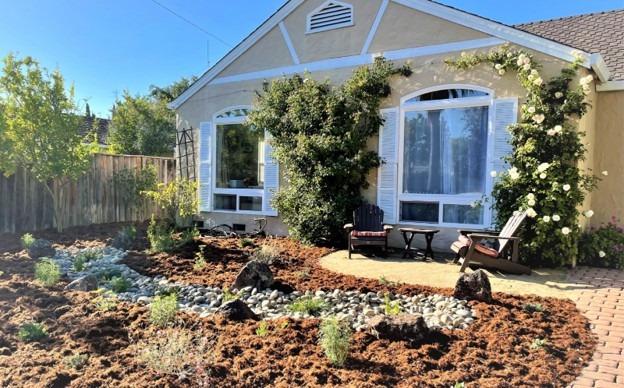
This yard feels calm and welcoming. A winding river-rock “creek” cuts through fresh mulch. Boulders sit along the edge like they landed there naturally.
Two Adirondack chairs wait on a small gravel patio, and white climbing roses frame the window.
Design formula: dry creek bed + boulders + mulch + climbing roses + gravel sitting nook.
Why it works:
- The creek bed looks like water, but it uses none.
- It also guides rain away from the house.
- The gravel patio gives you a spot to enjoy the garden.
Budget tip: Start with mulch, rocks, and small plants. Young plants cost less and fill in fast. I’d rather see you plant small and wait than overspend on big pots.
Upgrade idea: Add a few lavender or salvia plants along the creek edge. They soften the rocks and bring in bees.
7. Shady Oak Courtyard with Fountain Columns
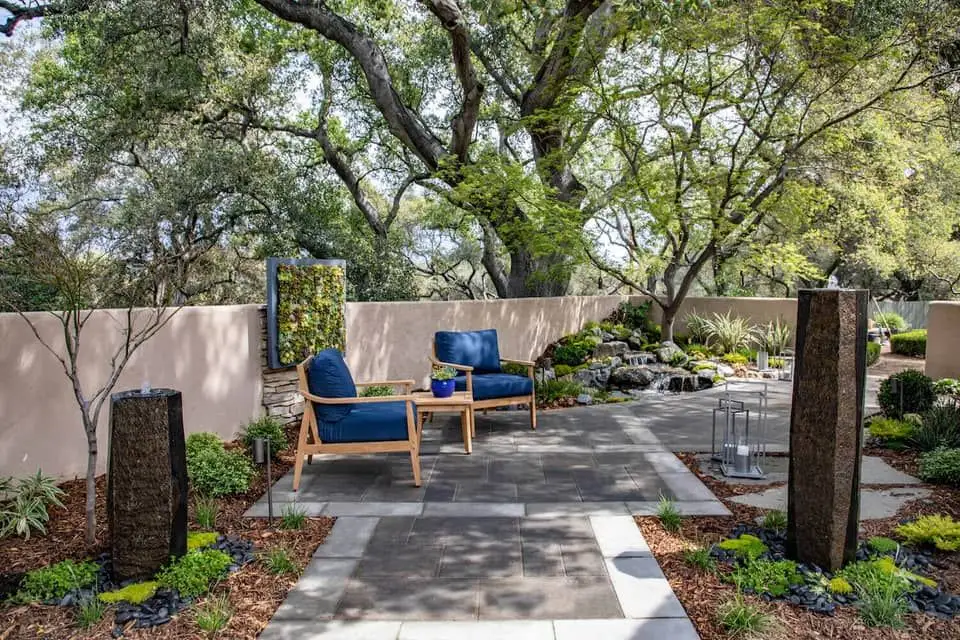
Big oaks can make a yard feel like a retreat. This courtyard leans into that. Paver squares form a cozy sitting area. Two dark stone fountain columns anchor each side, and a small rock waterfall trickles in the back.
Best for: Shady yards with mature trees and a small patio.
Why it feels calm:
- Blue cushions pop against the soft gray pavers.
- A vertical succulent frame adds art without using floor space.
- Black pebbles and low green plants keep the beds tidy.
What to avoid: Don’t water heavily near old oak trunks. California oaks prefer dry summers. Too much water can harm them. Keep new plantings back from the trunk, and choose plants that tolerate dry shade.
Water-wise note: Recirculating fountains use very little water. You can enjoy the sound without the waste.
8. Backyard Stepping-Stone Path with Silver Shrubs
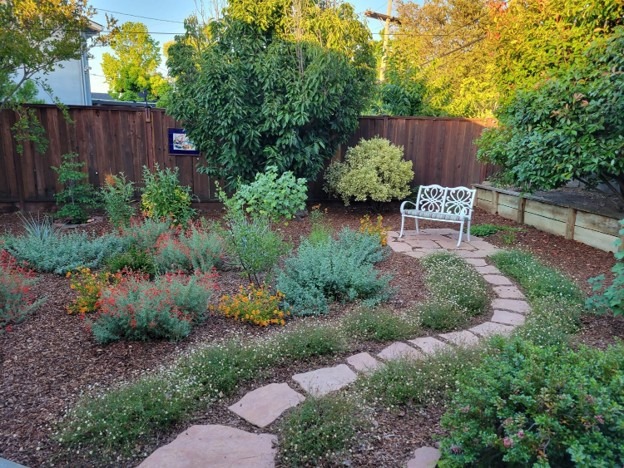
Small yards can still feel like a journey. This one uses a flagstone path that curves through soft silver-green plants. Red blooms add spark. Tiny daisy-like flowers spill over the stones, and a white bench waits in the corner.
Copy the look:
- Lay flagstones in a gentle curve, not a straight line.
- Plant silver-leaved shrubs on both sides.
- Tuck low, flowering groundcover between the stones.
Landscape note: Space your stepping stones a comfortable stride apart. Your feet should land on each stone without a stretch. I test this by walking the path before I plant.
Water-wise note: Silver and gray leaves often signal drought tolerance. Their fuzzy or waxy surface slows water loss. Look for those traits when you shop.
9. Faux Lawn with Pebble Beds and Spiky Accents
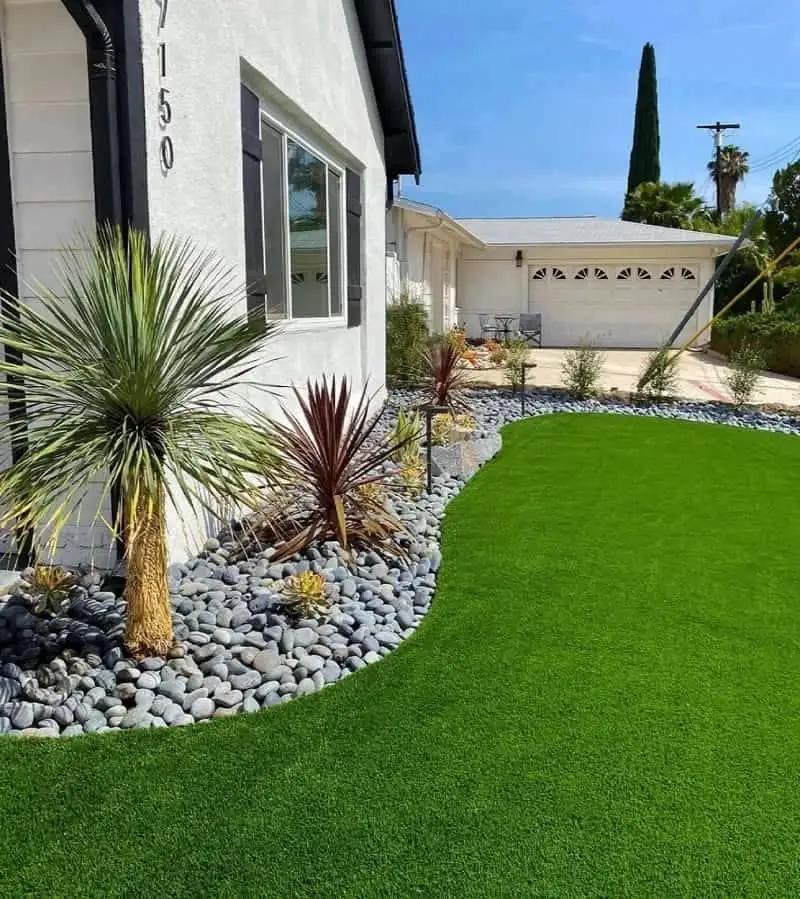
Some homeowners want a green lawn look without the mowing or watering. This yard delivers that with a smooth artificial lawn and a curved pebble bed. A yucca, a burgundy cordyline, and small succulents add bold shapes near the wall.
Why it works:
- The curved edge feels soft and modern.
- Gray river rock ties in with the white and black house trim.
- Spiky plants give the bed height and drama.
What to avoid: Artificial turf can heat up in full sun. It also gives wildlife little to eat or shelter in. Check your city’s rules and rebate programs before you buy.
Proportion tip: Keep the plant bed wide enough for layers. Three to four feet gives you room for tall plants in back and low ones in front.
Upgrade idea: Swap part of the turf for a low, walkable groundcover. You save water and add life.
10. Stock Tank Planters in a Gravel Garden
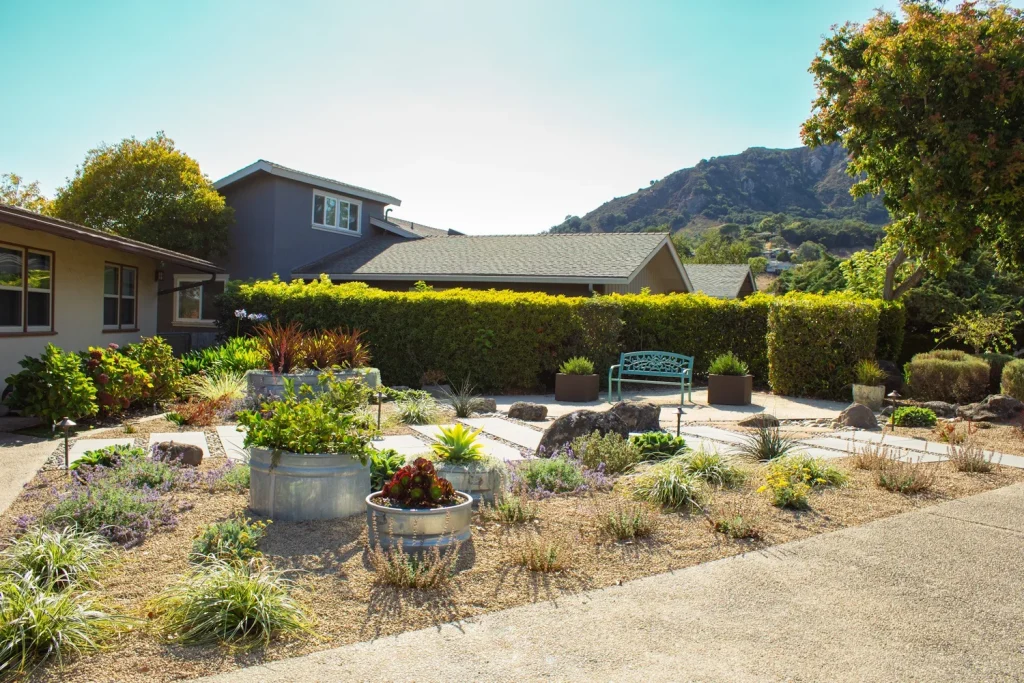
I love this yard’s clever mix of rustic and modern. Galvanized stock tanks hold succulents and grasses. Pavers cross a gravel bed, and a teal bench invites you to sit. The trimmed hedge behind it adds privacy.
Decor formula: stock tank planters + gravel mulch + flat pavers + soft grasses + one colorful bench.
Best for: Sunny front yards that need structure and a sitting spot.
Why it works:
- Tall tanks add height to a flat yard.
- Lavender-blue flowers soften the metal.
- Boulders make the garden feel natural.
Water-wise note: Container plants dry out faster. Drill drainage holes in each tank. Use gritty soil mix for succulents. Water them deeply, then let the mix dry.
Upgrade idea: Place small solar path lights along the pavers. They make the garden feel warm at night.
11. Red Mulch and Stepping Pads on a Sunny Corner
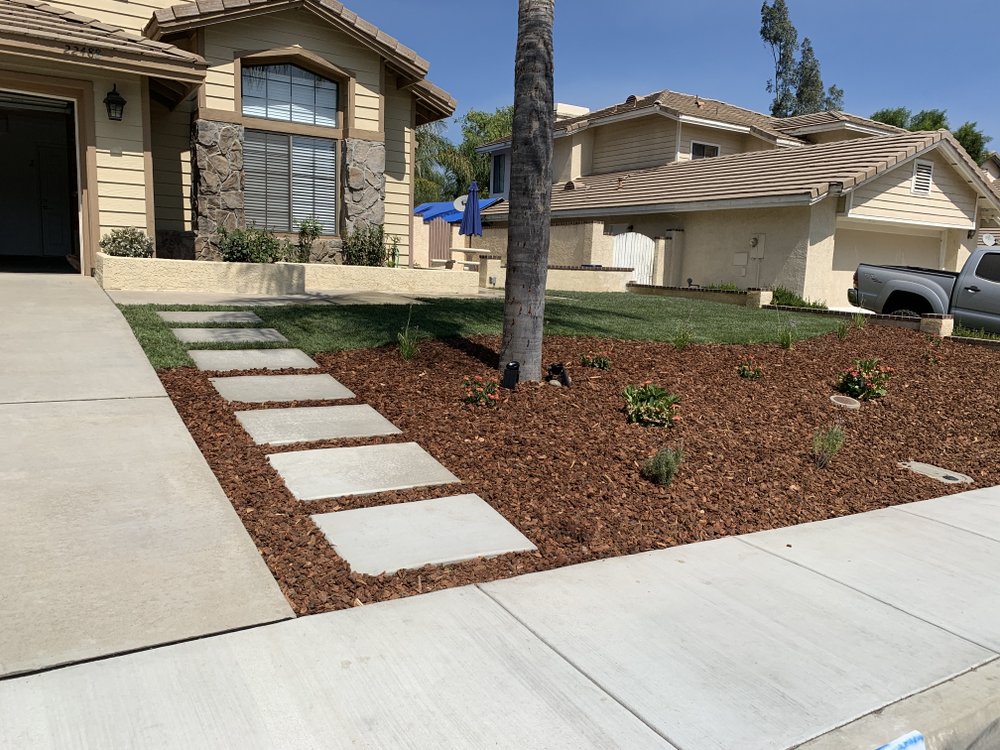
This yard shows how easy a fresh start can look. Wide concrete pads cross a bed of warm red mulch. Small shrubs sit far apart, so each one gets room to grow. A strip of lawn remains near the house, and a tall palm anchors the corner.
Best for: New homeowners who want a simple, low-cost makeover.
Why it works:
- The big pads make a clean, modern path.
- Red mulch looks rich against the tan siding.
- Wide spacing keeps the design calm and open.
Budget tip: You don’t need to plant everything at once. I’d fill the bed in stages. Add three to five plants each season and watch what thrives.
Water-wise note: Young plants look tiny at first, but mulch protects the bare soil while they grow. Water them deeply during their first summer. After that, most drought-tolerant plants need far less.
Upgrade idea: Replace the last strip of lawn with a low groundcover. You cut water even more and still keep a soft green edge.
12. Backyard Retreat with a Gazebo and Turf
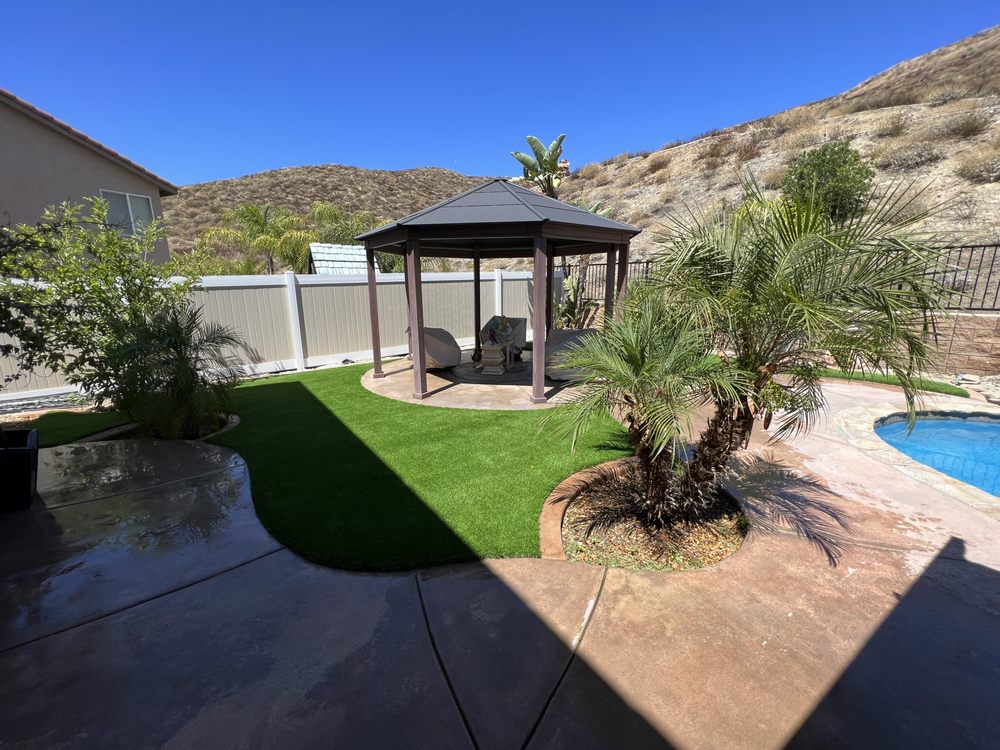
Hot inland yards need a place to escape. This one delivers. A shady gazebo sits on a round stone pad. Green turf wraps around it in a soft curve. Pygmy date palms and a pool complete the resort feel.
Why it works:
- The gazebo gives you shade where you need it most.
- The curved turf edge softens the hard concrete.
- The hillside backdrop makes the yard feel private.
Landscape note: Palms in planting rings add height without taking over. I love how these two sit apart from the turf, so they never compete for space.
Maintenance note: Artificial turf stays green all year. Still, rinse it now and then to clear dust and pet hair. Give it a little shade if you can. Turf gets hot in full sun.
Water-wise note: A pool cover cuts evaporation. It also keeps debris out. If you own a pool, add one.
13. Sunny Patio with Stepping Stones and Golden Groundcover
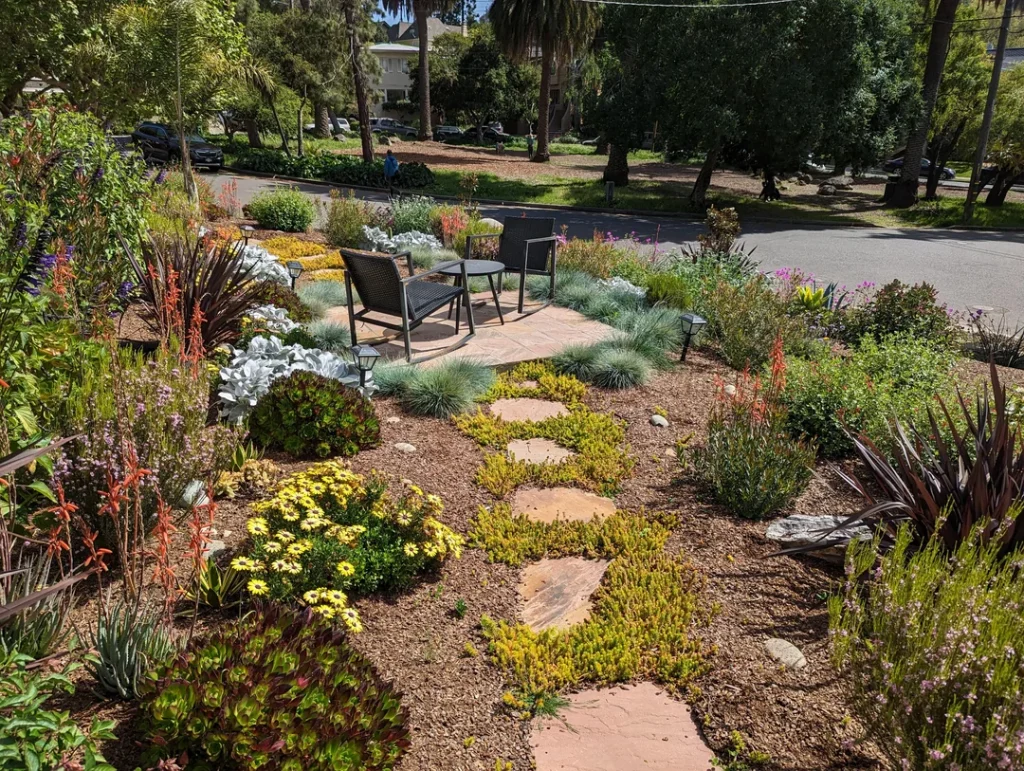
I could sit here all afternoon. Two black chairs perch on a flagstone patio. A path of stepping stones leads there through a golden groundcover. Silver, blue, burgundy, and orange plants fill every gap around it.
Plant formula: golden sedum + silver dusty miller + blue fescue + yellow daisies + orange-red aloes + burgundy spikes.
Copy the look:
- Choose one low groundcover for between the stones.
- Add three plants with silver or blue leaves.
- Finish with two or three bold flowering accents.
Landscape note: Small solar lights line the patio. They add a soft glow without extra wiring.
Design tip: Repeat colors, not just plants. Notice how burgundy shows up on both sides of the patio? That repetition makes a busy garden feel planned. I use it whenever a design feels chaotic.
Mulch fills the spaces between plants. It keeps roots cool and weeds down.
14. Modern Stucco Entry with Burgundy Spikes
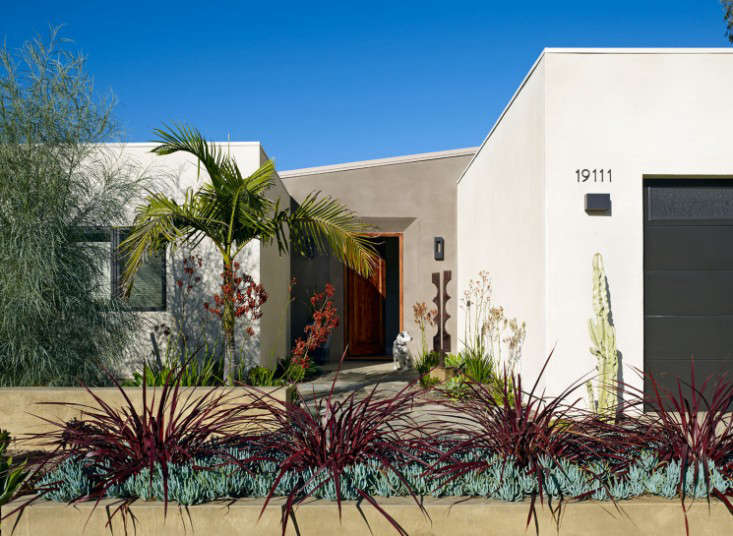
Modern homes love bold shapes, and this entry delivers them. A row of burgundy spiky plants rises above a carpet of blue-gray succulents.
The raised planter frames the whole scene. A palm, a cactus, and red flowers add height near the door.
Design formula: raised planter + burgundy spikes + blue-gray succulents + palm + tall cactus accent.
Why it works:
- The blue and burgundy colors pop against warm stucco.
- Repeating one spiky plant creates rhythm.
- A low planter wall gives the front yard structure.
Proportion tip: Plant the tallest spikes at the back of the bed. Keep the low succulents up front. That way, you see every layer and none of them hide the others.
Upgrade idea: Add a small uplight near the cactus. At night, it casts a dramatic shadow on the wall. I’d choose a warm bulb to keep the look inviting.
15. Magenta Blooms and Silver Grasses
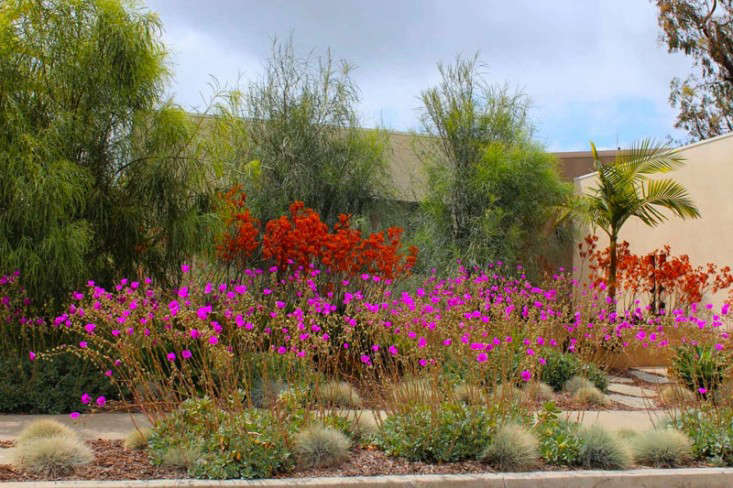
Want a yard that stops traffic? Try this one. A cloud of magenta flowers floats above the ground on thin stems. Rust-orange shrubs glow behind them. Tall, feathery trees and silver grass tufts finish the scene.
Why it works:
- Bright pink and orange create a bold color pairing.
- Airy stems let you see through the flowers.
- Soft green trees give the colors a calm backdrop.
Best for: Sunny street-facing yards where you want big color.
Water-wise note: Plants with thin stems and silvery foliage often handle dry spells well. Group them together and skip frequent sprinklers.
Maintenance note: Trim spent stems after the main bloom. Fresh growth usually follows. Add a light layer of mulch between the plants to keep the soil cool.
I’d plant in big drifts, not single plants. Ten flowers make a statement. One flower gets lost.
Frequently Asked Questions
When should I plant a drought tolerant garden in California?
Fall is my favorite time. The soil is still warm, and winter rain helps new roots settle in. Early spring works too. Try to avoid planting in peak summer heat.
How much water do these yards need?
It depends on your plants and your region. New plants need regular water for the first year or two. After that, many need water only every couple of weeks in summer. Some natives need almost none. Water deeply, not often.
Can I get paid to replace my lawn?
Many California water agencies offer turf replacement rebates. Rules vary by city. Some programs don’t cover artificial turf. Check with your local water district before you start digging.
Will a drought tolerant yard look dull?
Not at all. Look at the poppies, salvias, and magenta blooms above. Mix bold colors with silver leaves and interesting shapes. Your yard will look full and lively all year.
Final Thoughts
You don’t have to choose between a beautiful yard and a smaller water bill. Start small. Pick one idea from this list and try it in one corner of your yard. Add mulch, plant a few tough favorites, and watch what happens.
I bet you’ll want to keep going. Save your favorite ideas, and give your yard a fresh, water-wise start.