13 Side Yard Landscaping Ideas for Dogs That Look Good and Hold Up

Your side yard probably feels like wasted space. It’s narrow, shady, and a little muddy. Your dog paces it anyway.
I think that strip has real potential. With the right surface, a smart fence, and a few safe plants, it can become your dog’s favorite zone.
These 13 side yard ideas show you how. Some use turf. Others use gravel, pavers, or wood chips. All of them keep paws happy and the space easy to clean.
What Makes a Side Yard Work for Dogs
- Pick paw-friendly surfaces: Turf, rounded pea gravel, and wood chips feel gentle underfoot. Sharp crushed stone does not.
- Plan for the narrow width: Leave a clear path down the middle. Your dog needs room to run, and you need room to walk.
- Close every gap: Check the fence base and the gate. Small dogs squeeze through tiny openings.
- Plant only dog-safe options: Bamboo and coral bells are non-toxic to dogs. Skip hostas, which are toxic.
13 Dog Friendly Side yard Landscaping Ideas
1. A Turf Strip With a Living Wall
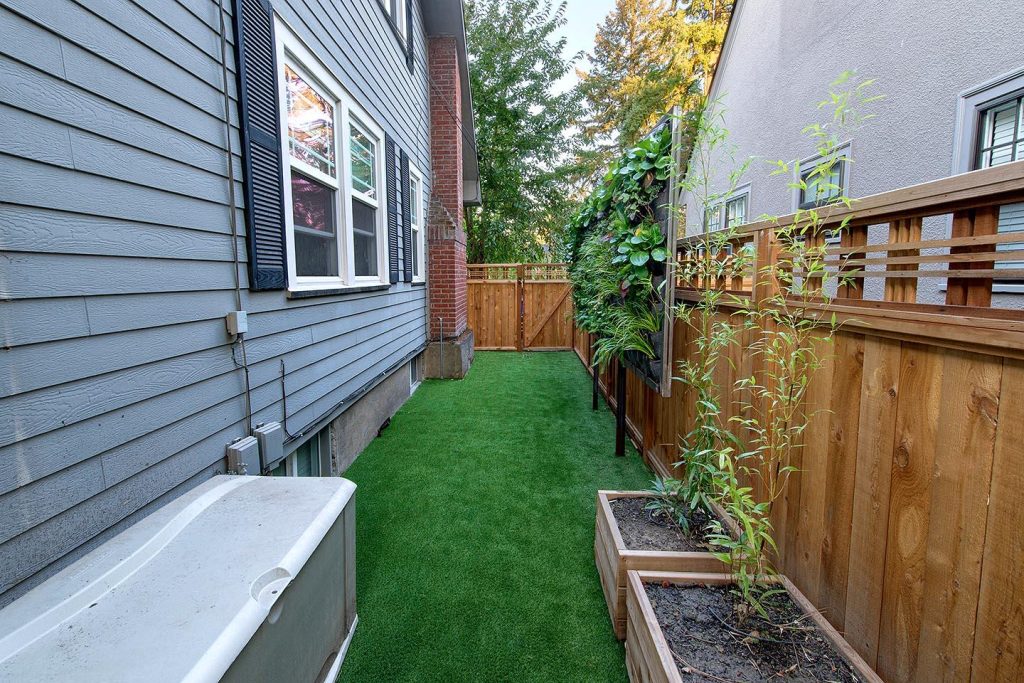
I love how this side yard gives the dog a clean green runway. Artificial turf covers the whole strip, so you skip the mud and bare patches.
A living wall adds leaves at eye level without using any floor space.
Two raised planters hold bamboo along the fence. The gate at the end gives your dog an easy route to the backyard.
Why it works:
- Turf stays green in deep shade and handles daily zoomies.
- Raised planters keep roots and soil away from digging paws.
- Vertical planting adds color without shrinking the run.
Best for: Small to medium dogs and shady side yards where lawn never grows.
Also read: Backyard Landscaping Ideas With Dogs: 12 Designs That Survive Zoomies and Digging
2. Big Pavers, Pebbles, and Mulch Beds
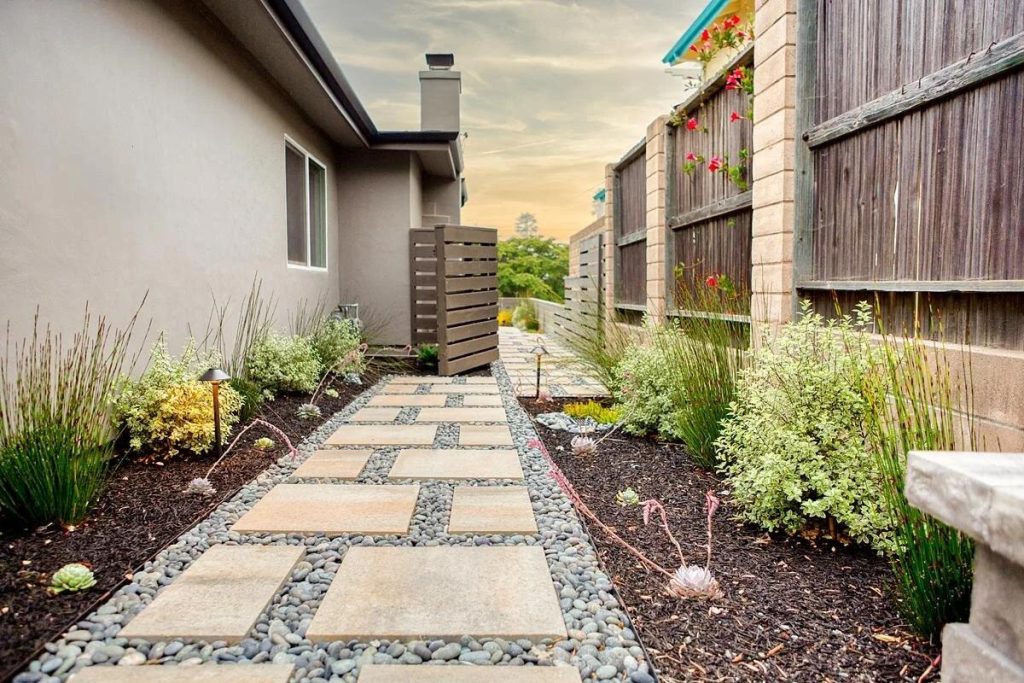
This side yard feels like a calm garden path. Large pavers run straight down the center. Mulch beds hold grasses, soft shrubs, and a few succulents. A slatted wood screen hides the utilities at the end.
Yard formula: large pavers + river pebbles + mulch beds + ornamental grasses + low path lights
Your dog gets a clear walking line, and you get a pretty view from the window. Small lights make late-night potty trips easier too.
Upgrade idea: Set the pavers close enough to match your dog’s stride. Then paws stay on flat stone instead of loose pebbles. Keep the mulch beds edged so they stay in place.
3. A Dog Run Beside a Walking Path
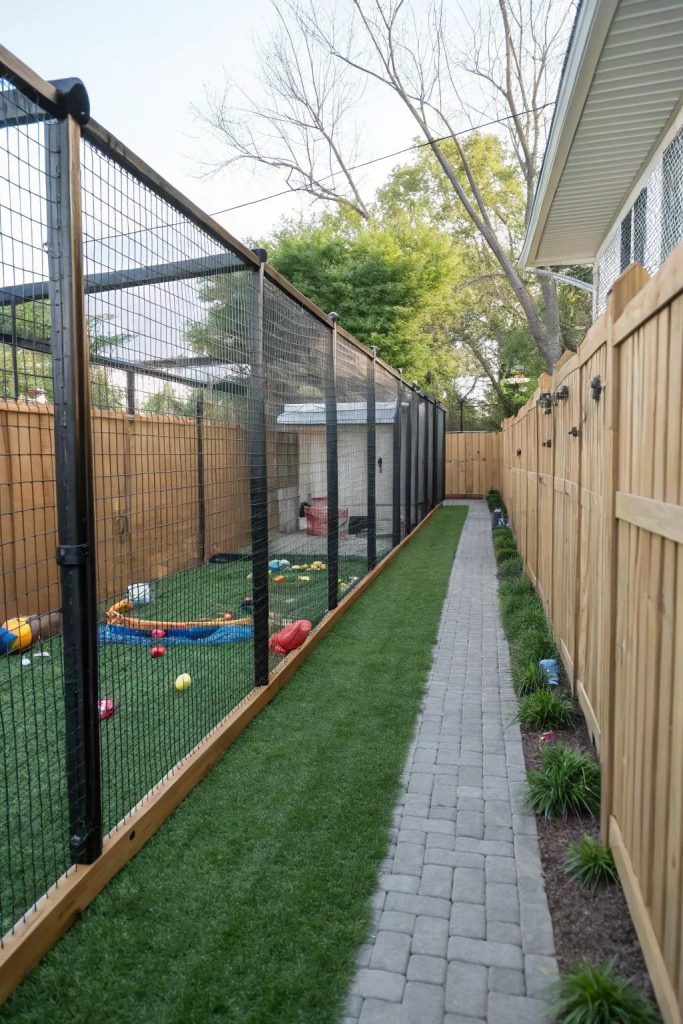
Here, I’d split the space in two. A tall black mesh run holds toys and a strip of turf. A neat brick path runs beside it for you. Your dog plays safely, and you walk through without stepping over anything.
Best for: Active dogs, escape artists, and homes where kids or visitors use the gate.
Fence-line tip: Pick mesh with small openings so snouts and paws can’t squeeze through. Run it tight to the ground if your dog digs.
What to avoid: Don’t leave a gap under the mesh. Dogs find gaps fast.
4. A Soft Groundcover Lawn With Stepping Pavers
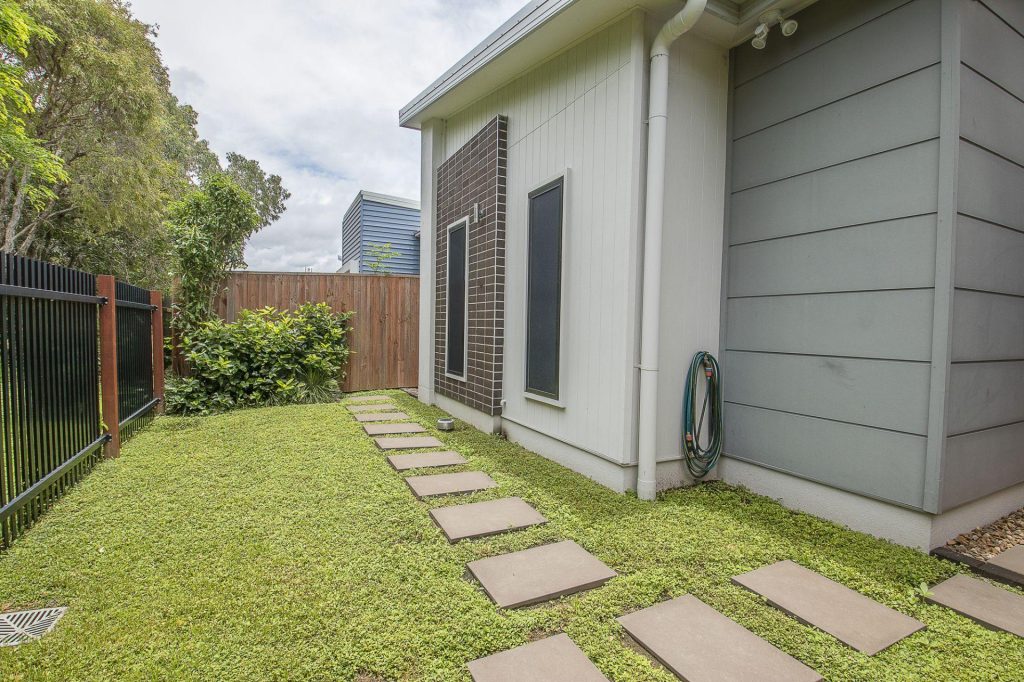
This one looks like a mini meadow. A low, fine-leaved groundcover forms a thick green carpet.
Wide pavers curve across it and guide your dog’s steps. A black metal fence lets your dog see out, which can calm a restless pup.
Why it works:
- The pavers give your dog a set route, so the groundcover wears less.
- The open fence adds airflow and keeps the narrow space from feeling boxed in.
- Shrubs at the far end soften the corner.
Paw-safe note: Touch the pavers on a hot afternoon before you buy. Lighter stone usually stays cooler than dark stone.
5. Turf, Stepping Stones, and a Pebble Border
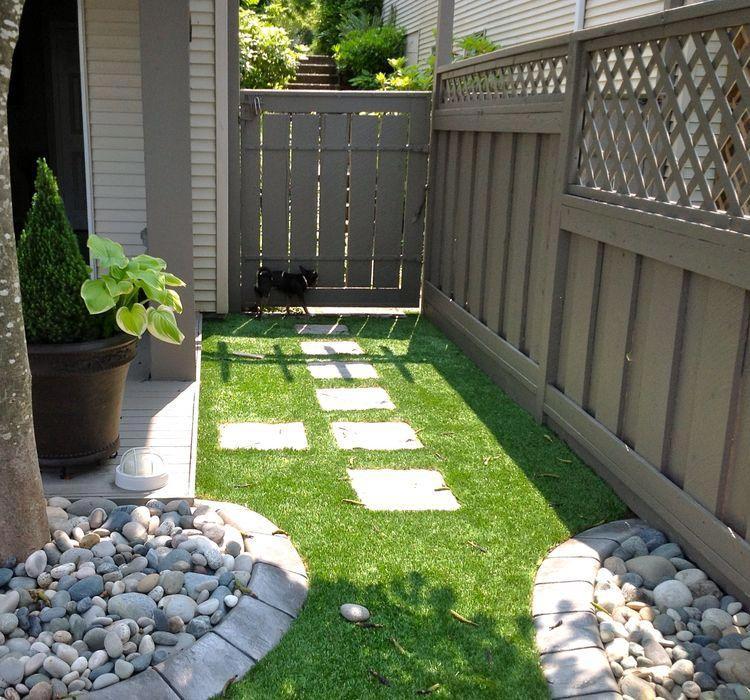
A tiny dog waits at the gate here, and the space still looks great. Turf fills the strip. Five flat stepping stones lead straight to the gate. Curved pebble borders frame the turf, and a lattice-topped fence adds privacy and airflow.
Yard formula: turf + five stepping stones + lattice-top fence + curved pebble border + one potted plant
Dog-safe plant note: Hostas look lovely in a pot like this, but they are toxic to dogs. Raise the pot out of reach or swap in coral bells.
Coral bells are non-toxic to dogs and give you the same leafy color.
Budget snapshot: Mid-range. Turf costs the most, but the small footprint keeps the total down.
6. Pea Gravel Between Brick and Wood
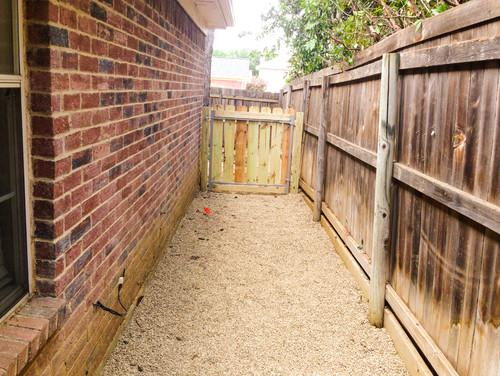
Not every side yard needs plants. This one uses fine gravel from wall to fence, with a simple wooden gate at the end.
It looks tidy and drains well. Your dog gets a dry, clean path in any weather.
Mud and odor fix: Lay landscape fabric and a compacted base under the gravel. Water then drains instead of pooling. Rake the surface weekly and hose down the potty spot.
Upgrade idea: Add a row of pavers along the brick wall. They give you a dry walking line and add visual interest. A small shade sail would also help on hot days.
7. Pea Gravel and Round Stepping Stones
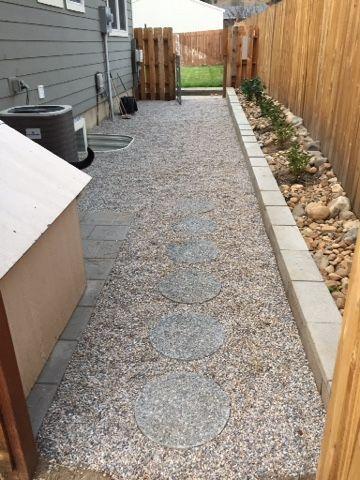
I like how clean this side yard looks. Pea gravel covers the ground. Round stepping stones add a soft, playful rhythm.
A concrete curb separates the path from a river rock bed. A small shelter near the house gives your dog a shady nook.
Why it works:
- Gravel drains fast, so puddles don’t stick around.
- The curb keeps rocks out of the path.
- The rock bed hides the A/C base and keeps plants away from dogs.
Paw-safe note: Choose rounded pea gravel over sharp crushed stone. Rounded pieces feel gentler under paws.
Copy the look:
- Use a concrete or stone edge to hold the gravel.
- Add stepping stones every few feet.
- Tuck the utilities behind a rock bed.
8. Wide Slabs With Low Edging Plants
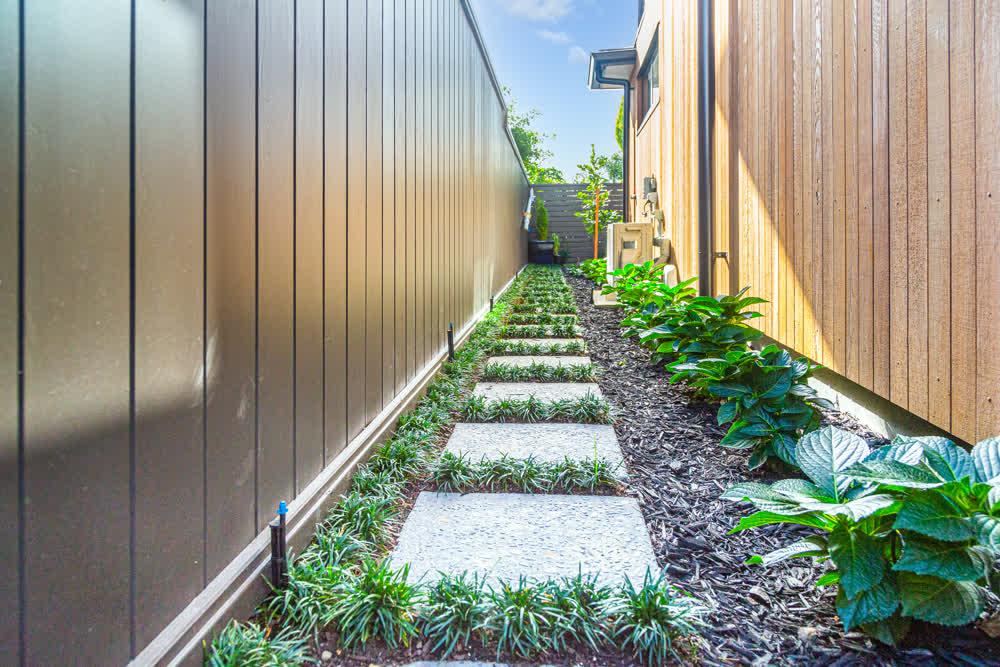
This strip proves a narrow side yard can feel lush. Wide stone slabs run straight down the middle. Low, grass-like plants fill the gaps between them.
A mulch bed runs along the building wall. Drip stakes keep everything watered without hauling a hose.
Yard formula: large pavers + low edging plants + mulch bed + drip irrigation
Dog-safe plant note: Hostas are a popular choice for this shady bed, but they are toxic to dogs. They can cause vomiting and diarrhea if your dog chews them.
I’d plant coral bells instead. They are non-toxic to dogs and love the same shade.
9. A Pebble Corner With a Sculpted Mulch Bed
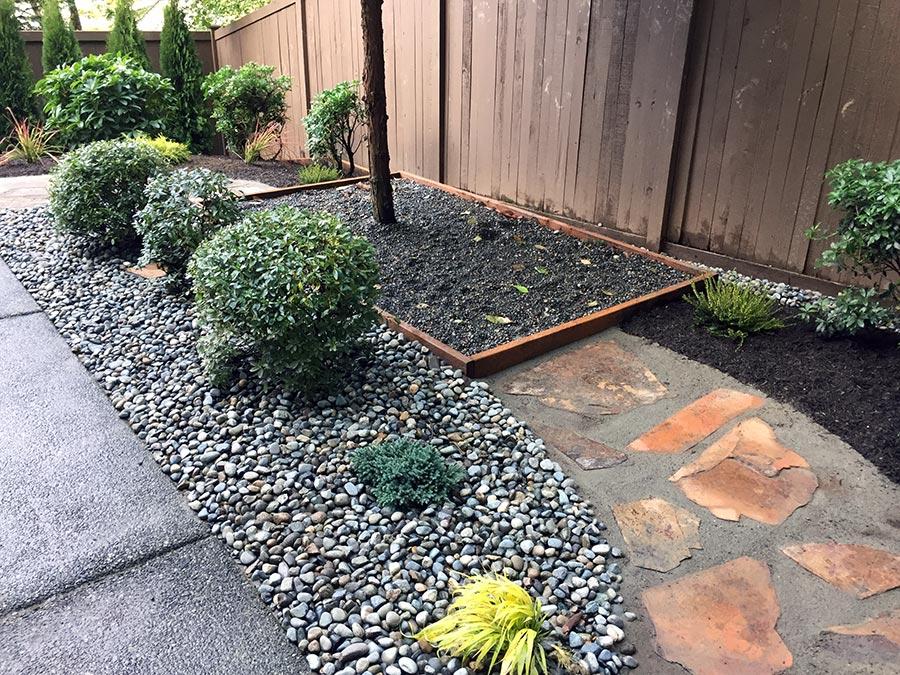
This corner looks like a designer’s work. River pebbles wrap around rounded shrubs. A rust-colored steel edge frames a mulch bed with a young tree. Flagstone pavers add warm color and give you a solid place to step.
Best for: Wider side yards with a corner or bend, and dogs who like to patrol.
The steel edge does the hard work here. It keeps mulch off the pebbles and shows your dog where the plants live. The shrubs add structure all year.
What to avoid: Skip loose mulch right where your dog runs. It scatters fast. Keep it inside the edging.
10. A Slatted Fence With Layered Planting
I picked this one for the layers. A horizontal slat fence gives privacy and a modern look. Shrubs and burgundy-leaved plants fill the beds.
Stepping pavers lead your dog through. An A/C unit sits tucked beside the path, with steps and a gate at the far end.
Copy the look:
- Use a horizontal fence to make a narrow yard feel wider.
- Plant in layers: low in front, taller shrubs behind.
- Repeat one accent color, like burgundy, for a pulled-together look.
Upgrade idea: Add a solid base board along the fence line. It closes the gap under the slats, so small dogs can’t wriggle out.
11. Oversized Slabs in Warm River Rock
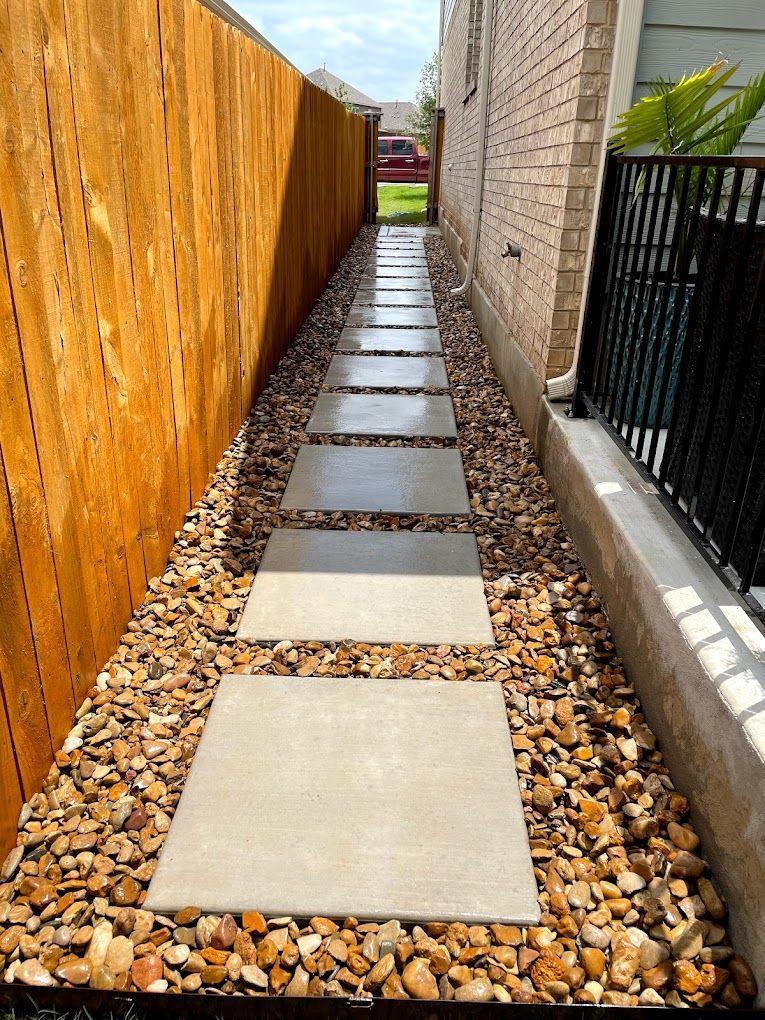
This side yard is very narrow, and it still works. Oversized concrete slabs march down the center.
Warm brown and orange river stones fill the gaps. Metal edging keeps the stones in place. A tall wood fence adds privacy.
Why it works:
- Big slabs give your dog a smooth, steady path.
- Warm stones add color without a single plant.
- The clean lines make the strip look longer and tidier.
Budget snapshot: Mid-range. Concrete slabs and river stone cost more than gravel, but they last for years and need almost no upkeep.
12. A Colorful Path That Dogs Actually Use
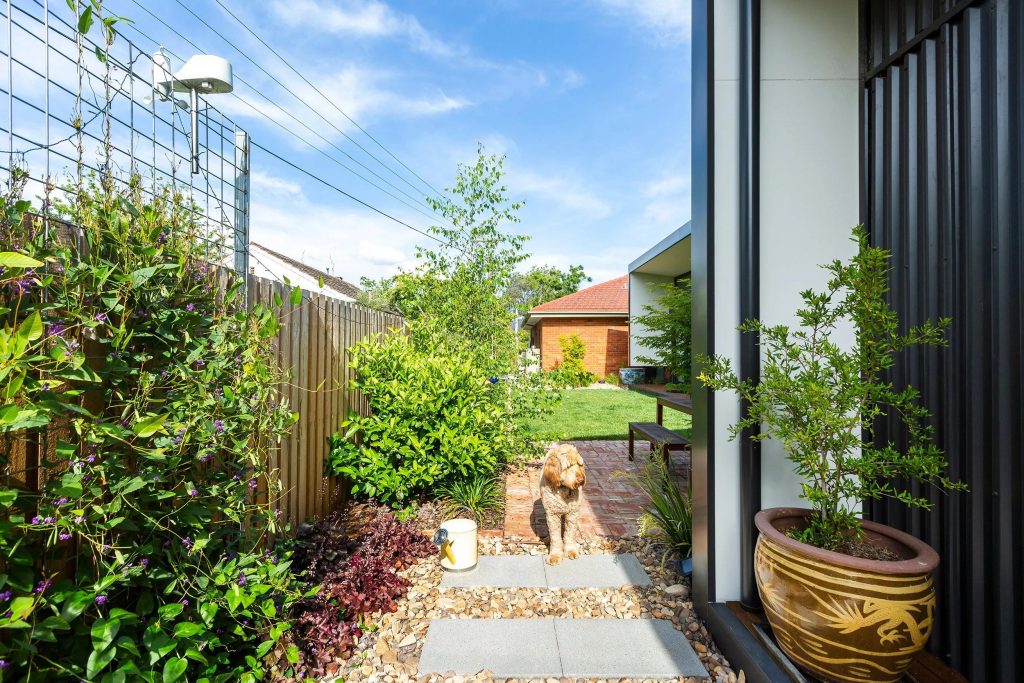
You can see it in the photo. The dog stands right where the path opens up, and the space clearly works for him.
Wide stepping pavers lead through gravel to a brick patio. A wire trellis holds a flowering vine. Burgundy foliage fills the lower bed.
Dog-safe plant note: Burgundy-leaved coral bells are a smart pick for a bed like this. They are non-toxic to dogs and hold their color through the season.
Fence-line tip: A wire trellis lets vines climb up instead of spread out. Your dog keeps the floor space, and you get the flowers.
13. Wood Chips Along a Chain-Link Run
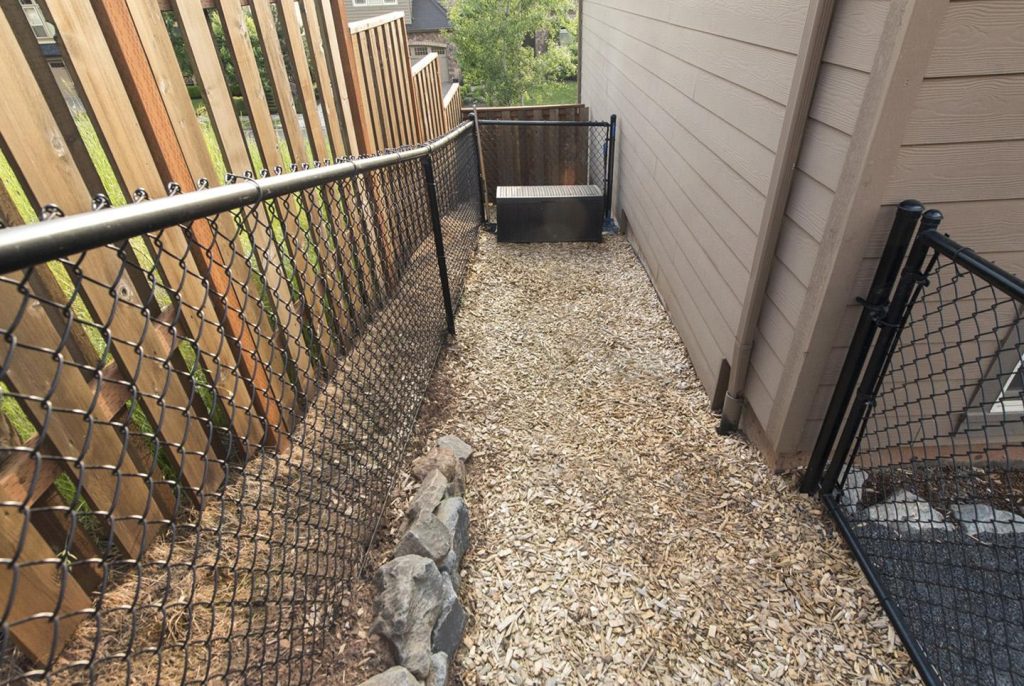
This one is practical, and I mean that as a compliment. Wood chips cover the ground from wall to fence.
A black chain-link barrier keeps your dog in a defined run. Rocks edge the fence base. A storage box at the end hides the dog supplies.
Mud and odor fix: Wood chips soak up moisture and cushion paws. Refresh the layer once a year and rake out soiled spots. Skip cocoa mulch. It is toxic to dogs.
Best for: Budget-friendly makeovers, sloped side yards, and dogs who love to run a fence line.
Frequently Asked Questions
What is the best surface for a dog side yard?
Artificial turf, rounded pea gravel, and wood chips all work well. They drain fast and stay gentle on paws. Add pavers or stepping stones for a clean walking line.
How do I stop mud in a narrow side yard?
Start with drainage. Lay landscape fabric and a compacted base, then top it with gravel or chips. Point your downspout away from the strip so water has somewhere else to go.
Which plants are safe for dogs in a side yard?
Bamboo and coral bells are both non-toxic to dogs. They handle shade well and add color along the fence. Skip hostas, which are toxic to dogs.
How do I keep my dog from digging under the fence?
Close the gap at the base. A solid board, buried edging, or mesh that runs tight to the ground all work. A strip of pavers or gravel along the fence also makes digging less fun.
How do I keep a side yard cool for my dog in summer?
Choose lighter pavers and add shade with a sail or tall plants. Test any surface with your palm. If it feels too hot for your hand, it is too hot for paws.
Ready to Win Back Your Side Yard?
A side yard doesn’t need much to work for your dog. Start with a safe surface. Close every gap along the fence. Then add one or two dog-safe plants for color.
Pick the idea that fits your space and budget. Even a small change, like a row of pavers or a fresh layer of gravel, makes the strip cleaner and calmer.
Your dog will notice the difference right away. I bet you will too.