Narrow Side Yard Landscaping Ideas: 12 Ways to Turn a Skinny Strip Into a Showpiece

A narrow side yard feels like leftover space. It holds trash bins, a hose, and a few stubborn weeds. You walk through it fast and forget it exists.
I think that’s a missed chance. Even a three-foot strip can look designed. It just needs a clear path, smart height, and a short plant list you repeat.
These 12 narrow side yard landscaping ideas show you how. You’ll find pavers, raised beds, living fences, and cozy nooks.
Pick one and turn your skinny strip into the best-looking part of your home.
The Details That Make a Narrow Side Yard Work
- Keep one clear path: Aim for at least 3 feet of walking width. Go wider if you push a wheelbarrow or roll bins through.
- Build up, not out: Trellises, wall planters, and slim trees add green without eating floor space.
- Repeat two or three plants: Repetition makes a long strip feel planned. Ten different plants make it feel busy.
- Add one memorable feature: A gate, a pair of big planters, or a small bistro table gives your eye a place to land.
12 Narrow Side Yard Landscaping Ideas That Make a Skinny Strip Look Designed
1. Corten Beds That Turn a Side Strip Into a Veg Patch
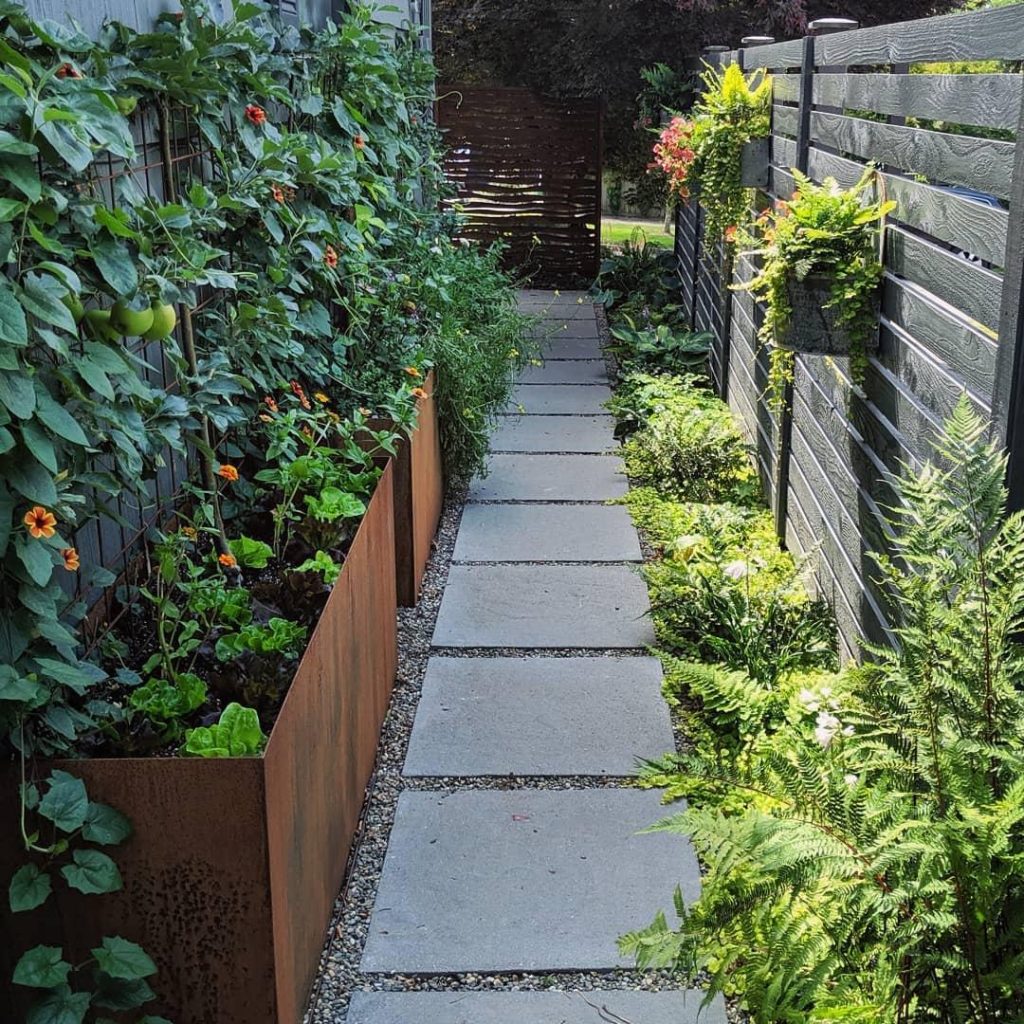
Rust-colored steel planters hug one wall here. Tomatoes climb a trellis above lettuce and bright orange nasturtiums.
Across the path, ferns and leafy shade plants fill the other side. A slatted gray fence holds hanging pots.
I love how hard this strip works. You get food, flowers, and a clear walkway in one slim space.
Why it works:
- Tall steel boxes lift the soil, so you save your back and keep plants tidy.
- Climbing crops use the wall instead of the floor.
- Wide pavers with gravel joints give you a firm, easy path.
- Ferns and hanging pots soften the fence and fill the shady side.
Width note: Keep the path at least 3 feet wide. That leaves room to walk and harvest comfortably.
Also read: 13 Side Yard Landscaping Ideas for Dogs That Look Good and Hold Up
2. Black Timber Wall Planter With Stepping Pavers
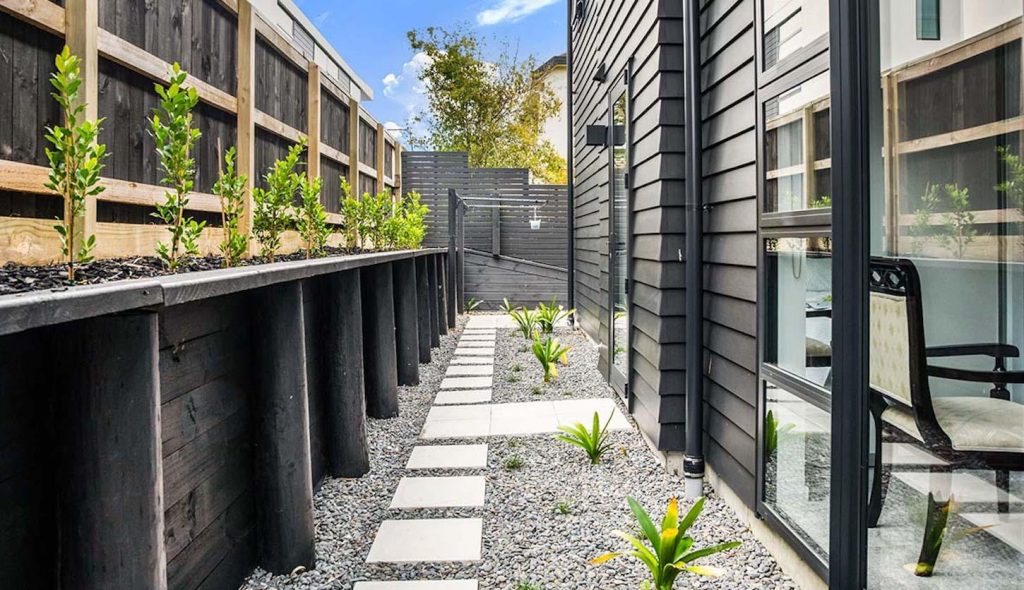
Yard formula: black timber wall + young hedge plants + square pavers + pale gravel + strappy accent plants
A raised black planter runs along the fence here. Young hedge plants grow inside it. They will fill in and form a living screen. Square pavers step through the gravel and lead you toward a dark timber screen at the far end.
I like the moody palette. Black timber, black siding, and black window frames create one calm backdrop. The pale gravel and fresh green leaves pop against it.
The raised bed also frees the ground for your path. You gain height for privacy without losing walking room.
Upgrade idea: Add small solar path lights between the pavers. They will glow against the gravel after dark and guide your steps.
3. Oversized Pavers in Dark River Pebbles
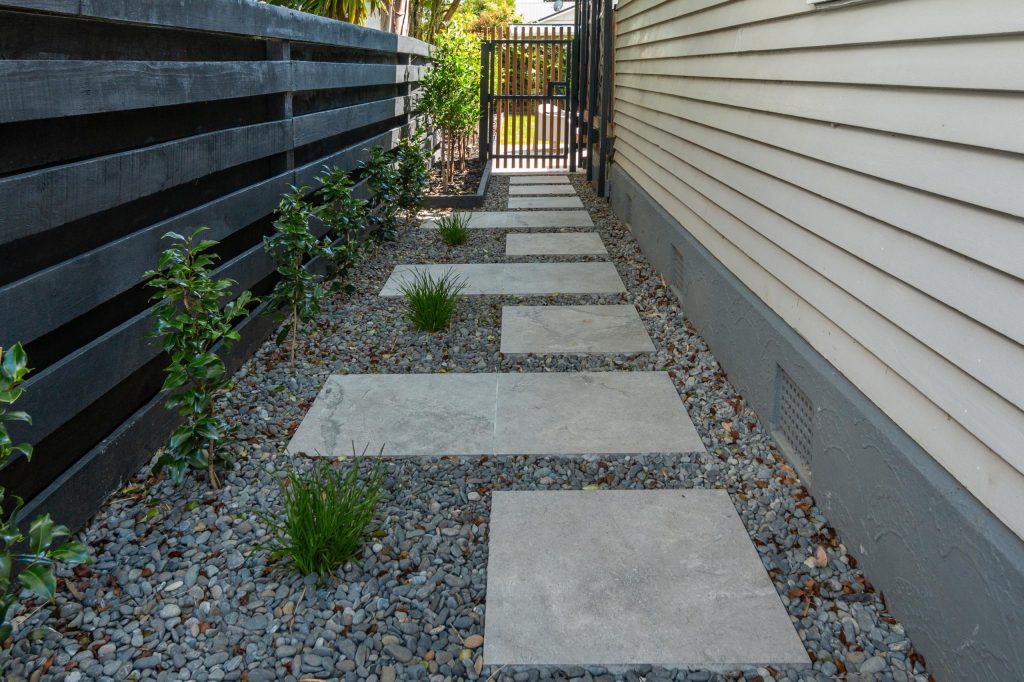
Best for: Side yards that connect the front yard to a backyard gate.
Big light gray pavers float over dark pebbles in this clean, modern strip. Glossy young shrubs line a black slatted fence. Soft grass clumps sit between the slabs. A timber gate at the end frames a peek of green lawn.
Large slabs calm a narrow space. Fewer joints mean less visual noise. The dark pebbles also hide fallen leaves, so you sweep less.
I love the gate here. It gives your eye a target and pulls you down the path.
Layout tip: Stagger the slabs and set a few side by side. That small change breaks up the straight line and adds rhythm.
4. Warm Cedar Fence and Gravel Path
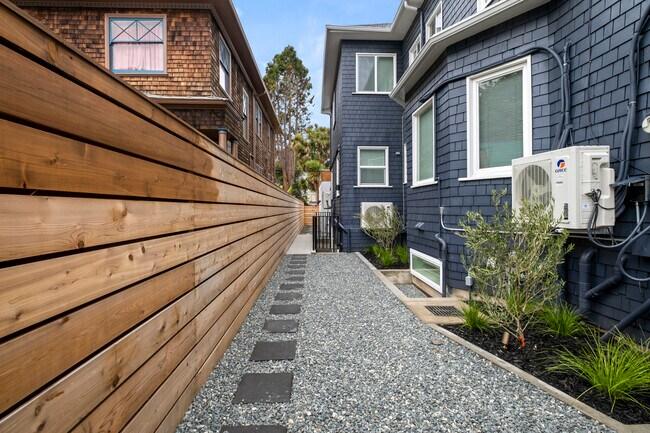
A smooth horizontal cedar fence runs along one side here. Dark square pavers step through pale gravel.
On the house side, a small silvery-leaved tree and soft grasses fill a tidy raised bed.
Wood tones warm up the dark blue siding. The horizontal boards also make the strip look wider. Your eye travels across them instead of down a tunnel.
Copy the look:
- Run fence boards horizontally to stretch the space.
- Pair dark pavers with light gravel for strong contrast.
- Edge the bed with a crisp border, then plant one small tree and a few grasses.
If utility units sit on your wall, plant a leafy shrub in front of them. It softens the hardware and adds life.
5. Pea Gravel Path With Purple Accents
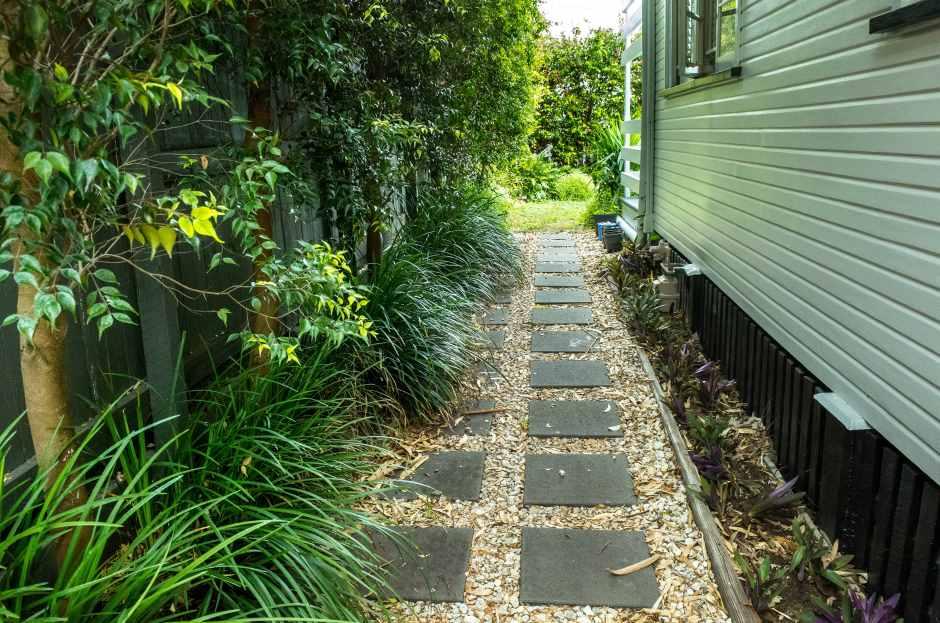
Pale pea gravel and charcoal pavers make a soft, sandy path. Dark green strappy plants line the walkway in neat clumps.
A small tree with fresh yellow-green leaves leans in from the fence side.
Purple-leaved plants run along the base of the pale house. Timber edging keeps the bed sharp. That purple pops against the siding and adds color without a single flower.
Plant note: Choose foliage color over blooms in a tight space. Leaves look good for months. Flowers fade in weeks.
6. A Green Ribbon of Groundcover Between Walls
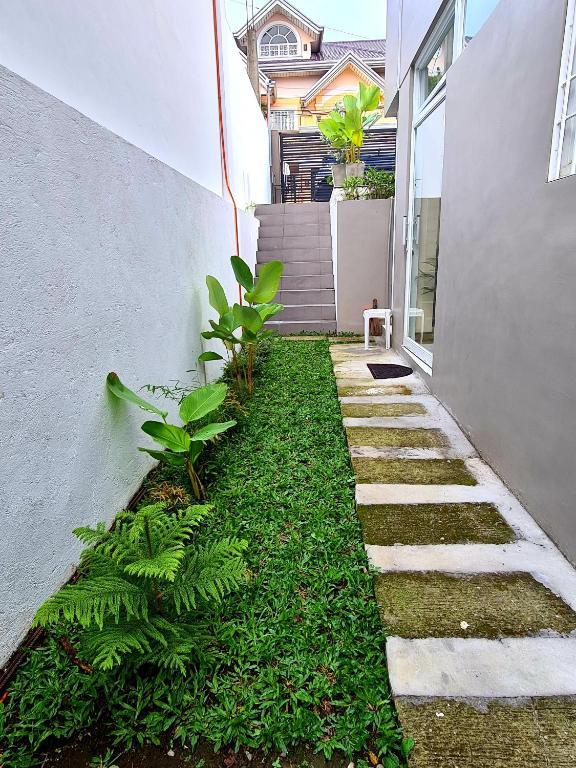
Two plain gray walls frame this slim space. A low green groundcover fills the middle like a soft carpet. Wide pavers with mossy tops run beside it.
Large paddle-shaped leaves and a feathery fern lift the left side. Steps at the end lead you up to the next level.
Why it feels fresh:
- Green softens the hard walls.
- The two-lane layout separates your walkway from the planting.
- Tall leaves add height where you have no floor space.
- The steps give the strip a destination.
Maintenance note: Trim the groundcover edge each month so it stays off the pavers. A sharp line keeps the whole strip looking neat.
7. Cream Pavers and Staked Trees Beside a Blue House
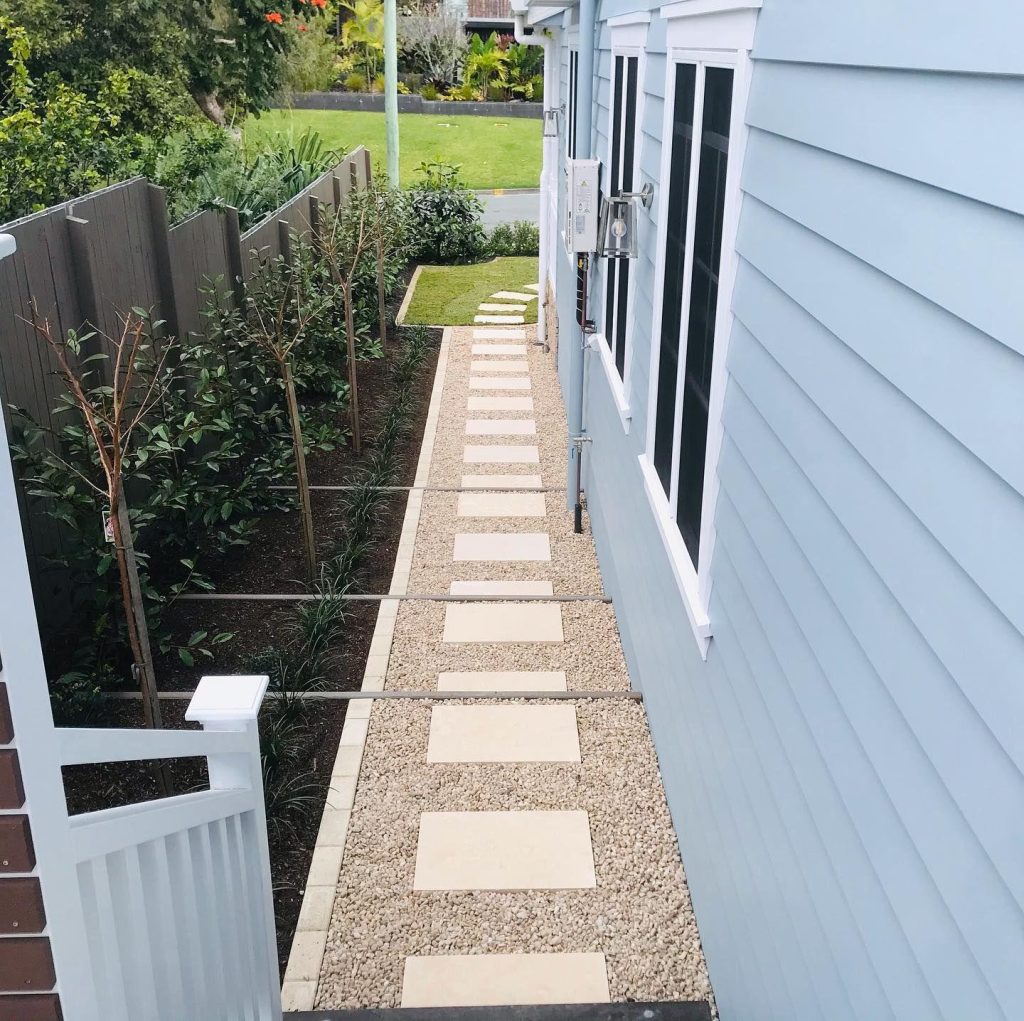
Yard formula: cream pavers + warm pea gravel + concrete edging + slim trees + strappy grasses + dark mulch
Soft cream stones glow against this pale blue house. A concrete border keeps the gravel and mulch apart.
Slim young trees stand in a row along the gray fence, each with its own stake. Dark mulch makes their green leaves stand out.
I love the repetition. Same tree, same spacing, same grass at their feet. That rhythm makes a long, narrow strip feel planned and calm. The path even continues across the lawn with stepping stones.
Lighting idea: The lantern-style wall light already adds charm. Add a second one near the far end so the whole path glows evenly at night.
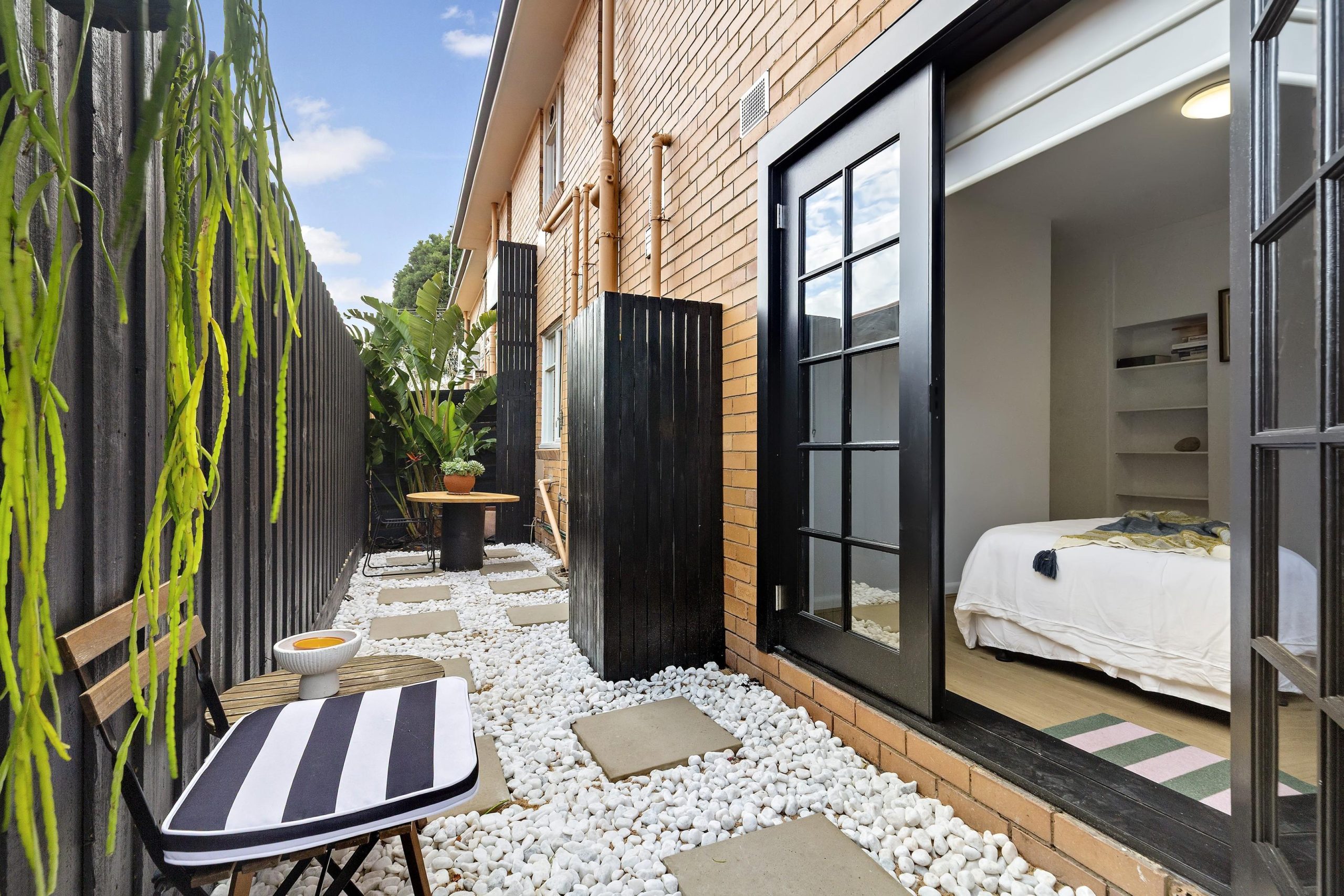
8. A Side Yard Café Nook With White Pebbles
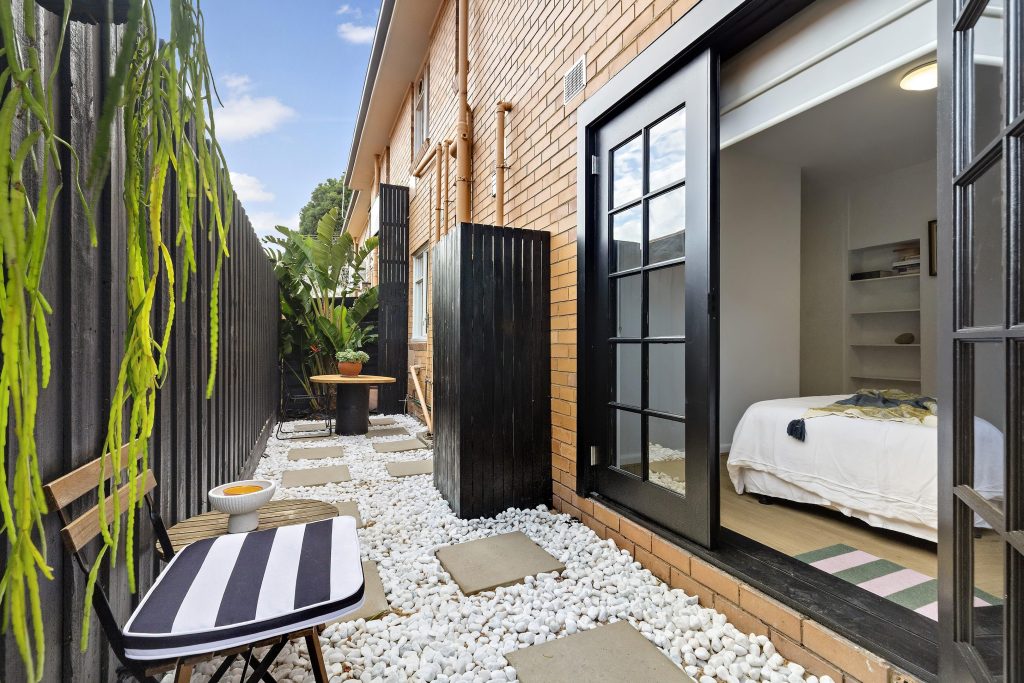
Best for: Narrow strips beside a bedroom or living room door.
White pebbles brighten this dark, tight corridor. Square pavers step through them and lead you to a round table and a paddle-leaf plant.
A striped cushion on a wooden bistro chair adds a playful touch. Trailing succulent stems spill over the black fence like a green curtain.
I also like the black slatted screen. It boxes in the utility corner and matches the fence, so nothing distracts your eye.
What to avoid: Skip big furniture. One small table and one or two chairs keep the walkway open and the space calm.
9. Timber Raised Beds That Step Up a Slope
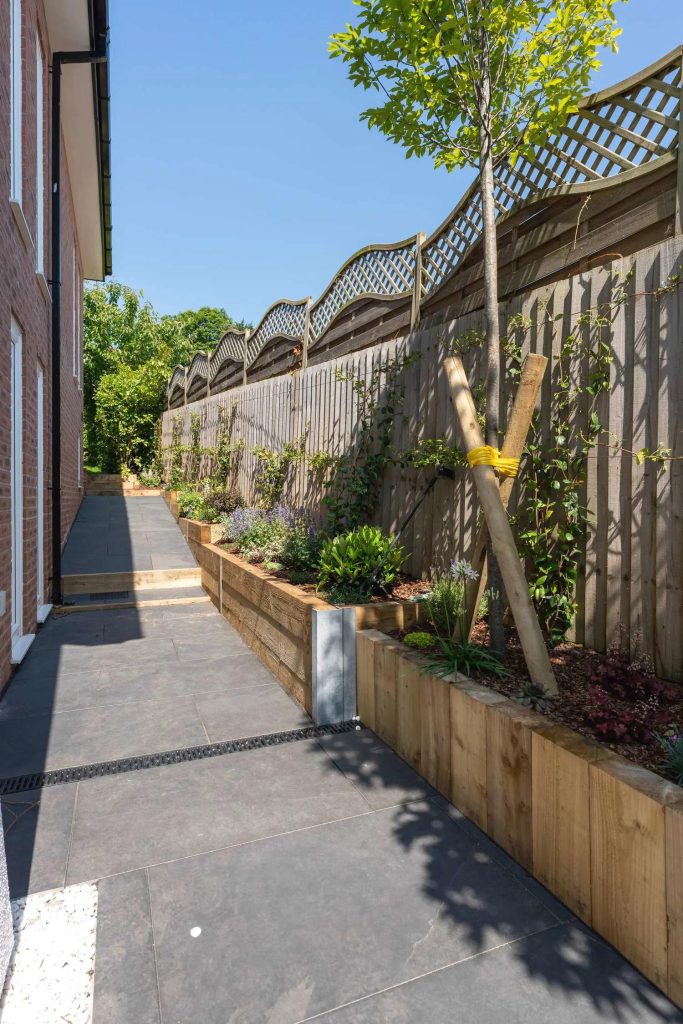
Best for: Sloped side yards that need level planting space.
Chunky timber beds climb along a tall fence here. Wide gray slabs make the path. Simple timber steps carry you uphill.
A drainage channel crosses the paving, so rainwater has somewhere to go.
I love how this design solves two problems at once. The beds tame the slope, and they hold a full mix of shrubs, perennials, and a young tree.
Why it works:
- Stepped beds turn a hill into usable planting space.
- Climbers on wires use the fence wall and take no floor room.
- Mixed leaf shapes and colors keep the bed lively from spring to fall.
- Big slabs make the path feel wide and calm.
Budget tip: Timber often costs less than stone for raised beds. Pick pressure-treated or naturally durable wood so it lasts.
10. Columnar Evergreens as a Living Fence
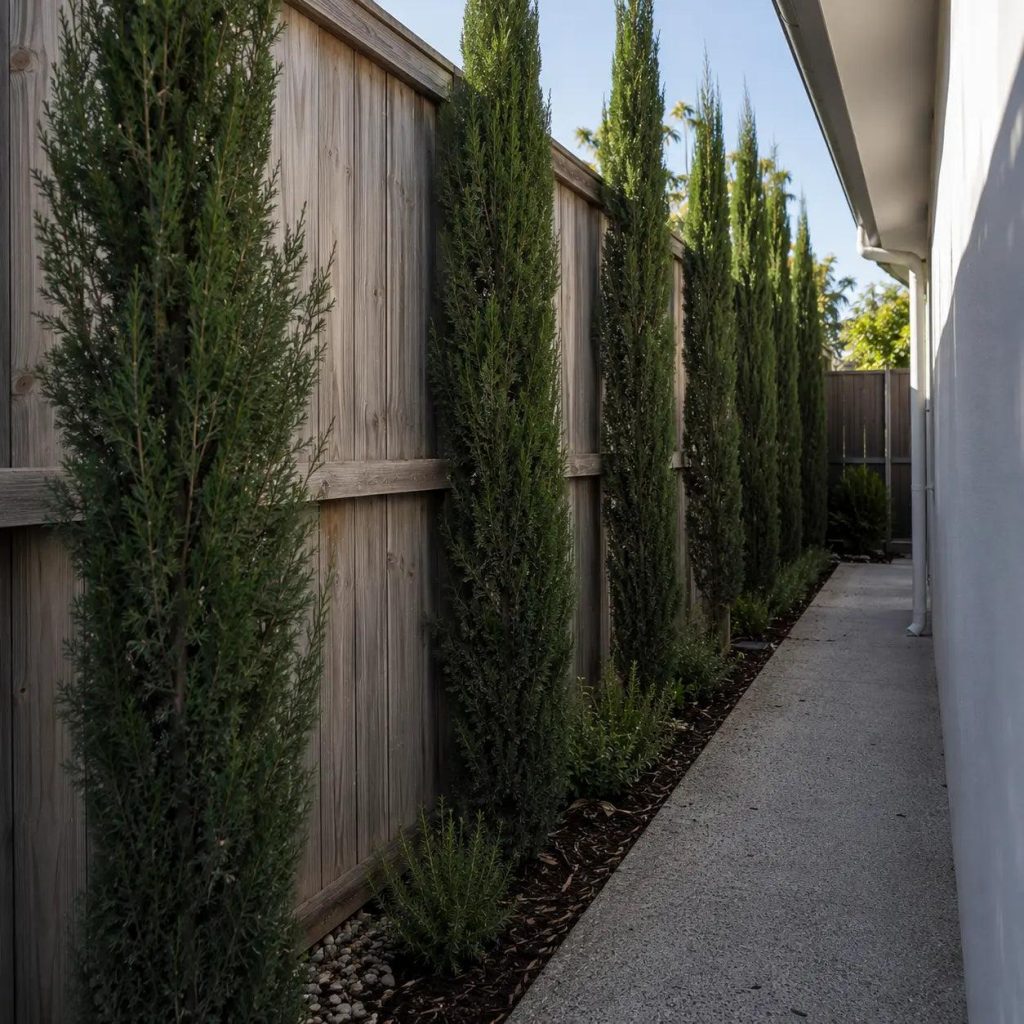
Yard formula: slim columnar evergreens + weathered timber fence + dark mulch + low herbs + smooth concrete path
Tall, slim evergreens stand in a tidy row along a gray timber fence. They grow high but stay narrow. That’s the secret. You get privacy and a green wall without losing path width.
Low shrubs and herbs fill the gaps at their feet. Dark mulch keeps the bed neat. A smooth concrete path makes sweeping easy.
I love how the vertical lines pull your eye upward. The strip feels taller instead of tighter.
Maintenance note: Check the plant tag for mature width before you buy. Then space each tree evenly. Even spacing looks intentional and gives every tree room to breathe.
11. Cedar Walls, Oversized Planters, and Black Pebbles
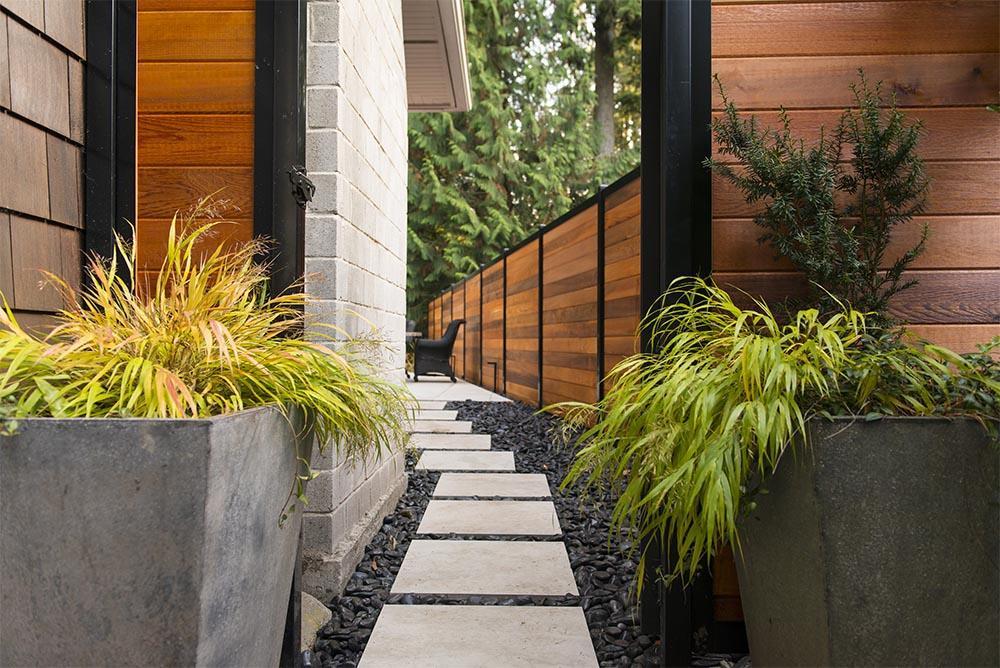
Warm cedar boards line both sides of this tight passage. Two big concrete planters stand at the entrance like gateposts. Golden-green grasses spill from each one.
Pale pavers step through glossy black pebbles toward a lone chair at the far end.
I love the contrast here. Warm wood, cool concrete, and dark stone feel rich together. The grasses add movement and soft color.
Copy the look:
- Frame the entrance with two matching planters.
- Plant one type of grass and repeat it in both pots.
- Set light pavers on dark stone for strong contrast.
Width note: Big planters eat floor space. Keep them at the start of the path and leave about 3 feet clear so you can walk past easily.
12. Arching Grasses Along a Wood Deck
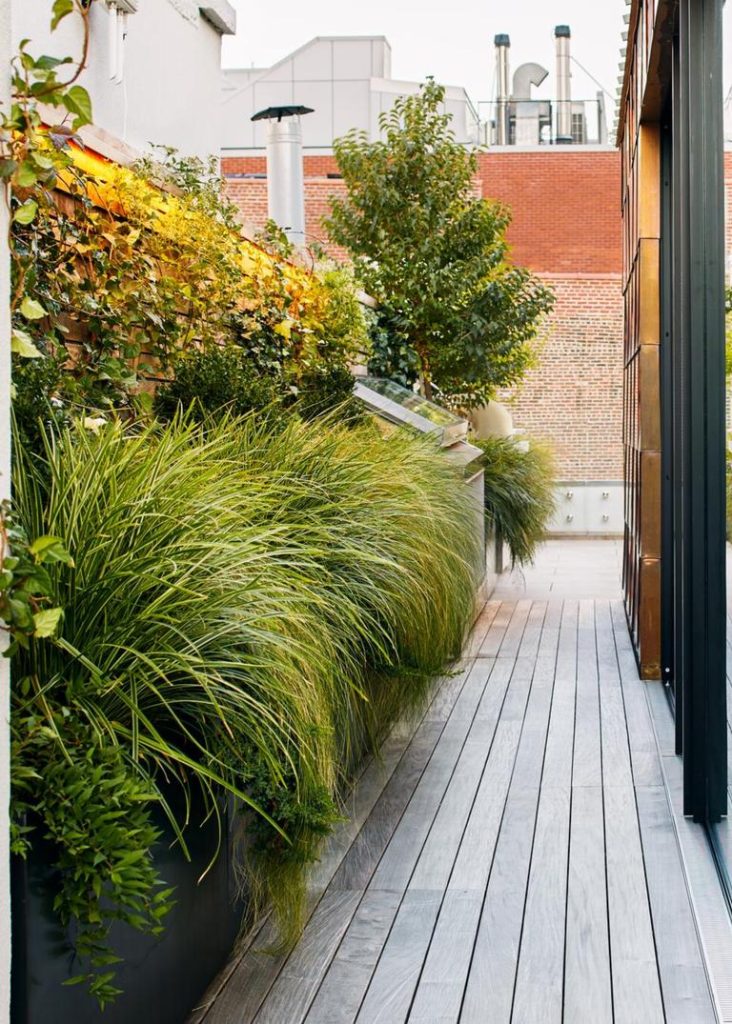
A long planter runs along the wall here. Soft grasses arch over its edge like a green waterfall. Ivy climbs the wall above. A slim gray deck leads you past floor-to-ceiling glass. A small tree at the end lifts your eye over the rooftops.
I like how the planter works like a fence. You get privacy, texture, and movement in one band of green.
Plant note: Choose grasses that arch instead of standing stiff. Their soft shape cushions the hard lines of the wall and glass. They also sway in the breeze, which brings a tight space to life.
Lighting idea: Tuck small uplights at the base of the grasses. At night, the blades glow and the whole strip looks layered.
FAQs
How wide should a side yard path be?
Aim for at least 3 feet so you can walk comfortably. Go to 4 feet if you push a wheelbarrow or roll bins. Stepping stones can work in less space, but they suit light foot traffic.
What are the best plants for a narrow side yard?
Choose slim, upright, or climbing plants. Columnar evergreens, clumping grasses, and climbers on a trellis stay in bounds. If your strip sits in shade, pick ferns and leafy foliage plants. Always check the mature width on the plant tag.
How do I add privacy without making the space feel smaller?
Use slim evergreens or climbers on wires. They add height and screening without taking floor room. A fence with horizontal boards also stretches the space visually.
How do I handle drainage in a narrow side yard?
Slope the path slightly away from your house. Gravel beds drain quickly. A drainage channel, like the one in idea 9, catches runoff before it pools.
Can I use gravel and pavers instead of lawn?
Yes, and it’s a smart choice. Grass struggles in tight, shady strips. Pavers set in gravel give you a clean, low-maintenance path that looks great year-round.
Final Thoughts
A narrow side yard doesn’t need much. Start with a clear path. Add height with slim plants. Repeat one or two materials so the strip feels calm.
Pick the idea that fits your space best and start small. You’ll soon enjoy walking through the spot you used to rush past.