15 Gravel Driveway Edging Ideas That Keep Your Drive Looking Sharp

Gravel drives look wonderful on day one. Then the stones start to wander. They creep into the lawn. Weeds sneak in. The clean line you loved fades fast.
Edging fixes that. It holds the gravel in and keeps the grass out.
It also frames your drive like a picture and sets the style of your home before anyone reaches the front door.
I pulled together 15 gravel driveway edging ideas for you.
You’ll see granite, brick, steel, timber, river rock, and even lavender. Pick the one that fits your home and your budget.
What Makes Gravel Edging Actually Work
Before you pick a material, I want you to know a few simple rules. Good edging does more than look pretty.
- Set it deep. Bury the edge a few inches below the gravel surface. A shallow edge lets stones slip right under it.
- Build a solid base. Compact the soil or sand under the edging. Frost and tires will shift anything loose.
- Add a weed barrier. Lay landscape fabric under the gravel and behind the edge. You’ll pull far fewer weeds.
- Match your home. Echo your brick, stone, or trim color. Your drive will feel like part of the house.
- Plan for the curves. Steel and small setts bend with ease. Long boards and big blocks suit straight runs.
- Think about mowing. Keep the edge level with the lawn. Your mower can then roll right along it.
Also read: 15 Circular Driveway Landscaping Ideas for a Stunning Front Yard
15 Beautiful Gravel Driveway Edging Ideas
1. Granite Curb Edging Along a Cobble Drive
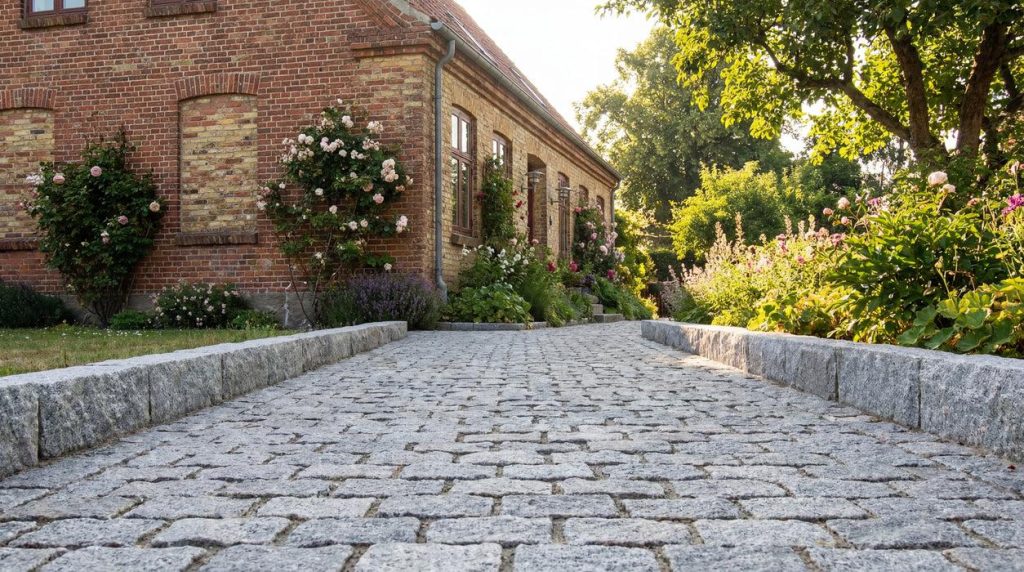
I love how this drive feels like a European courtyard. Thick granite curbs frame the cobbles on both sides.
They hold the surface in place and give the whole entry a sturdy, finished look. Pink roses and peonies spill toward the stone and soften the hard lines.
Why it works:
- The tall curb keeps lawn and beds from creeping onto the drive.
- The gray granite echoes the cobbles, so the drive feels like one piece.
- The pale stone looks fresh against the warm red brick house.
Edging formula: Granite curb + compacted gravel base + cobble or gravel surface.
Landscape note: Plant lavender and roses a foot or two back from the stone. You get a soft edge and still have room to mow or weed.
Read more: 17 Driveway Landscaping Ideas for Entrance That Boost Curb Appeal
2. Corten Steel Edging for a Sweeping Gravel Curve
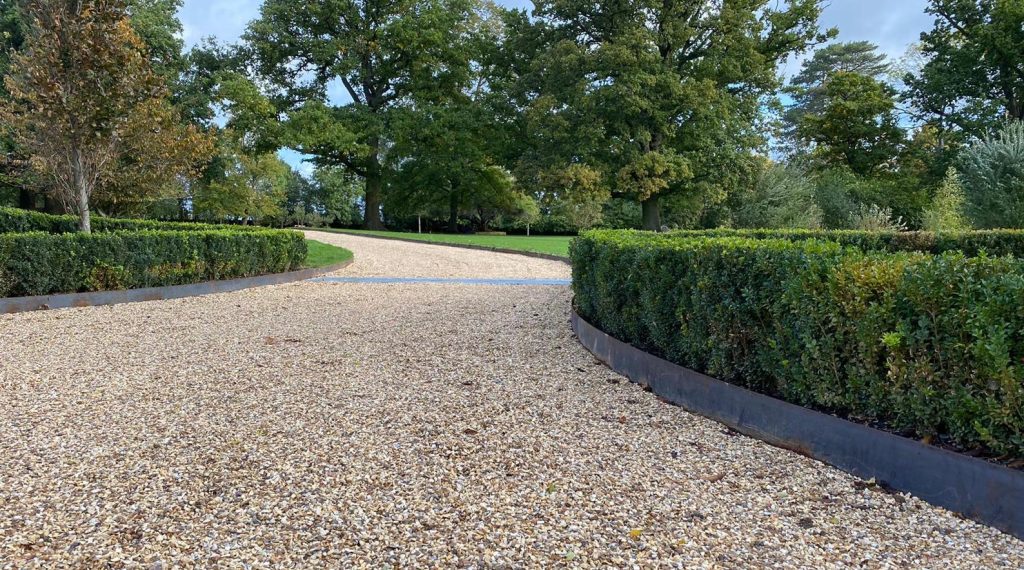
I could stare at this curve all day. A slim strip of rusty steel hugs the gravel and flows with the bend. It looks clean, modern, and almost invisible. Your eye follows the line instead of the edge itself.
Best for: Long, curving drives and clipped boxwood hedges.
Why it works:
- Steel bends into smooth curves that stone and brick can’t match.
- The warm rust tone matches golden gravel perfectly.
- The thin profile keeps the focus on the hedge and the trees.
Install tip: Set the steel a few inches below the gravel surface. Stake it every few feet so it stays straight through winter freezes.
Upgrade idea: Add low path lights behind the hedge. At dusk, the steel will catch a warm glow.
3. Cobble Setts and Lavender in an English Drive
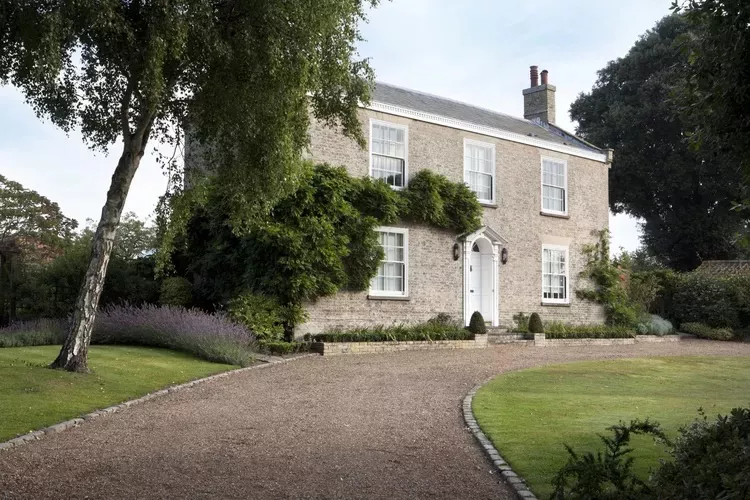
This drive feels like a classic country house entry. A narrow row of small stone setts separates the gravel from the lawn.
The line stays tidy but never feels stiff. Lavender spills along the border and adds scent and color.
Landscape note: Lavender loves gravel. It enjoys the sharp drainage and the sun. Plant it just beyond the edging and let it flop gently over the stones.
Why it works:
- Small setts fit tight curves without cutting.
- The warm gravel color suits the pale stone house.
- A birch tree adds height and dappled shade.
What to avoid: Don’t set the stones too high. A low edge lets your mower roll right along it.
4. Rustic Rock Edging for a Country Lane
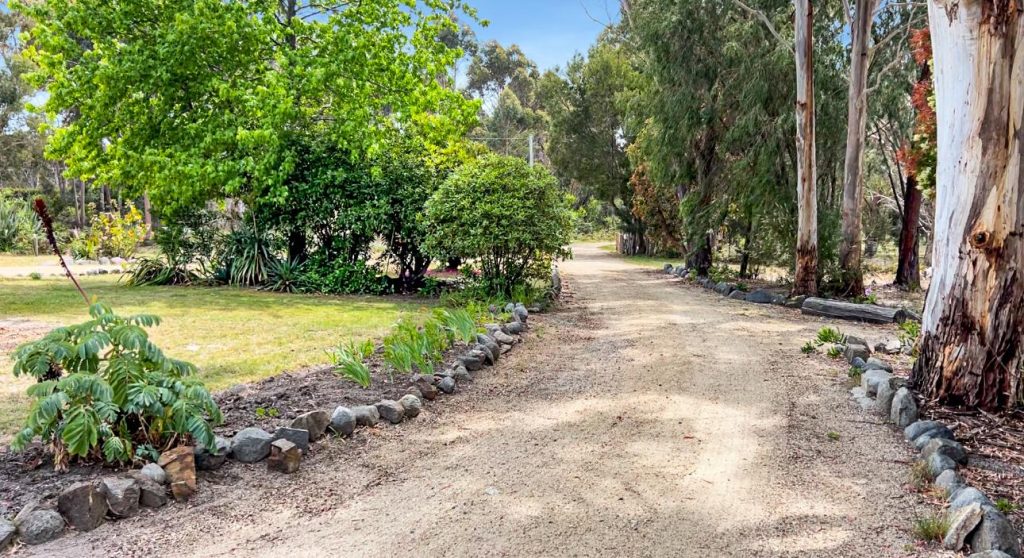
I’m a sucker for this relaxed look. Rounded field stones line both sides of this gravel lane. They’re not perfectly matched, and that’s the charm. The drive feels natural and a little wild.
Best for: Rural properties, big yards, and gardeners on a budget.
Why it works:
- Local stones cost little and blend into the landscape.
- Grasses and low plants grow right through the gaps.
- Mulched beds behind the rocks stop weeds from spreading.
Maintenance note: You’ll need to pull a few weeds each season. Gravel and soil mix over time, so a quick refresh keeps things neat.
Upgrade idea: Lay landscape fabric under the gravel and behind the stones. You’ll cut your weeding time in half.
5. White River Rock Borders Beside a Wooded Drive
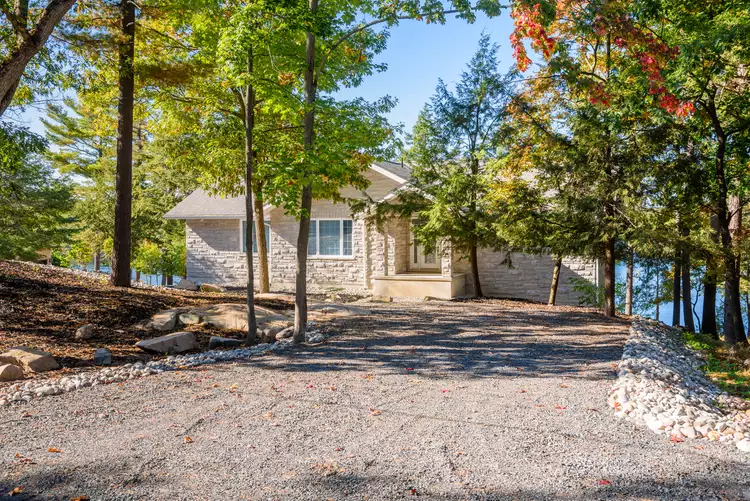
Here’s a smart edge that also works hard. Bands of pale river rock run along both sides of this lakeside drive. They look bright against the dark gravel. They also help rainwater drain away.
Edging formula: River rock band + landscape fabric + gravel drive.
Why it works:
- The light stone outlines the drive, even on shady days.
- Loose rock lets water soak in instead of pooling.
- Larger boulders anchor the corners and add natural drama.
Best for: Sloped lots, wooded sites, and spots with heavy rain.
Install tip: Dig a shallow trench first. Fill it with rock about three inches deep. That keeps the band from washing into the drive.
Also read: The Ultimate Guide to River Rock Landscaping for Your Front Yard
6. Granite Setts Curving Along a Lawn
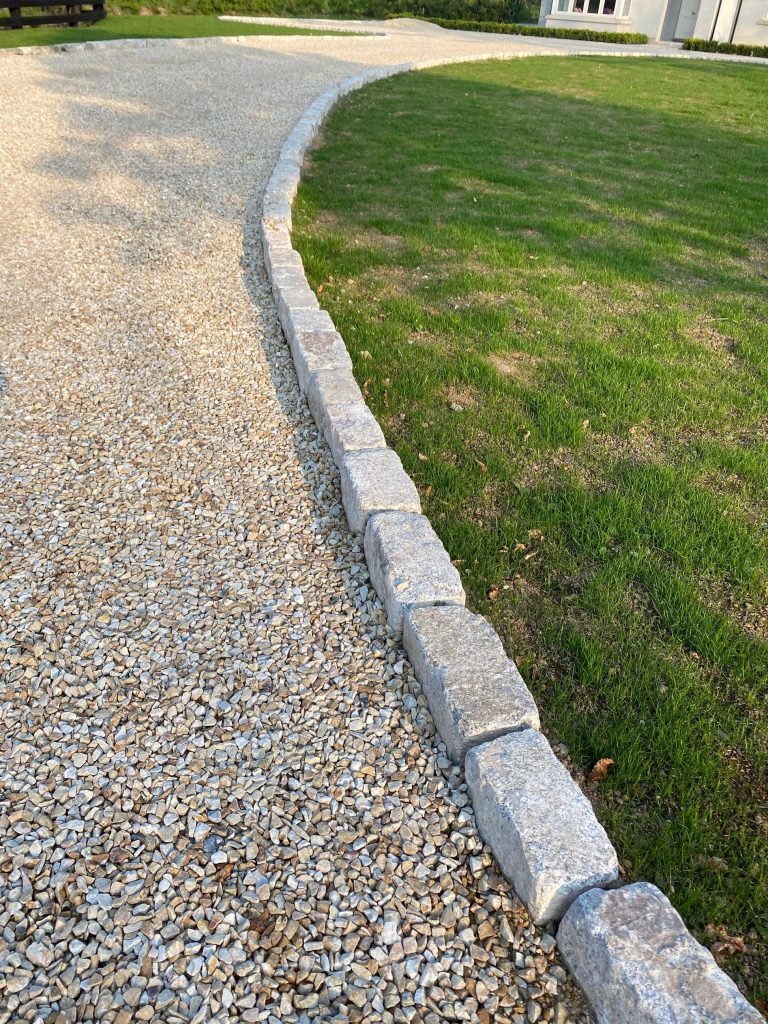
I’d pick this one for pure curb appeal. Rough granite blocks follow the curve of the drive and cut a crisp line against the lawn. The gravel stays inside. The grass stays outside. Everything looks sharp.
Why it works:
- Chunky blocks add weight and a hand-built feel.
- The stone’s soft gray ties in with pale gravel.
- A lawn edge this clean needs very little trimming.
Landscape note: Keep the grass cut right to the stone. A neat mow line makes the edging look even more polished.
Install tip: Bed each block in concrete or compacted sand. Check that the tops sit level with the lawn. That way your mower glides across without catching.
7. Red Brick Edging That Warms Up Tan Gravel
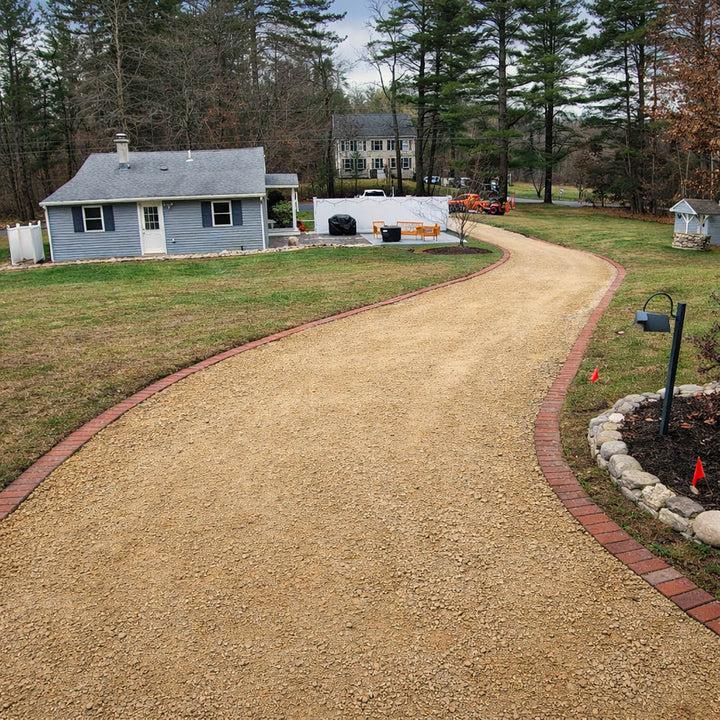
Here’s a simple edge with a big payoff. A single line of red brick, laid on its side, traces the full curve of this long drive.
The color pops against the tan gravel and green lawn. It looks classic, and it’s easy to copy.
Best for: Budget-friendly projects and DIY weekends.
Why it works:
- Bricks are cheap and easy to find.
- The warm red adds color all year, even in winter.
- A narrow band keeps the look light on a wide drive.
Maintenance note: Check the line each spring. Frost can nudge bricks out of place. Tap them back down and top up the sand underneath.
Upgrade idea: Place a ring of fieldstone and a small post light at the bend. You’ll add a focal point without much cost.
8. Brick Edging and Boxwood in a Courtyard Drive
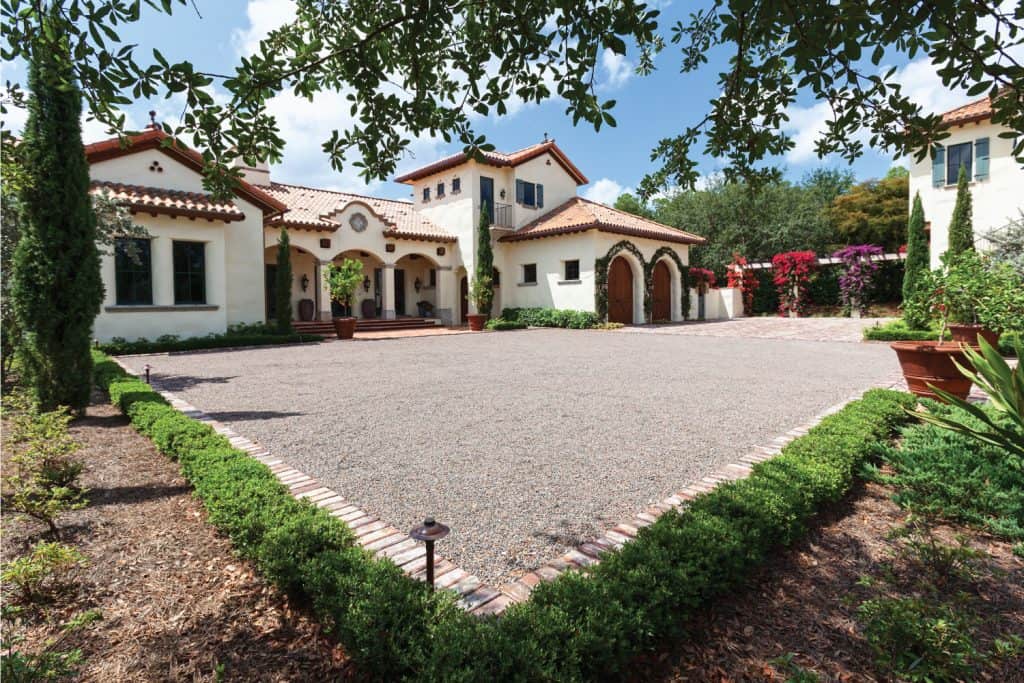
I find this one so elegant. A thin brick line separates the gravel court from a low boxwood hedge. The hedge frames the space like a green wall.
Terracotta pots and bright bougainvillea add Mediterranean flair.
Edging formula: Brick band + clipped boxwood + bark mulch + low path lights.
Why it works:
- The brick marks a clear boundary between the gravel and the beds.
- The hedge gives a soft, formal frame all year.
- Mulch behind the hedge keeps roots cool and weeds down.
Landscape note: Trim the boxwood twice a year. A crisp top and straight sides make the whole entry look custom.
What to avoid: Don’t plant the hedge right against the brick. Leave a few inches so branches don’t push the bricks over.
9. Poured Concrete Curb for a Long-Lasting Edge
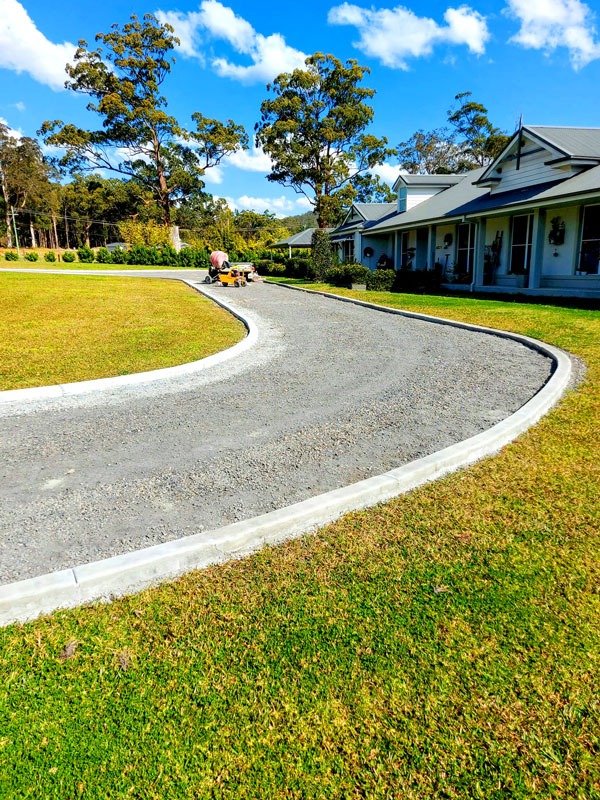
If you want a tough edge, look at this one. A smooth concrete curb follows every bend of the drive.
It’s strong, low, and clean. Gravel stays put even when the car turns hard.
Best for: Busy drives, heavy use, and low maintenance.
Why it works:
- Concrete resists shifting, frost, and tire pressure.
- The pale gray stands out against dark gravel and bright grass.
- A flat top makes mowing and string trimming easy.
Cost note: Expect to pay more upfront. You’ll save time and money later because it rarely needs repair.
Install tip: Ask your contractor to add expansion joints. Concrete can crack without them as the seasons change.
10. Double-Row Granite Setts With Hydrangea Beds
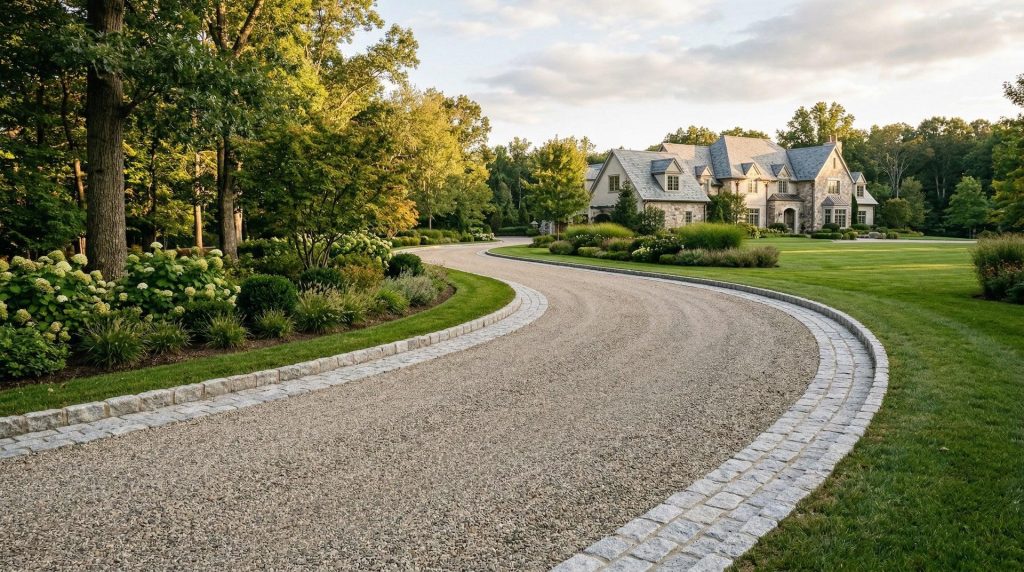
This is the luxury version, and I’m in love with it. Two neat rows of granite setts trim the curve of this gravel drive.
The pattern looks rich and detailed. Hydrangeas and soft grasses bloom just behind the stone.
Why it works:
- The double row adds width and visual weight.
- Pale granite brightens the gravel and picks up the house stone.
- Round hydrangea blooms soften the straight stone lines.
Landscape note: Mix in grasses and boxwood balls. You’ll get texture in every season, even after the blooms fade.
Upgrade idea: Run a thin strip of mulch between the stone and the plants. It makes a tidy buffer and keeps gravel out of the beds.
11. Upright Timber Boards for a Woodland Drive
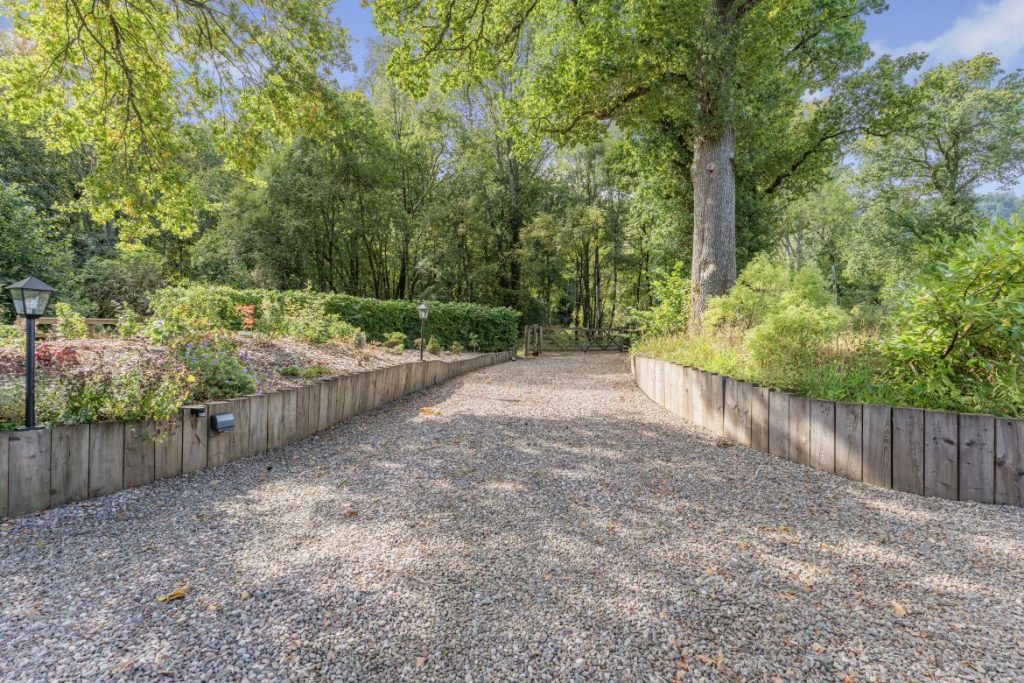
I can’t get enough of this natural look. Tall wooden boards stand upright along both sides of this gravel drive. They work like a low retaining wall. Soil and plants stay put, and the gravel stays clean.
Why it works:
- The weathered wood blends into the trees and the shade.
- Raised beds behind the boards let you plant at an easy height.
- A lantern post and small path lights add charm at night.
Best for: Sloped drives, wooded lots, and cottage-style gardens.
Install tip: Bury at least a third of each board. Add sturdy stakes behind them. That keeps the wall straight when the soil gets wet and heavy.
Maintenance note: Choose pressure-treated or naturally rot-resistant wood. It will last many years longer in damp soil.
12. Slate-Gray Brick Edging for a Modern Gravel Court
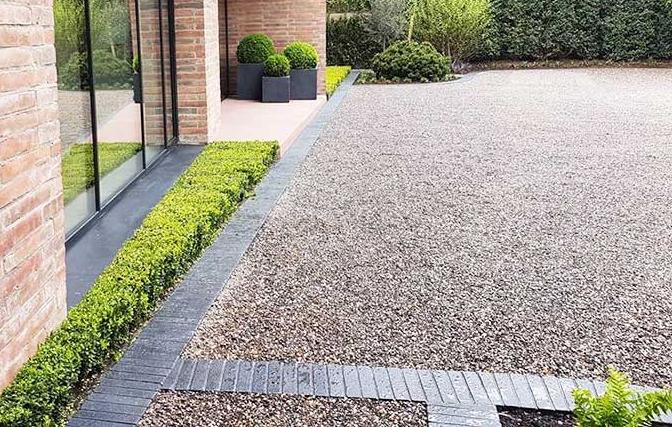
This one feels crisp and calm. A narrow band of dark gray brick runs along the edge of the gravel. It draws a sharp line against the pale stone and the clipped boxwood hedge.
I love how the brick even turns a corner and creates a neat inset panel.
Edging formula: Charcoal brick band + fine gravel + low boxwood hedge + round boxwood planters.
Why it works:
- Dark brick makes the light gravel look brighter.
- The straight lines suit modern homes with big glass windows.
- Green boxwood softens the hard edges and adds year-round color.
Landscape note: Clip the hedge flat on top. A sharp, level hedge makes the whole entry look designed.
Upgrade idea: Repeat the brick in a small border around your planters. The echo ties everything together.
13. Striped Brick Edging Around Golden Gravel
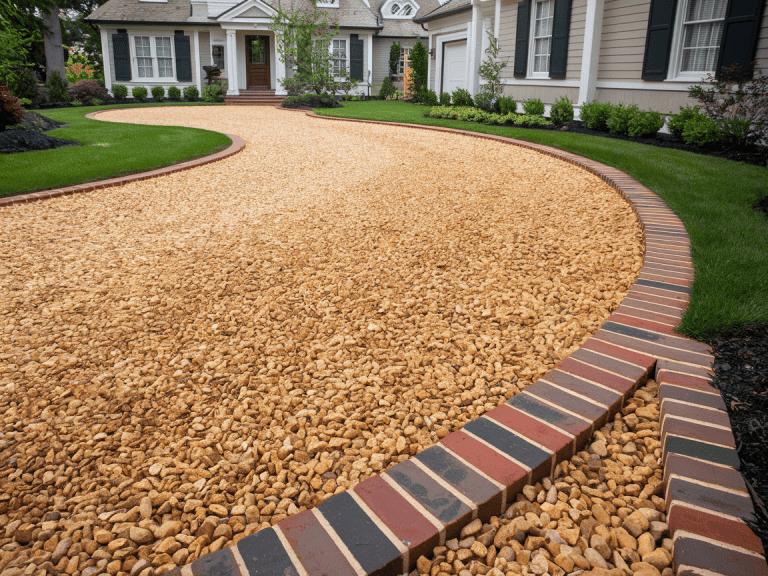
If you want a bold edge, this is it. Bricks in rust red, plum, and charcoal sweep along the curve like a ribbon.
The warm gold gravel makes every color glow. A band of river rock sits outside the brick and adds a second layer of texture.
Why it works:
- Mixed brick colors add depth and a hand-laid look.
- The curved line guides your eye straight to the front door.
- River rock catches rainwater and keeps mulch from washing onto the drive.
Best for: Traditional homes, formal front yards, and sweeping curves.
Install tip: Lay the bricks on a bed of compacted sand. Tilt them slightly in the curve so the pattern flows smoothly.
What to avoid: Don’t mix too many colors. Stick to three that match your roof, shutters, or gravel.
14. Redwood Board Edging Between Lawn and River Rock
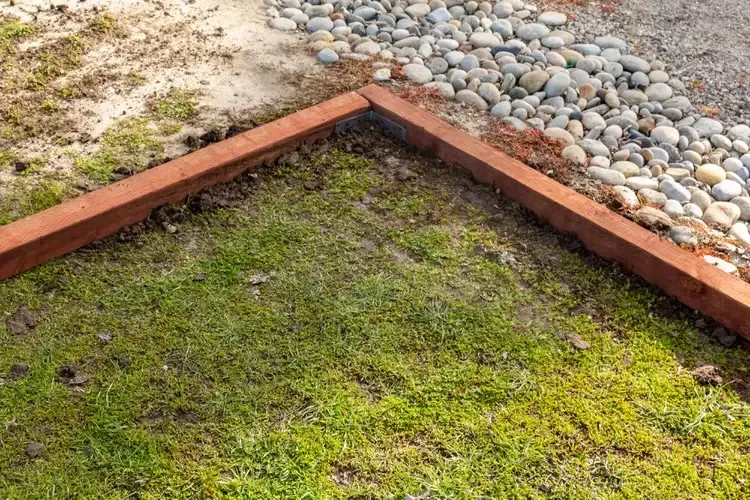
Sometimes the simple edge is the smartest. Two straight redwood boards meet at a tidy corner. On one side, smooth river rock fills the bed.
On the other, soft green grass fills the lawn. The boards keep the two worlds apart.
Best for: Small budgets, DIY weekends, and straight borders.
Why it works:
- Wood boards cost less than stone or brick.
- The warm red-brown tone looks great next to gray stones.
- A metal corner bracket locks the joint without much effort.
Install tip: Sink the boards a few inches into the soil. Then tamp the dirt tight around them. That stops the gravel from sneaking under the wood.
Maintenance note: Seal the wood once every couple of years. A simple coat of sealer keeps the color rich and slows rot.
15. Lavender Border Along a Golden Gravel Court
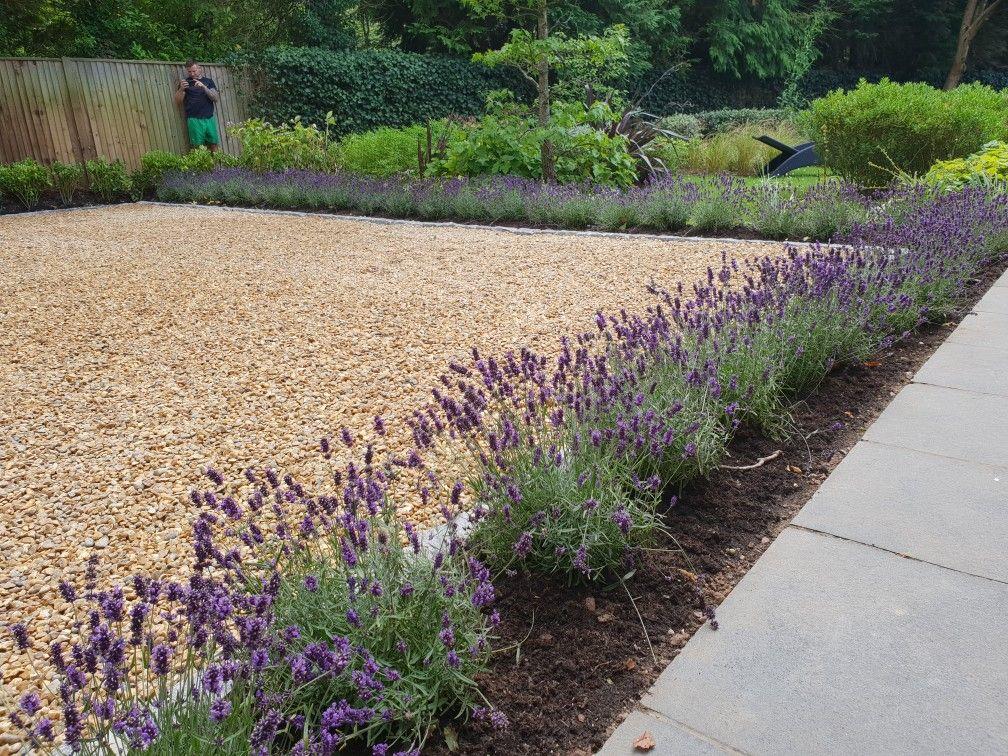
I’m ending with my favorite idea, because the edge here is alive. A thick row of lavender follows the gravel from end to end.
Purple blooms sway over the golden stones. A slim metal strip hides underneath and holds the gravel in place.
Why it works:
- Lavender thrives in gravel’s sharp drainage and full sun.
- The purple and gold color pairing looks rich and natural.
- Bees and butterflies will visit all summer.
Landscape note: Space the plants about 18 inches apart. They’ll grow into a soft, full hedge within a season or two.
Edging formula: Hidden steel strip + lavender row + dark soil + paving slabs.
Upgrade idea: Add a row of stepping slabs beside the bed. You’ll keep your feet off the soil and make pruning much easier.
What to avoid: Skip heavy mulch around lavender. It holds moisture and can cause root rot.
Final Thoughts
Good edging turns a plain gravel drive into a real design feature. It keeps your stones where they belong and cuts down your weeding.
It also boosts your curb appeal every single day.
Start with your budget and your home’s style. Then pick the edge that fits. Which idea would look best along your drive?
Save this post so you have it handy when you start your project.